

Need a Professional Hand?
If a DIY fix isn't enough, our insured technicians are just a click away. We’ll diagnose the issue and get your home running right again.
BOOK NOWA dryer not heating is one of the most common repair calls we handle at Wilson & Myers. The drum spins, the motor runs, but clothes come out damp every cycle. In nearly half of these cases, the real cause is a blocked dryer vent, not the dryer itself. This guide walks through all four symptom patterns and their real fixes, including the heat pump dryer angle that every other article skips entirely.
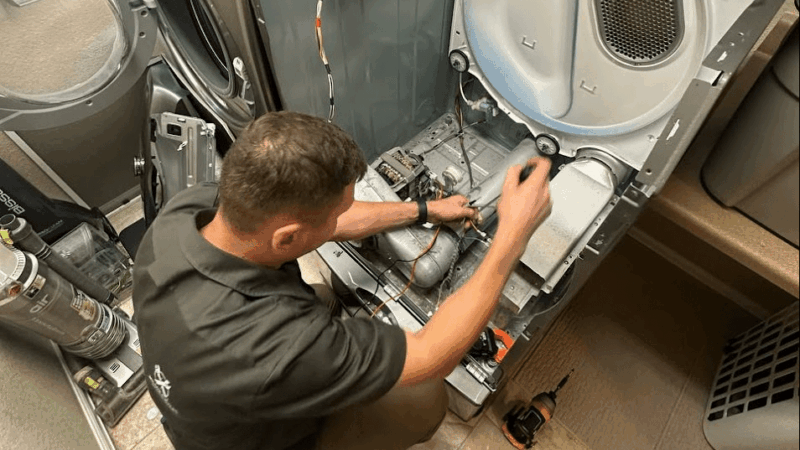
Before diagnosing anything inside the dryer, do this first if you have an electric model. It takes 30 seconds and has saved many service calls.
Electric dryers run on a 240-volt circuit fed by two separate 120-volt legs. If one leg trips silently, the motor keeps running on the other 120 volts, but the heating circuit goes dead. The drum spins, the timer advances, but no heat. This single-leg 240V fault is responsible for roughly 5% of all dryer not heating calls, and it costs nothing to fix yourself.
1
2
3
4
5
The type of dryer determines which failure modes apply. Electric, gas, and heat pump dryers make heat completely differently, and the no-heat diagnosis changes depending on which one you own.
An electric dryer uses a 240V heating element coil. Resistance in the coil converts electrical current into heat. Simple, reliable, and when it fails, usually fixable with a part that costs very little.
A gas dryer uses a burner assembly. A gas valve opens on demand, the igniter glows red and ignites the gas, and a flame heats the incoming air. Gas dryers are common in newer Denver Metro construction. The igniter is the most frequently failed component.
A heat pump dryer uses a sealed refrigerant cycle. Instead of generating heat, it moves heat by dehumidifying the air in a closed loop. Standard on most Miele, Bosch, and Asko models, and increasingly common on premium LG, Samsung, and Whirlpool lines. When a heat pump dryer stops drying effectively, the diagnosis is different from every other type.
The symptom pattern tells you which component family to investigate. Whether you describe it as a dryer not getting hot at all or ask why is my dryer not getting hot mid-cycle, the answer is different depending on your symptom pattern. Skipping this step and going straight to “replace the heating element” is why so many people end up calling us a second time.
Here is the thing most articles skip, and it is the reason we see repeat thermal fuse failures so often in Denver. When you replace a blown thermal fuse without addressing the vent, the new fuse blows again within a few weeks. The fuse did not fail because of a manufacturing defect. It failed because restricted airflow raised the exhaust temperature high enough to trip the thermal protection system.
Lint accumulates in the dryer vent over months. As the duct fills, airflow through the drum slows down. The exhaust temperature climbs. The hi-limit thermostat trips and cycles the heat off early. Clothes need more time to dry. You run two cycles instead of one.
Eventually the exhaust temperature exceeds what the thermal fuse is rated for. The fuse blows. The dryer now has no heat at all, and the vent is the reason. Replace just the fuse and the cycle repeats. Fix the vent first, then replace the fuse, and the new one lasts.
Most clothes dryer not heating, dryer is not heating, and my dryer is not heating situations give you weeks of warning before the thermal fuse finally blows. Watch for clothes that need two cycles to dry fully. A dryer cabinet that feels hot to the touch during a cycle. Lint visible at the outdoor vent cap. A faint burning smell during operation, which often indicates the dryer is overheating.
If you have any of these symptoms and the dryer is still producing some heat, clean the vent now. On an LG dryer the warning may arrive as a code rather than a symptom, because Flow Sense reads the restriction and shows D80 at roughly 80% blockage, in time to act before the thermal protection trips. It is much cheaper than replacing a blown fuse after the fact.
At altitude and in a dry climate, lint compacts faster than it does in coastal areas. Denver homes also frequently have longer roof-vent runs than is ideal, which means buildup accelerates and partial blockages form sooner. At Wilson & Myers, we recommend inspecting and cleaning your dryer vent every six months in Denver Metro, not annually as standard guidance suggests. This is one recommendation we give that most national repair guides do not.
The DIY approach: disconnect the vent at the wall, vacuum what you can reach, then use a dryer vent cleaning brush kit (available at any hardware store) to work through the duct from the outside vent cap. For runs over 15 feet or any duct with bends, professional dryer vent cleaning is worth it. Visit our dryer vent cleaning service page for service across Denver Metro.
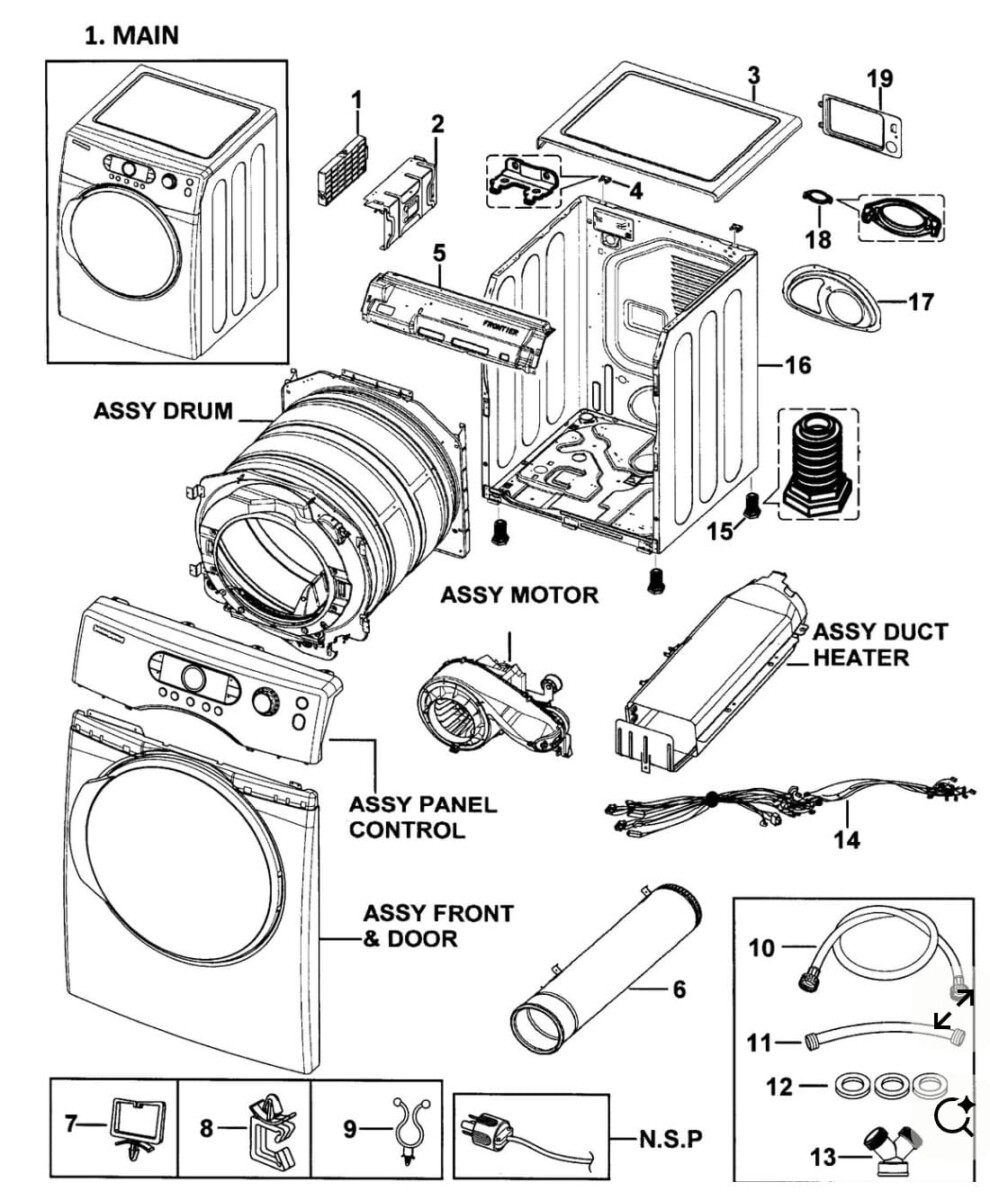
The most common electric dryer not heating cause after vent-related issues. The thermal fuse dryer owners most often deal with is a one-time safety device wired into the heating circuit. When it blows, the dryer runs but produces zero heat. Unlike a breaker, it does not reset. It must be replaced.
Confirm it with a multimeter continuity test: a good fuse shows continuity, a blown fuse shows none. The fuse itself is inexpensive. The repair cost includes the fuse, labor, and ideally a vent cleaning on the same visit so the new fuse does not blow again.
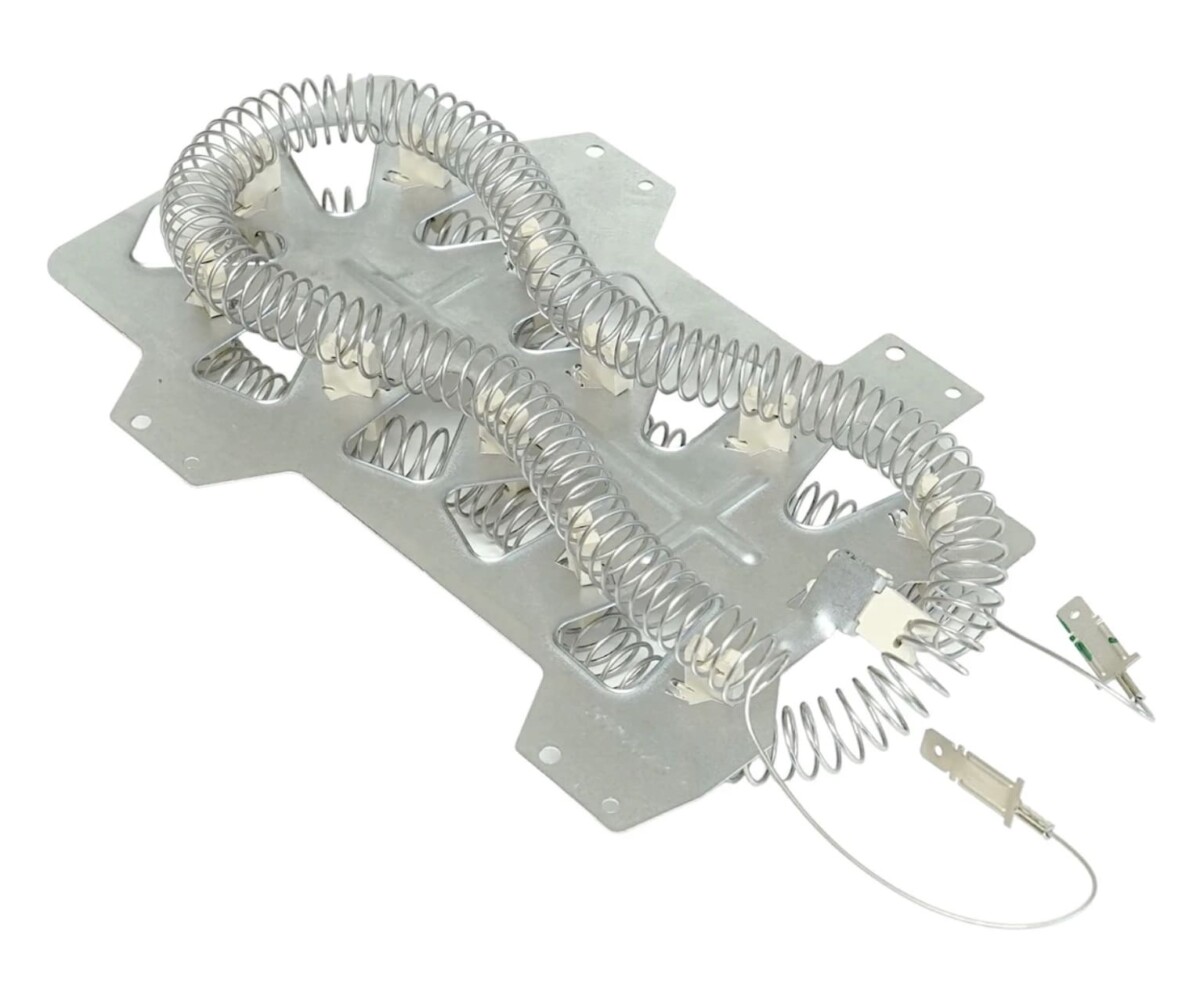
On electric dryers five years or older, the heating element coil is the next suspect. The heating element for dryer models is a resistance coil that heats up as current passes through it. A dryer heating element that has failed opens the circuit completely. Over time, the coil fatigues and develops a break. When it opens, the heating circuit is dead.
A multimeter resistance test tells you immediately: a good element reads 8 to 25 ohms depending on the brand. An open element reads OL (overload, meaning infinite resistance). You may also see the break visually, a gap or charred section in the coil.
At Wilson & Myers, we often find the thermal fuse and heating element have failed together on units eight years or older. Replacing both on the same visit avoids a callback within a few months. For brand-specific details on heating element replacement, see our Samsung dryer not heating guide.
The cycling thermostat regulates the temperature inside the drum throughout the cycle, switching the heating element on and off to maintain the target temperature. The hi-limit thermostat is a safety device that cuts heat if the temperature gets dangerously high.
When the cycling thermostat fails, the heat may cut out mid-cycle and not return. When the hi-limit trips repeatedly because of restricted airflow, it eventually fails in the open position. Both require a multimeter test to confirm. Neither is DIY territory unless you are comfortable working near 240V components.
Newer electric dryers use a thermistor rather than a mechanical thermostat to read temperature. The thermistor sends a resistance reading to the control board, which adjusts heating accordingly. A failing thermistor can cause the board to shut heat off early or run cycles incorrectly. Symptoms are often inconsistent, which makes this one harder to pin down without diagnostic tools.
The least common electric dryer not heating cause. When the control board fails, the heating command never reaches the element. Diagnosis requires ruling out every component above first. Control board replacement is a mid-range repair and makes financial sense only on dryers under eight to ten years old.
A gas dryer not heating follows a different diagnostic path. All the thermal fuse and cycling thermostat logic from the electric section still applies, but the heat source is completely different: gas, not a coil.
The igniter is a small ceramic glow bar that heats to a high temperature to ignite the gas burner. On most gas dryers, it is the most frequently failed component. Ceramic igniters crack with age, usually between five and eight years of use.
There is a useful field diagnostic here. Open the dryer door during a heat cycle, block the door switch with tape, and listen near the burner area. You should hear a click as the igniter activates roughly 30 to 60 seconds in, then a soft whomp as the gas lights. No click at all means the igniter has failed or the control circuit is not sending power to it. A click with no flame usually points to the gas valve.
Gas igniter work is not DIY. Even component-level work on a gas burner assembly involves combustion safety. Call a pro.
The gas valve solenoids are small electromagnetic coils that open and close the gas valve on demand. When one fails, the igniter may glow normally but gas does not flow, so no flame develops. Gas valve failures are less common than igniter failures but not rare on dryers older than seven years.
The flame sensor monitors whether the burner is lit. If it fails or reads incorrectly, the control circuit shuts off the gas valve as a safety response even when the burner is functioning normally. The symptom: the igniter glows, gas lights briefly, then the unit shuts down. The flame sensor is the component that caused the shutdown.
Heat pump dryers are fundamentally different from resistance and gas models, and diagnosing them requires a different mental model. Most articles about dryer not heating do not address heat pump dryers at all. That is a gap we want to fill.
Instead of generating heat with a coil or burner, a heat pump dryer uses a refrigerant cycle to dehumidify the air inside the drum and then recirculate it. The air temperature inside a heat pump dryer is lower than a resistance dryer. Exhaust temperature runs around 38 to 55 degrees Celsius rather than 65 to 80. Clothes come out at roughly the same dryness, just over a longer cycle.
This means a heat pump dryer that is “not heating” in the traditional sense may be working exactly as intended. If your clothes feel slightly warm but never fully dry after the full cycle, that is a real failure. If they come out dry but the process takes longer than a resistance dryer, that is normal.
Premium European brands including Miele, Bosch, and Asko have offered heat pump dryers for years. LG, Samsung, and Whirlpool have rolled out heat pump models on their higher-end lines. All of them require different service approaches than conventional dryers.
The condenser is a heat exchanger inside the dryer that the refrigerant passes through. Lint and fabric fibers collect on the condenser over time and restrict airflow, reducing the efficiency of the refrigerant cycle. Clothes start taking longer to dry. Eventually they come out damp regardless of cycle length.
On most heat pump dryer models, the condenser is owner-accessible. There is a dedicated access door or panel, usually in the lower front of the unit. The manufacturer recommends cleaning it every few months. If you own a heat pump dryer and have never cleaned the condenser, start there before calling anyone. It takes ten minutes and costs nothing.
When condenser cleaning does not restore drying performance, the sealed system is the next investigation. A refrigerant leak causes the dryer to lose its ability to dehumidify the drum air. Clothes stay damp despite long cycles.
A heat pump dryer compressor failure is the most serious possibility. The compressor drives the refrigerant cycle. When it fails, there is no dehumidification and no meaningful drying. Sealed system work requires EPA Section 608 certification and specialized equipment. This is a pro-only repair on any heat pump appliance.
Wilson & Myers services heat pump and ventless dryers including Miele, Bosch, Asko, and the premium LG and Samsung heat pump lines. See our dryer repair service page.
If you are asking “my dryer is not getting hot” and the unit is several years old, the age table below narrows the field considerably. Fifteen years of repairs have given us a clear picture of when specific components tend to fail. This is not universal, but it is accurate often enough to be useful when deciding what to repair and whether it is worth it.
Different brands have different component layouts and known failure patterns. If your dryer is from one of the brands below, we have a dedicated guide with model-specific failure patterns and a step-by-step diagnostic.
For premium and European brands including Miele, Bosch, and Asko, our technicians handle heat pump and condenser dryer service specifically. These models require different parts sourcing and service procedures than mass-market brands. Book a diagnostic if your premium dryer is not drying.
The standard repair-vs-replace rule: if the repair quote exceeds 60% of the cost of a comparable new unit, replacement makes more financial sense. Applied to dryers, the math works out like this.
One thing we say to every customer before we write up a repair ticket: if the repair is not going to make financial sense for your specific unit, we will tell you before we start. That is the Wilson & Myers approach, and it is why we get calls back when the next appliance needs attention.
Most of the dryer heating failures we see were predictable. The warning signs were there for weeks before the thermal fuse blew or the element gave out. A few habits extend dryer life significantly and prevent the most common failures behind why is my dryer not drying, dryer not drying well, and my dryer is not drying calls.
Clean the lint filter every single load. Lint that escapes the filter is what compacts in the vent and eventually causes a no-heat event. This is the single most impactful maintenance habit for any dryer.
Inspect the dryer vent every six months in Denver Metro. The outdoor vent cap is the quick check. If lint is visible at the cap, the duct needs cleaning now, not next season. This is more frequent than general guidance because of Denver’s altitude and dry climate.
Do not overload the drum. Full loads restrict airflow during operation and make the heating system work harder than it is designed to. Over time, this accelerates element fatigue and thermostat wear.
For heat pump dryers: clean the condenser per the owner’s manual schedule. Most manufacturers recommend every one to three months. If that seems excessive, ask yourself how much a sealed system repair costs compared to ten minutes of maintenance.
For gas dryers: a combustion check every few years is good practice, particularly if you notice the igniter clicking more often than it used to before the burner lights.
Wilson & Myers provides dryer repair across Denver Metro Area. Our insured technicians service all electric, gas, and heat pump dryer types from all major brands. Heating elements, thermal fuses, igniters, gas valve solenoids, thermistors, and cycling thermostats for the most common brands are sourced through national supplier networks and manufacturer contracts so most repairs happen on the first visit.
We also specialize in premium heat pump and condenser dryer service for Miele, Bosch, and Asko models that require European-specification parts and different diagnostic procedures.
For dryer vent cleaning, washer repair, and full laundry appliance service, visit our appliance repair services page. For washer-dryer combinations and commercial laundry equipment, see our commercial dryer repair page.
There is no reset for a heating element. When an element fails, it must be replaced. What you can reset: the double-pole circuit breaker at the panel (flip both halves off, wait five seconds, flip both on) and the hi-limit thermostat on some models, which may auto-reset after cooling. If heat does not return within an hour of a breaker reset, the issue is a failed component inside the dryer.
Almost always yes, unless the dryer is over ten years old and the repair cost approaches 60% of what a comparable new unit would cost. A thermal fuse and vent cleaning is a low-cost repair on any dryer. A heating element replacement is a mid-range repair that makes sense on any unit under eight to ten years old. Premium and heat pump dryers are worth repairing at higher cost thresholds.
Yes, if the dryer is under eight to ten years old and the rest of the unit is in good condition. On entry-level dryers, the element replacement cost is still well below what a new unit costs. On mid-tier and premium dryers, the math is even more favorable. The element is not the expensive part of the dryer.
Cold air means the heating circuit is broken. On an electric dryer, run the breaker reset described at the top of this guide first. Then check the thermal fuse with a multimeter. Then test the heating element resistance. On a gas dryer, listen for the igniter click during a heat cycle and watch for a flame. If the igniter does not click, the igniter or its power circuit has failed.
Unplug the dryer. Locate the thermal fuse, typically mounted on the exhaust duct inside the back panel near the heating element housing. Disconnect the wires and test with a multimeter set to continuity. A working fuse gives a continuous tone or reads near zero ohms. A blown fuse gives no tone and reads OL. If blown, replace the fuse and clean the vent before running the dryer again.
Two cycles to dry is the warning stage before complete no-heat failure. In most cases, the dryer vent is partially blocked, restricting airflow and reducing the efficiency of the heat system. Clean the vent first. If two-cycle drying continues after a thorough vent cleaning, the cycling thermostat or heating element is degrading and needs testing.
A heat pump dryer does not generate heat with a coil or burner. It dehumidifies the drum air using a sealed refrigerant cycle, similar to how an air conditioner works. Exhaust air is cooler than a resistance dryer, cycles take longer, and energy consumption is roughly 30 to 50% lower. Failure modes are entirely different: condenser blockage, refrigerant leak, and compressor failure rather than element and thermal fuse problems.
Every six months in Denver Metro, not annually. At altitude with low humidity, lint compacts faster than it does in coastal climates. Many Denver homes also have longer vent runs than recommended. Six-month inspection and cleaning prevents thermal fuse failures, reduces fire risk, and keeps the dryer running at full efficiency. Our dryer vent cleaning service covers the full metro area.
A cracked gas igniter on dryers under seven years old. The igniter is a ceramic glow bar that ignites the gas burner. Ceramic fatigues with heat cycling and eventually cracks. The symptom is a dryer that runs completely normally but produces no heat. The vent blockage and thermal fuse causes that apply to electric dryers also apply to gas dryers since they share the same thermal protection system.
Yes. We service heat pump and ventless dryers from all major brands including Miele, Bosch, Asko, LG, Samsung, and Whirlpool premium lines. Heat pump dryer service requires different parts and diagnostic procedures than conventional dryers. We handle sealed system diagnosis and condenser service. Book online.
Dryer Guides by Brand
Our insured technicians trace the heating chain on dryers across Denver Metro Area. Call Wilson & Myers or book online.
Found This Helpful?
A washer that shakes violently during spin traces to one of seven causes, from a bunched load to a failed drum bearing. Here is the order to check them, and th…
A gas smell during oven preheating is normal for about 90 seconds. Here is how Denver technicians tell routine startup odor from a real gas leak…
You walked into the laundry room and the display is flashing D80. The drum is still turning. You do not know whether to stop the cycle or let it finish. D80 is…
A GE refrigerator not cooling usually falls into one of two failure paths. The question is simple: is the freezer still cold? If yes, the sealed system is inta…
A gas stove clicking but not lighting follows one of three failure patterns. Each one has a different fix. Knowing which one applies tells you whether this is…
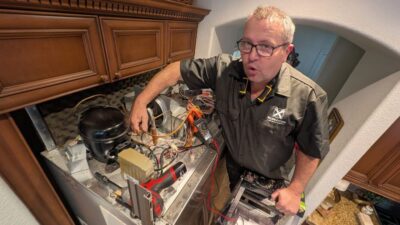
You pull open the freezer on a July evening and find an empty bin. A Frigidaire ice maker not working in peak summer is one of the most frequent calls our Denv…
Welcome to the community.
You'll receive our next expert update soon.

Wilson & Myers is a verified member of the Denver Metro Chamber of Commerce.

