Samsung Refrigerator Not Cooling: Causes and Fixes
Posted

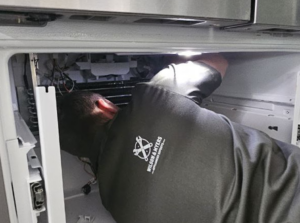
When you open your Samsung fridge, you feel it: warm air, plush produce, the sinking sense that something is amiss. One of the most frequent repair calls to Wilson & Myers is a Samsung refrigerator not cooling, and the good news is that most will be diagnosable and many will be repairable without necessarily having to change the unit. This guide takes you through what precisely is happening, what you can look into yourself, and when it’s time to leave it to the pro.
Why Is My Samsung Refrigerator Not Cooling?
A refrigerator does not make cold it gets rid of heat. Refrigerant moves in a closed circuit, absorbing the heat inside the fridge compartment, and venting it through the condenser coils at the back or bottom of the unit. When any of the cycle fails, cooling ceases. That simple rule will make the rest of this guide far easier to follow. In the event that you would like to read further, here is a quick-reference table of the most common symptoms reported by homeowners when their Samsung fridge ceases cooling:
| Symptom | Most Likely Cause | DIY Check? |
|---|---|---|
| Fridge warm, freezer cold | Evaporator fan or defrost system failure | Yes — see below |
| Both fridge and freezer warm | Compressor, sealed system, or control board | Partial — reset first |
| Thick frost on freezer back wall | Defrost system failure | Yes — manual defrost test |
| Inconsistent temps, overcooling/undercooling | Temperature sensor or thermistor | Partial — note error codes |
| Compressor clicks on and off | Compressor overload or sealed system leak | No — call a pro |
| Display shows error code | Sensor, board, or fan depending on code | Reset first, then call |
Samsung Fridge Not Cooling But Freezer Works
And it is the most frequent situation that we are told about, and it is a helpful diagnostic hint. After concluding that your freezer is maintaining a temperature but the refrigerator portion is hot, it is nearly certain that the compressor and the sealed system is functioning properly. The issue is nearly invariably airflow, rather than refrigerant.
This is how it works: the evaporator coils in the freezer compartment generate cold air, which is pumped into the fridge department by the evaporator fan. When that freezer fan motor stops, the freezer will maintain the same temperature but the fridge will gradually heat up. Likewise, with a failure of the defrost system, ice accumulates on the evaporator coils and physically obstructs the airflow- same effect, different cause.
This particular case; a refrigerator not cooling but freezer works is nearly never a compressor issue on Samsung models less than 10 years old. This difference is important since it is costly to repair a compressor and when a homeowner mistakes a failure in the fan or defrost system with a compressor, the homeowner may pay to have the component repaired when it is not necessary or replace an appliance that did not require replacement.
Common Causes and How to Fix Each One
1. Dirty or Blocked Condenser Coils
The condenser coils emit heat of the refrigerant into the room air. When covered by dust, pet hairs, and kitchen greases, they are not able to cool effectively and therefore the entire system operates at a higher temperature, the compressor is more effective and cooling suffers with time.
On most Samsung models—including the popular Samsung French Door refrigerator and Samsung Side-by-Side refrigerator—the condenser coils are located either at the back of the unit or beneath it behind a removable kick plate. Unplug the refrigerator, pull it away from the wall, and use a vacuum with a long brush attachment to clean the coils thoroughly. This is a maintenance task, not a repair, and doing it once or twice a year adds years to the compressor’s lifespan.
2. Evaporator Fan Motor Failure
Evaporator fan is located at the back of the freezer panel and its job is to transfer cold air in the evaporator coils into the freezer and fridge chambers. The result of this is when it fails, you will experience the usual freezer cold, fridge warm symptom mentioned above.
In addition to the door-switch test described above, you should be able to hear the nature of the sound. The active evaporator fan is a consistent, rather quiet buzz. An unsuccessful one can be heard making a grinding, squealing, or clicking noise intermittently before proceeding to cease completely. With the motor seized, you will hear no sound whatsoever in the inside of the freezer with the compressor running.
One of the simplest repairs on the refrigerator is the replacement of the evaporator fan, the component is cheap, and is available, but it involves removing the back panel of the freezer and being around the coils. Majority of homeowners want this one to be taken care of by a technician.
3. Defrost System Failure
Samsung refrigerators will automatically defrost to melt off any frost on the evaporator coils. In case the defrost heater, defrost thermostat or defrost timer is not working, the ice accumulates continuously until it creates a solid wall preventing any air to pass through.
The giveaway: drawers to the freezer and observe the wall behind. The presence of a thick layer of frost or solid ice, an inch or more deep, can be used to ascertain that the defrost system has failed.
To verify: Unplug the fridge and leave both doors open overnight (24-48 hours) to make sure that all the ice melts away. Then plug it back in and monitor it. In case it cools down, with a few days, and then it slowly heats up again, then it confirms it is a failure of the defrost system. The manual thaw only purchased you time but not the root of the problem, the broken component still needs to be changed.
4. Faulty Temperature Sensor or Thermistor
The thermistor or temperature sensor is a sensor that the control board uses to indicate what temperature each compartment is actually at. When it is reporting incorrect temperatures, the control board might believe that the fridge has already reached the desired temperature and not request cooling, even when the inside is hot enough to cook food.
This usually presents in the form of unreliable cooling and not complete failure: the fridge switches between being too hot and too cold without leveling off, or you find yourself with an error codes appearing on the display repeatedly that is linked to temperature sensing. A technician can check the resistance of a thermistor using a multimeter to confirm its in-spec or replacement.
5. Control Board Issue
The control board integrates all the controls: compressor, the two fan motors, defrost cycle, and all the temperature sensors. The glitch in the board may show itself in virtually any mix of cooling symptoms, which is why it is commonly suspected–not to mention the fact that it is commonly falsely blamed when other causes are not yet known.
Before assuming the board is bad, always try a Samsung refrigerator reset first (full instructions in the section below). Many temporary software and sensor errors are cleared by proper power cycle. When cooling issues are not resolved in a complete reset and the error codes recur, it may be time to change the board, but this, again, should be a diagnosis, rather than a guess, conclusion.
6. Compressor or Sealed System Failure
In case the above do not explain the problem, the problem could be in the sealed system itself, that is, a leak in the refrigerant, a faulty compressor or a clogged drier. These are the most serious causes, least prevalent on units below 10 years of age.
Certain symptoms that lead here: the compressor is kept on continuously, but never a single chamber gets cold; or you hear a clicking noise as the compressor relay makes and breaks unsuccessfully attempts to start; or you find a smattering of a smear of oil at the back of the unit at the base.
Samsung Refrigerator Ice Maker Not Working
If your Samsung refrigerator ice maker is not working around the same time your fridge started warming up, that’s not a coincidence—they’re almost certainly connected. The ice maker will need the freezer to be at about 1517F to make ice consistently. Even a slight temperature change in the freezer, that causes cooling issues, is normally sufficient to stop the production of ice.
Another problem to be aware of Samsung-specifically, the ice maker assembly (a part of the DA97 series) in the French Door models is installed in the freezer door and is a frequent cause of ice accumulation. Frost may also form at the location of that assembly and may even clog the evaporator fan, as well as cause issues with the whole-fridge cooling. In case a failure of the ice maker and the cooling problem occurred simultaneously, then begin with the above defrost system tests and then replace the ice maker itself.
How to Reset a Samsung Refrigerator
A Samsung refrigerator reset is the right first step before any other troubleshooting. It costs nothing, takes about five minutes, and resolves a surprising number of minor sensor glitches and control board errors that can cause cooling problems without any physical part failure.
| 1 | Unplug the refrigerator from the wall outlet completely—don’t just turn it off at the panel. |
| 2 | Wait a full 5 minutes. This gives the control board enough time to fully discharge and clear any stored error states. |
| 3 | Plug the refrigerator back in and listen for the compressor and fans to start up within the first minute. |
| 4 | On models with a digital display, press and hold Power Freeze + Power Cool simultaneously for 3–5 seconds to initiate a forced cooling cycle. |
| 5 | Allow 24 hours for both compartments to stabilize at their set temperatures before deciding whether the problem is resolved. |
When the fridge chills back to normal following a reset and the same issue recurses within a few days, the reset is only an assurance that there is indeed a real hardware issue- it has simply cleared the symptom. A warning that you should call a service when the next malfunction occurs and you have a fridge of rotting food.
When to Call a Pro for Samsung Refrigerator Repair
On a Samsung fridge, you can check a lot and even perform some repairs on it. However, there are repairs that may need the use of a licensed technician with the correct tools, correct parts, and experience to fix the issue in the first attempt. When any of the following situations occur, then you should not do your own troubleshooting:
- ✓
You suspect a refrigerant leak—hissing sounds, oily residue near the compressor, or the unit runs constantly without ever getting cold. - ✓
The compressor won’t start, overheats, or clicks on and off in short cycles. - ✓
Defrost failure keeps recurring—you’ve done the manual thaw and the frost is already back within days. - ✓
Error codes persist after a full reset and can’t be cleared. - ✓
The unit is under Samsung warranty—DIY repairs that open the sealed system or replace control components can void coverage. - ✓
You’re not sure what you’re looking at—misdiagnosis is the most expensive mistake in appliance repair.
Wilson & Myers technicians specialize in Samsung refrigerator repair in Denver and serve the entire Denver Metro area with same-day service on most refrigerator repairs.
And no matter what model you have Samsung French Door, Side-by-side, or Bespoke 4-Door Flex, our technicians come with most of the parts that you need on the truck, which means that most of the repairs will be made in one visit.
And we also service the entire line of high-end refrigerators: Sub-Zero, Thermador, Viking, JennAir, and Gaggenau, so when you have a blend of brands in your house, just make one call.
Samsung Refrigerator Acting Up? We’re One Call Away.
Same-day service over Denver Metro – the majority of Samsung refrigerator repair jobs done in one visit. No guessing, no halting of parts.
The Bottom Line
Majority of the Samsung refrigerator cooling issues can be repaired -and most of them do not require the compressor. Begin with the fundamentals: test your temperature settings, clean the condenser coils, and do a complete power-cycle reset. When your freezer is cold but your fridge is warm, be careful to put your attention on the evaporator fan and the defrost system before thinking that anything worse has happened.
Waiting is the only thing that makes a repair manageable to an expensive repair. The later a cooling problem is resolved, the greater the stress is placed on the compressor. The value of a replacement fan motor today of $200 can save a compressor job of $950 to $1,100 in the future. When you are in doubt of what you are looking at, always the next best thing to do is have an honest diagnosis by a qualified technician.
Published by the service team at Wilson & Myers Appliance Repair — Denver’s specialists in refrigerator, washer, dryer, and wall oven repair. wilsonmyers.co