Samsung Washer Won’t Spin: Front-Load and Top-Load Fixes
A Samsung washer not spinning leaves clothes wet in the drum and the dryer waiting. Samsung's four platforms handle this differently: WF front-load, WA top-loa…

Wilson & Myers repairs Wine Guardian ducted and self-contained wine cellar cooling systems for homes and businesses across the Denver Metro Area. Our insured technicians handle temperature, humidity, and compressor faults.

The Wine Guardian D-series includes the ducted self-contained D025, D050, D088, and the commercial D200. The DS-series adds a ducted split option: DS025, DS050, DS088, and DS200. Both lines serve residential wine cellars and small commercial applications. Split-system architecture keeps the condenser in a remote mechanical space, allowing quiet operation in tasting rooms and dining areas. We service the full Sentinel touchscreen RIC controller on these units, including the !1 and !2 alarm codes that trigger automatic shutdown.
The Wine Guardian D025 is the most common D-series unit we service in Denver homes. Mid-size cellars often run on the Wine Guardian D050 for step-up capacity. Larger residential cellars step up to the Wine Guardian D088 for higher BTU output. The Wine Guardian DS025 separates the noisy condenser from the cellar interior. Mid-tier installs often select the Wine Guardian DS050 for split-system architecture.
Commercial-grade pro split units (SP25, SP50, SP88, SP200) run at higher duty cycles than residential D-series hardware. The commercial ducted DP line (DP25, DP50, DP88, DP200) shares the same elevated duty-cycle rating. Restaurant walk-in cellars, hotel wine programs, and retail wine shops run these models under continuous load. We cover compressor diagnostics, refrigerant service, condenser fouling from kitchen grease aerosol, and RIC controller issues specific to the Pro series. If your Sentinel Pro wine cellar is in a commercial kitchen or back-of-house mech room in the Denver Metro Area, contact us. Wine cooler repair from an insured shop with Pro experience is the right call.
Three water-cooled models serve commercial indoor mechanical rooms where air-cooled condensers would overheat: DP25WC, DP50WC, and WG40WC. These reject heat to a building chilled-water loop or cooling tower rather than discharging hot air into the room. Scale buildup on the heat exchanger and cooling-tower water quality are the dominant service issues. We source replacement heat-exchanger components and service the refrigerant circuit on these commercial-only configurations.
Wine Guardian TTW009 is a compact self-contained through-the-wall unit. Wine Guardian TTW018 is the higher-volume residential model in this product family. Wine Guardian through the wall units serve residential cellars where a ducted system is not practical. Condensate drain line management is the primary seasonal concern. Units discharging into an unconditioned garage or utility room can freeze the drain in winter, triggering a !2 shutdown and cellar temperature loss. We service the full TTW lineup including fan motor replacement and refrigerant recharge.
Wine Guardian CS025 and Wine Guardian CS050 ceiling-mounted split units serve high-end residential Wine Wall installations. Neither a through-the-wall opening nor a floor-level unit fits these design briefs. Evaporator sits flush in the ceiling; the condenser runs remotely. Refrigerant line-set length and ceiling-void clearance directly affect performance at Denver altitude. We handle the full CS-series including line-set inspection, coil cleaning, and refrigerant service.
D025, D050, DS025, and DS050 units produced before 2020 use an earlier copper-coil evaporator design. The Remote Interface Controller (RIC) in these units is no longer manufactured as a new part. Wine Guardian offers an OEM Rework Kit covering the controller, communication cable, and control board. The Kit upgrades these units to modern Sentinel controller compatibility without replacing the entire system. This is the correct path for a Legacy unit with a controller or board fault, not a coil fault. We install the Rework Kit and restore full digital alarm-code support on pre-2020 hardware that competitors may decline to service.
Copper-tube evaporator coils in pre-2020 D025, D050, DS025, and DS050 units develop pinhole leaks at solder joints. Four to six years of thermal cycling is the typical trigger in that copper-coil design. Aluminum-tube, aluminum-fin coils in post-2020 Sentinel hardware have a different fatigue profile. The symptom is gradual cooling loss over weeks before a complete shutdown. EPA-608 certification covers both the leak repair and refrigerant recovery, evacuation, and recharge. Replacement coils for current Sentinel units are sourced through national supplier networks and manufacturer contracts. Book online if your cellar has been slowly warming without a visible fault code.
A !1 alarm code forces an immediate compressor shutdown to protect the refrigerant circuit. The root causes in most Denver calls are dirty condenser inlet filter, blocked condenser exhaust, and less than three feet of clearance. Ambient temperatures above 105 degrees Fahrenheit also trigger this fault. The HP switch resets via the red push button at the compressor housing after you clear the airflow obstruction. If the unit trips again within 48 hours, the root cause has not been resolved. Front Range pollen and construction dust clog condenser filters significantly faster than the national average. We service the full HP-switch diagnostic including condenser fin cleaning, filter replacement, and clearance assessment.
A !2 alarm code trips when the condensate overflow float switch activates. Biofilm and dust accumulate in the drain line over one to two seasons, restricting flow until standing water reaches the float switch. A hot-water flush with diluted bleach typically clears the blockage. TTW units in unconditioned spaces face a second failure mode. The condensate line can freeze in winter when the mech room drops below 32 degrees, blocking drainage and tripping !2 even with a clean line. We service the complete drain system including line clearing, float-switch testing, and winterization guidance for units in unheated spaces.
Ice formation on the evaporator coil restricts airflow and progressively reduces cooling capacity before causing a full shutdown. Restricted return airflow, setpoint below 55 degrees Fahrenheit, and low refrigerant charge are the three primary causes. In Denver’s dry climate the humidity available for frost formation is limited, which means icing events are less frequent than in humid climates. When a Denver unit does ice up, low refrigerant charge is the cause in roughly 80 percent of cases rather than airflow or humidity factors. This distinction matters for diagnosis: the fix is a refrigerant service call, not an airflow adjustment. Our technicians confirm charge status before defrosting the coil.
Residential Sentinel compressors reach end of life between years seven and ten. Commercial Sentinel Pro units under continuous restaurant or retail load may reach that threshold between years five and eight. Repeated HP-switch trips that went unresolved accelerate compressor wear by forcing high-head-pressure starts. Compressor replacement is a sealed-system job requiring EPA-608 certification, refrigerant recovery, and deep vacuum before recharge. For units approaching ten years with a sealed-system fault, the repair-or-replace framework below gives an honest decision guide. Wine Guardian’s Platinum Extended Warranty covers compressor and coils for five additional years on qualifying units if purchased before failure.
The Remote Interface Controller (RIC) on Sentinel units manages setpoint, humidity display, alarm logic, and communication with the control board. Three failure modes cover most controller calls. The first is RIC display freeze. The second is communication loss between the RIC and control board, producing a blank screen or persistent alarm with no clear cause code. The third is temperature thermistor drift that causes the unit to overcool or undercool against a setpoint. E1 (fan motor) and E2 (temperature sensor) codes from the service-tech convention isolate two of the three. Pre-2020 Legacy units have no digital codes, making sensor failures purely symptom-based until the OEM Rework Kit upgrades the controller.
Wine Guardian units use two parallel code systems. Current Sentinel units with the touchscreen RIC display OEM codes (!1, !2) as alarm events. The service-tech community uses a separate E-code convention (E1 through E4) to describe individual component failures. These codes appear in third-party technical resources and some dealer service sheets. Both systems are listed below. Legacy pre-2020 units have no digital display; they are diagnosed by symptom only until an OEM Rework Kit upgrade installs a modern controller.
!1: High Pressure Switch Fault
System: OEM Sentinel touchscreen RIC
Meaning: Compressor shutdown triggered by high-side pressure exceeding safe limit.
First step: Clear condenser inlet filter, restore minimum 3-ft exhaust clearance, allow unit to cool 15 minutes, reset HP switch (red push button at compressor). If it trips again within 48 hours, schedule a service call.
!2: Condensate Switch Fault
System: OEM Sentinel touchscreen RIC
Meaning: Float switch activated by standing water in condensate pan; automatic shutdown protects cellar from overflow.
First step: Clear drain line with hot water flush and diluted bleach. In winter, check for frozen drain line on TTW units in unconditioned spaces. Confirm float switch action manually before restart.
Flashing Temperature Value
System: OEM Sentinel touchscreen RIC
Meaning: High or low temperature alarm; cellar temperature has drifted outside the configured alarm band.
First step: Check cooling capacity, door seal integrity, and condenser airflow. If temperature is rising without a !1 code, a refrigerant charge issue or fan fault is likely.
Flashing Humidity Value
System: OEM Sentinel touchscreen RIC
Meaning: High or low humidity alarm; relative humidity has drifted outside the configured alarm band.
First step: In Denver, a low-humidity alarm most often means the cellar needs an add-on humidifier or a Wine Guardian humidifier rebuild. The cooling unit alone does not actively humidify. Denver ambient RH in winter can fall below 30 percent, pulling cellar humidity below the 50-70 percent storage band.
E1: Fan Motor Malfunction
System: Service-tech aftermarket convention (not OEM official)
Meaning: Condenser or evaporator fan motor failure; condenser fan is the more frequent failure point.
First step: Inspect fan motor wiring to control board. Listen for motor hum without blade rotation, which indicates a seized motor rather than a wiring fault.
E2: Temperature Sensor Issue
System: Service-tech aftermarket convention (not OEM official)
Meaning: Temperature thermistor reading outside expected range; can cause overcooling, undercooling, or erratic setpoint behavior.
First step: Clean sensor area and check for physical obstructions or cable damage. A sensor reading ambient rather than cellar temperature will cause the compressor to run continuously.
E3: Compressor Failure
System: Service-tech aftermarket convention (not OEM official)
Meaning: Compressor not starting or running; can indicate a hard electrical failure or a refrigerant-side condition (loss of charge, locked rotor).
First step: Verify power supply continuity to compressor terminals. Inspect refrigerant lines for visible oil staining that suggests a leak. Do not attempt multiple restart cycles if the compressor is not engaging.
E4: Power Supply Problem
System: Service-tech aftermarket convention (not OEM official)
Meaning: Control board or 24V transformer failure, often from voltage sag or surge damage.
First step: Check circuit breaker, verify outlet is properly grounded, and measure voltage at the unit’s input terminals. Voltage below 108V or above 132V (for a 120V unit) can trigger control board faults.
Legacy pre-2020 note: D025, D050, DS025, and DS050 units built before 2020 display no alarm codes. All diagnosis is symptom-based until the OEM Rework Kit upgrades the controller to the modern Sentinel RIC with full digital alarm support.
Denver sits at 5,280 feet above sea level. Air density at that elevation is approximately 17 percent lower than at sea level. This reduces condenser heat rejection and evaporator airflow CFM for any given unit rating. A Wine Guardian unit sized for a sea-level cellar of a given volume is effectively undersized for the same cellar in Denver. Our technicians apply a 1.15 to 1.20 multiplier when evaluating capacity against actual cellar volume. Generic shops without altitude experience skip this step.
Denver’s low ambient humidity is the second climate factor that drives service calls. Summer relative humidity in the metro area averages near 45 percent; winter values fall below 30 percent regularly. Wine cellar storage requires 50 to 70 percent relative humidity to prevent cork desiccation and oxygen exchange. Wine Guardian cooling units do not actively humidify. A cellar operating in Denver without an add-on humidifier or Wine Guardian humidifier model will drift into low-humidity territory. The Sentinel RIC will trigger a flashing humidity alarm when the band is breached. We service Wine Guardian’s humidifier line and Humidifier Rebuild Kit, and we install standalone humidifier units paired with existing cooling hardware. Our wine cellar refrigeration service covers the full humidity-management picture alongside sealed-system refrigerant work.
Front Range pollen and construction dust clog condenser inlet filters faster than the humid-climate average. HP-switch trips are the most frequent service call pattern we see on Wine Guardian units. Our insured technicians carry condenser filter replacements for D-series and TTW units. Full condenser fin cleaning is part of every sealed-system call. For commercial Sentinel Pro units in restaurant mech rooms, grease aerosol compounds the dust problem and warrants annual condenser service.
Wine Guardian built its Sentinel Pro SP and DP lines specifically for commercial duty. The SP and DP lines address the gap between residential D-series cooling and true commercial wine cellar cooling requirements. SP25 through SP200 pro split units handle the continuous cycling a restaurant wine program or hotel cellar demands. DP25 through DP200 commercial ducted units are built for the same duty. Residential D-series hardware is not rated for that load profile. Running residential units in commercial settings compresses the compressor lifespan to three to five years. We diagnose and repair the commercial Sentinel Pro lineup, including compressor short-cycling under high duty loads and condenser-side fouling from kitchen ambient grease.
Water-cooled DP25WC, DP50WC, and WG40WC variants serve indoor mechanical rooms where air-cooled condenser discharge is not acceptable. Scale accumulation on the heat exchanger and cooling-tower water quality are the two service issues specific to these models. We source heat-exchanger components for water-cooled variants through our commercial parts pipeline. IT equipment rooms using Wine Guardian hardware at a different setpoint fall under the same Sentinel Pro service scope.
Commercial wine cellar installations in Denver Metro Area restaurants, hotels, and retail locations often involve multiple brands. We service Breezaire and EuroCave alongside Wine Guardian, making cross-brand comparisons straightforward when evaluating replacement hardware. Wilson & Myers services all three lines. If your commercial cellar runs a mixed fleet, a single insured technician who knows all three platforms reduces downtime and coordination overhead across service calls.
Wine Guardian hardware has a real service life. These four scenarios cover the most common decision points we encounter on Denver service calls.
Under 7 Years: Non-Sealed-System Fault
Repair without hesitation. Board failures, fan motor replacement, sensor swaps, drain line service, and filter work on a unit under seven years old all extend service life. Done right, these repairs deliver a decade or more of additional life at a fraction of replacement cost. This is the most common scenario on Denver residential D-series and TTW units.
7 to 10 Years: Minor Fault
Repair tilts toward the correct answer for non-compressor, non-coil faults. The unit has life remaining. A fan motor or board replacement at year eight on a Sentinel D-series with no prior sealed-system work is economically sound. Sealed-system faults in this age bracket move to the conversation below.
Pre-2020 Legacy Unit: Non-Coil Fault
The OEM Rework Kit is the correct path. A D025, D050, DS025, or DS050 with a controller or board failure does not need replacement if the compressor and coils are healthy. The Kit upgrades the unit to modern Sentinel controller and alarm-code support. This is a repair-positive outcome that extends service life for units that competitors without the Rework Kit experience may decline to work on. We install and commission the OEM Rework Kit on pre-2020 hardware.
10-Plus Years: Sealed-System or Compressor Failure
This is a conversation, not a guaranteed repair recommendation. A ten-year-old unit with a failed compressor or a leaking evaporator coil warrants a cost comparison against a replacement Sentinel unit. Wine Guardian’s Platinum Extended Warranty covers compressor and coils for five additional years on qualifying units if purchased before the failure event. If the unit is still under Platinum coverage, repair is almost always the right answer. Outside of Platinum coverage at this age, we present both options honestly and let you decide.
No. We service Wine Guardian hardware the way a good auto shop services a car. That means OEM-compatible parts, technical knowledge of the product line, and no manufacturer overhead built into our pricing. EPA-608 certification covers all sealed-system refrigerant work on Sentinel D-series, Pro, TTW, and CS-series units. Independent Wine Guardian reviews confirm the brand’s commercial-grade reliability across residential and restaurant deployments.
Residential Sentinel D-series, DS-series, TTW, and CS units typically last eight to twelve years. Routine filter maintenance and one or two service calls over the lifecycle are usually all it takes. Commercial Sentinel Pro units in continuous-use restaurant or hotel applications reach seven to ten years before sealed-system fatigue becomes a factor. Denver’s dust load shortens the interval between condenser cleanings, but altitude and dry climate do not materially compress compressor lifespan on properly sized units.
Wine Guardian publishes installation and operation manuals for current Sentinel models on the official wineguardian.com support section. Models covered include D-series, DS-series, Pro SP/DP, TTW, and CS-series units. Legacy manuals for pre-2020 D025, D050, DS025, and DS050 units are also archived there. For OEM Rework Kit installation instructions, contact Wine Guardian tech support directly through their site. The Wine Guardian thermostat manual for Sentinel units is also available from the same support portal.
!1 and !2 are OEM Sentinel alarm codes for high-pressure switch and condensate switch faults respectively. They are manufacturer-published and appear on the touchscreen RIC. E1 through E4 are service-tech convention codes used in field diagnostics and third-party resources. The four codes are: E1 fan motor, E2 temperature sensor, E3 compressor, E4 power supply. The full reference for each code and its first-step diagnostic is in the error-code section above. Legacy pre-2020 units display no codes.
Yes. We install new Sentinel D-series, DS-series, TTW, and Pro units in residential and commercial cellars across the Denver Metro Area. This includes humid-climate humidifier add-ons recommended for Denver dry-climate applications. If you are adding a Wine Guardian humidifier to an existing cellar, we handle the full installation. The same applies when replacing an old unit with a new Sentinel model. We also source Wine Guardian units through our parts and equipment supplier network.
Yes. Commercial Sentinel Pro SP and DP series, water-cooled DP25WC, DP50WC, and WG40WC variants are within our commercial service scope. Restaurant cellars, hotel wine programs, and wine retail storage in the Denver Metro Area are standard commercial calls. We understand the higher duty cycles and the condensate and condenser fouling patterns specific to commercial kitchen environments. Visit our appliance brands we service page for the full commercial brand list.
Yes. We cover the full Denver Metro Area. Service cities include Boulder, Highlands Ranch, Centennial, Parker, Castle Rock, Littleton, Englewood, Lakewood, Arvada, Westminster, Thornton, and Aurora, among others. The 31-city location strip below lists every city we serve. Wine Guardian service calls in outlying metro communities are standard scheduling for us.
Yes. Beyond Wine Guardian, we service Breezaire, EuroCave, Wine Enthusiast, and WhisperKool units in the Denver Metro Area. If your cellar runs a brand not listed here contact us. You may also reach this page searching “wine gaurdian” by common transposition. The wine cooler repair service page covers our full cross-brand residential and commercial wine cooling scope.
Ducted systems fail quietly, and the bottles feel it first. Give us the serial plate, the cellar reading and how long the unit runs before it stops, and we send an insured technician.
Repair guides, maintenance tips and troubleshooting walkthroughs written by our insured technicians.
A Samsung washer not spinning leaves clothes wet in the drum and the dryer waiting. Samsung's four platforms handle this differently: WF front-load, WA top-loa…
You opened the KitchenAid freezer this morning and the bin was empty. In my experience, the arm is the first thing worth checking: the fix costs nothing and ta…
A Frigidaire oven not heating can come down to a setting rather than a part. Before you book a repair, two checks cost nothing and take under a minute: the clo…
A Whirlpool dryer that tumbles but never heats traces to one of five faults, and three of them cost nothing to check. Here is the order to work through them, p…
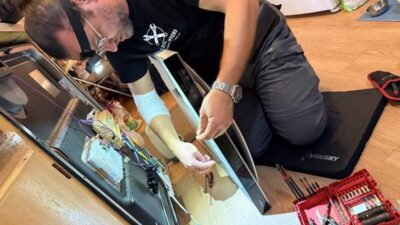
F8 E4 means water reached the drip tray, not a fill fault. Here is the two-step reset and why it can fire on a brand-new install with a dry tray…
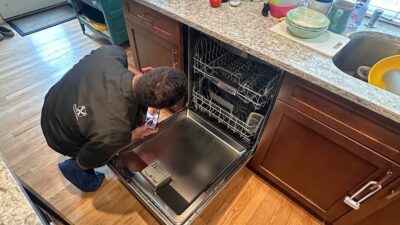
A Bosch dishwasher E22 error means one thing: the filter is blocked, and there is probably water sitting in the bottom of the tub…
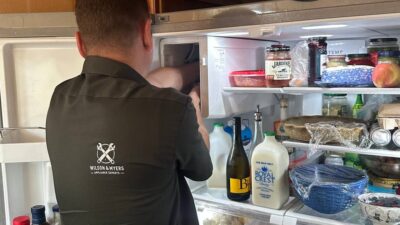
A Frigidaire refrigerator not cooling is not always a broken refrigerator. The display on the door settles that question in about ten seconds…
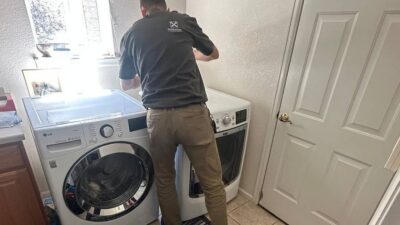
You walked into the laundry room and the display is flashing D80. The drum is still turning. You do not know whether to stop the cycle or let it finish. D80 is…
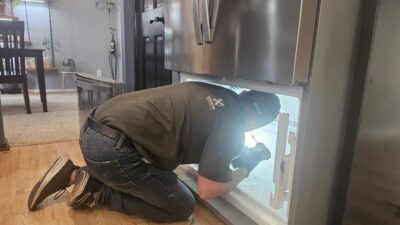
A GE refrigerator not cooling usually falls into one of two failure paths. The question is simple: is the freezer still cold? If yes, the sealed system is inta…
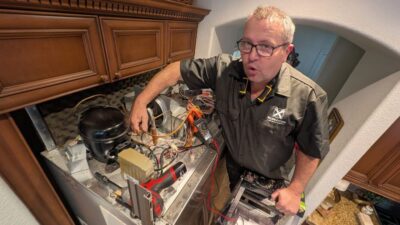
You pull open the freezer on a July evening and find an empty bin. A Frigidaire ice maker not working in peak summer is one of the most frequent calls our Denv…
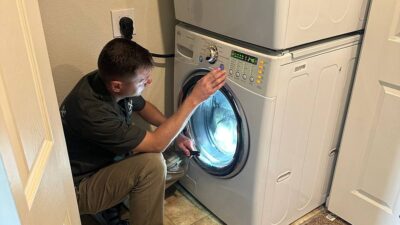
The LG washer UE code means the machine detected an unbalanced load during the spin cycle and stopped to protect the drum and bearings. UE is protection not br…
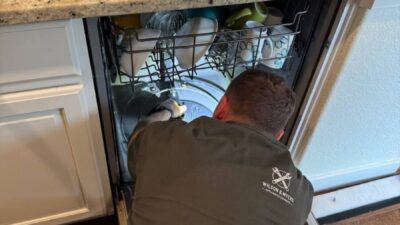
E24 on a Bosch dishwasher means the drain cycle did not complete. A clogged filter basket is the cause in most cases. If the filter is clear, the drain pump or…
Wilson & Myers dispatches insured technicians to homes and businesses running Wine Guardian cooling systems throughout the Denver Metro Area.
From temperature and humidity faults to compressor and control-board repair, Wilson & Myers services the full Wine Guardian line across the Denver Metro Area.
Is your appliance broken? Our experts offer top appliance repair services with genuine parts and proven techniques for quick fixes. Refrigerators, washers & more!
Downtime in business? Get fast commercial appliance repair with authentic parts & advanced methods. Perfect for restaurants & offices!

Professional appliance installation by insured technicians following industry standards. Safe setup for ovens, dishwashers and more, so you avoid DIY errors!

Wilson & Myers is a verified member of the Denver Metro Chamber of Commerce.


