

Need a Professional Hand?
If a DIY fix isn't enough, our insured technicians are just a click away. We’ll diagnose the issue and get your home running right again.
BOOK NOWAt the end of the washer cycle, you open the washer and discover that there is a tub of standing water. The clothes are wet and the machine did not finish and you do not know why. A washer not draining water is one of the most common repair calls we get at Wilson & Myers. The good news: the causes are mostly of a few definite categories. Others you can have done within ten minutes. There are others requiring a technician. Both are discussed in this guide.
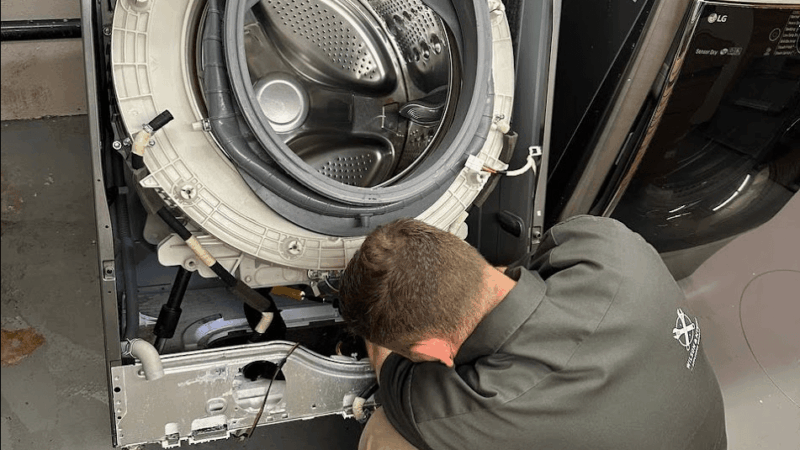
Before you pull the machine out from the wall, match your symptom to the most likely cause. This takes about 60 seconds and points you to the right section below.
This is the number one reason a washing machine not draining water on front-load machines, first thing to check if a washer drain clogged and can be fixed within ten minutes without any tools. The drain pump filter (also known as a coin trap) filters lint, hair, coins and other small objects before they reach the pump. With time, it becomes crammed solid and water does not flow through.
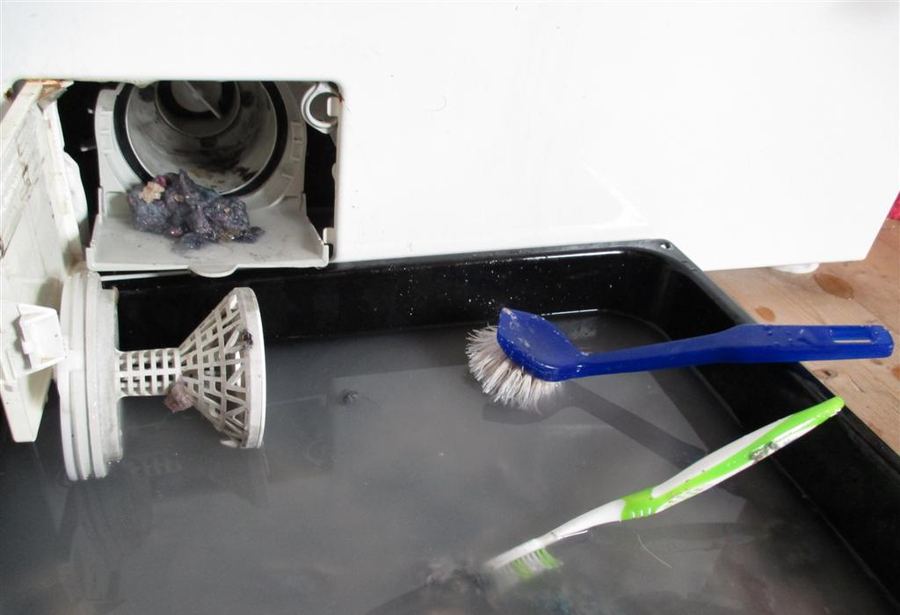
On most front-loaders (Whirlpool, Samsung, LG, and Maytag) the filter is positioned behind a small access door on the bottom front of the machine. It’s the first component we check on any washer not draining front load call.
How to clean it:
Top-load washers do not necessarily have a filter that is accessible – debris passes directly to the pump. Start with Cause #2, in case you have a top-loader.
The drain hose is a pipe that runs back of the washer into a standpipe or utility sink. Three things can go wrong in this: when the hose is pushed too close to the wall, it kinks behind the machine, or it becomes clogged with lint over the years, or it gets stuck too deep in the standpipe, forming a siphon that pulls the water back in.
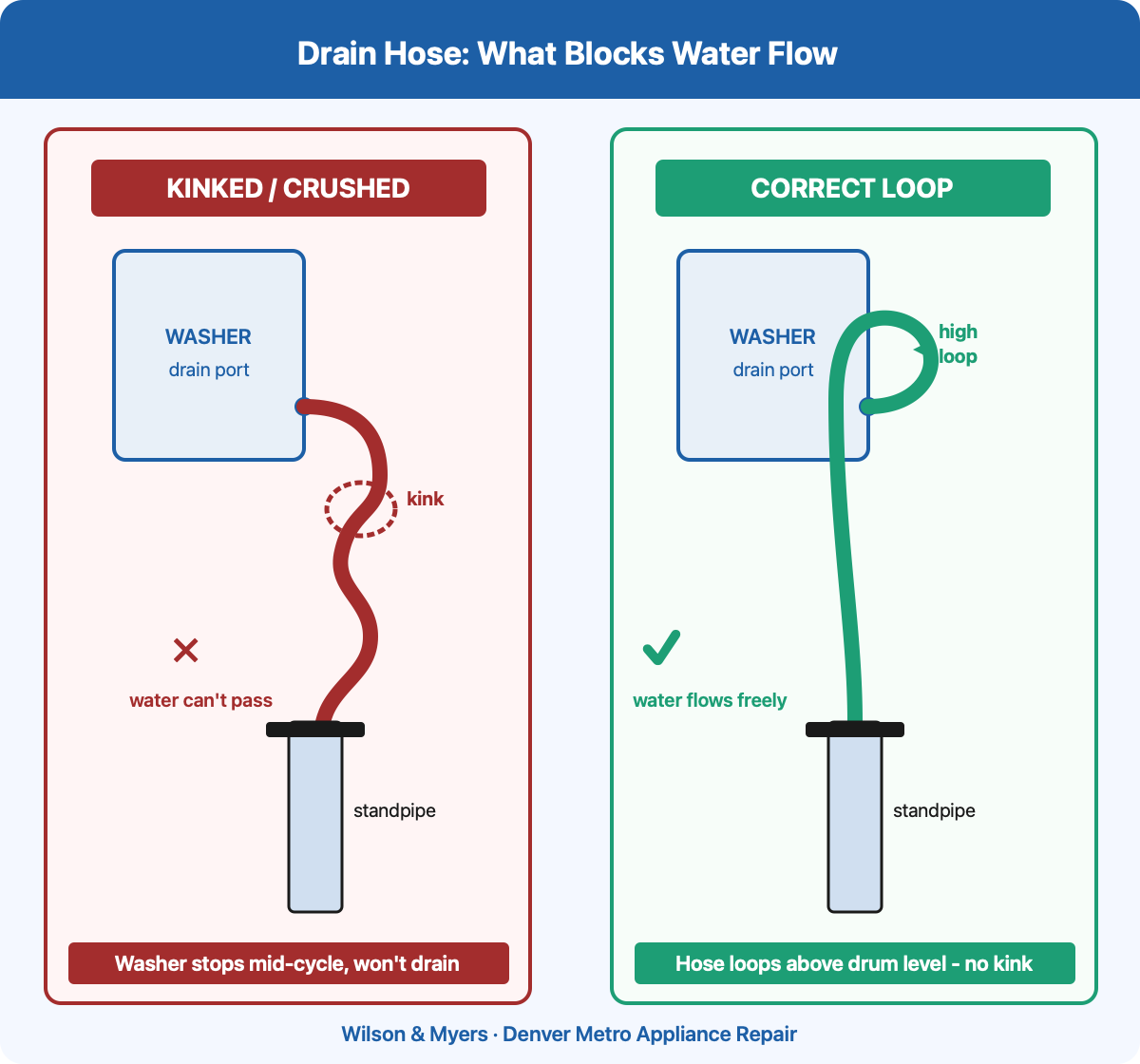
Take out the washer and visualize the hose of the machine at the back of the machine up to the point where it enters into the drain. Straighten any kinks. When you think there is a clog, remove the hose and run a long flexible brush against the hose. And test the depth of the insertion: the end of the hose must be 30-96 inches off the floor according to specifications. Go too deep and you have siphoning. Too superficial and it will not drain anywhere.
The washing machine drain pump physically moves water out of the tub. When it breaks, you generally hear it a loud humming or grinding sound as the motor struggles in vain to rouse water. In nine out of ten cases, a small item (a coin, bra wire, button) is stuck in the pump impeller and preventing it to spin.
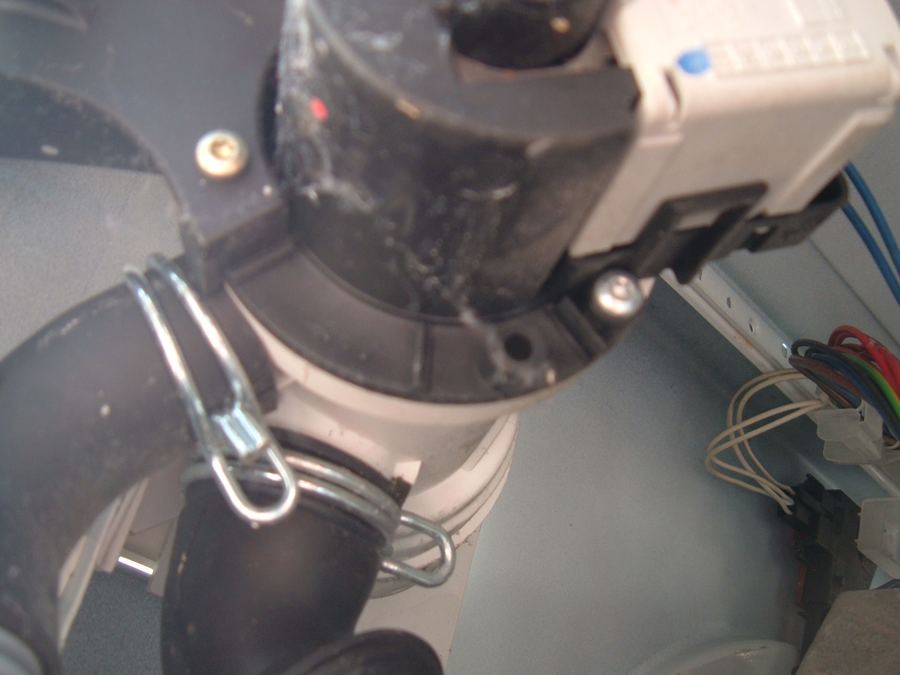
The pump can be accessed depending on the model, but it can usually be accessed by taking off the front panel or tilting the machine back. When the obstruction is not the problem, and the pump motor itself is burned out, you are considering washer pump replacement, and it is a DIY that is easy enough to do when you are a skilled homeowner. Should the motor freeze and you are smelling of burning plastic, call a technician.
Wilson & Myers handles pump replacements on all major brands. If you’re not comfortable pulling the pump yourself, professional washer repair in Denver is a call or text away.
Top-load washers have a lid switch – a tiny safety gadget which informs the machine that the lid is open or closed. A failure in the switch causes the machine to believe that the lid is left open and halts the cycle, that is, no draining, no spinning. It is easy to test: with the machine open, use your finger to press the switch. A definite click should be heard. No click indicates that it has probably failed.
Instead, front-loaders have a lock assembly and door latch. Failure to turn on the latch will result in the machine not running. When it malfunctions halfway down the line, the door remains shut and water will remain. Replacing a top-loader lid switch is a simple DIY project – typically two screws and a wire connector. A front-loader door latch (particularly on the Bosch, Miele or LG) is more engaged, but can still be reached.
This is not an appliance issue, but a plumbing issue. If the standpipe or sewer line is partially blocked, the washer will drain slowly or back water up into a nearby sink. Symptoms to look out: water taking too long to drain through other fixtures in the laundry, the draining of the washer gurgles, or the backing up of water.
In case any other drains around are slow as well, terminate troubleshooting the washer and call a plumber. There’s nothing wrong with the machine.
Not common, though, and should be checked in case everything is otherwise fine and the machine continues to show a fault. The pump is fed by the drain signal sent to it by the control board. In case of a board error or sensor problem the drain cycle does not begin. The error code will normally appear on the machine. Some typical drain-related error codes:
Step 1: Find the specific code of your model. Then power cycle – disconnect the machine 60 seconds, reconnect it and run a drain cycle. In the event of a reoccurring error, a technician must figure out whether it is the board, one of the sensors or a wiring connection. Then, do not change the board on a code alone – that is a costly component that is not always the cause of the problem.
Immediately you would require removing standing water before you can diagnose the problem and here is how it can be done safely. Never run the spin cycle to push the water out – this may cause the pump to break even more.
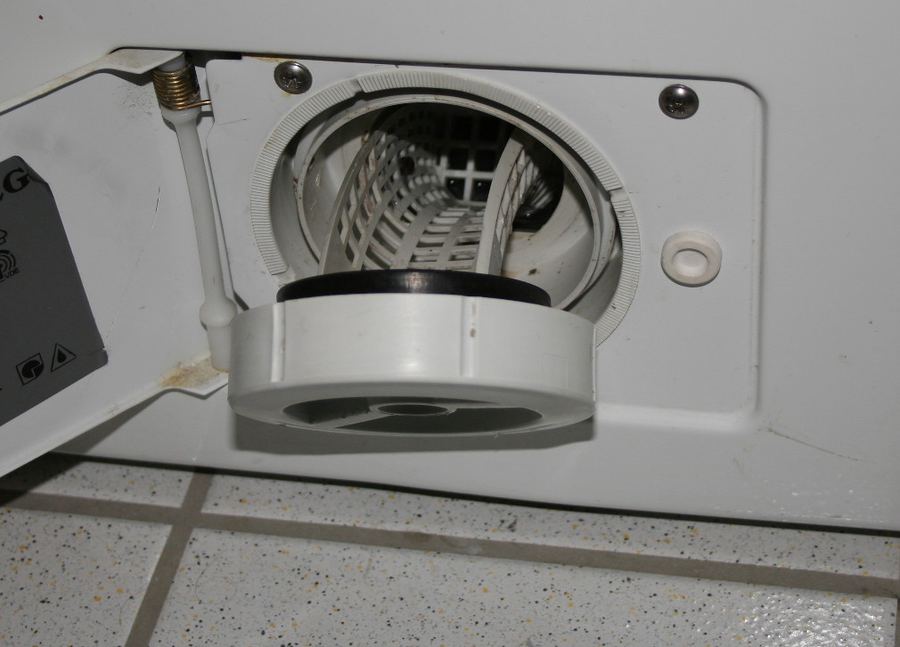
A Whirlpool washer not draining is almost always a pump filter clog or a failed lid switch on top-loaders. The front-load models of Whirlpool (and their models under the Maytag brand name) share the same filter housing – that is behind a rectangular panel located on the bottom right. Something unique to Whirlpool: when the machine has an F21 error and is not draining, this error code indicates the draining cycle took more than 8 minutes. Clean the filter. When the F21 returns after cleaning, then that probably means the pump is about to get its end.
A Samsung washer not draining typically shows a 5E or nF error code. The pump filter is located at the bottom front of Samsung front-loaders, although they do have a small debris trap within the door gasket, which homeowners can easily overlook – look in the rubber bellows to see whether there are coins or hair ties trapped in the folds. The drain errors in Samsung top-loaders with the ActiveWash or Digital Inverter motor can also be thrown when the sump hose is kinked at the bottom of the tub. Should the 5E not be resolved with a filter clean, do not jump to the conclusion that the pump is dead but instead, remove the machine and check the hose routing.
An LG washer not draining shows an OE error (outlet error). LG front-loaders are especially vulnerable to pump filter accumulation due to the fact that the filter chamber is located at a slight angle – debris compact easily. LG also has a mesh pre-filter on some models which is installed within the pump housing itself; again, when the main filter cover appears clean, but the OE is present, a look inside the mesh is worth considering. On LG top-loaders, one of the most frequent offenders is the drain hose loop – LG needs a type of high-loop installation at the rear of the machine. Siphoning can lead to intermittent failures of the drain, which will appear like a pump issue, should the hose be rerouted or dropped anywhere.
A Maytag washer not draining usually comes down to one of two things depending on the model. In Maytag front-loaders (which are based on the same platform as Whirlpool) the filter location and the F21 error behavior are the same as on Whirlpool above. The more frequent failure mode in Maytag top-loaders (especially the Bravos and the Centennial) is the pump itself, and not a filter, as those models do not have a coin trap accessible to users. When you can hear a loud humming sound in the drain cycle but no water is passing, then there is most certainly something stuck in the pump impeller. Another common failure in these machines is lid switch failure – the actuator tab on the lid breaks and the machine will halt half way through its cycle believing the lid to be open. See whether the tab is correct before ordering a complete switch assembly.
For a related washer issue, see our guide on Maytag washer stuck on sensing.
One of the most frequently occurring combinations of symptoms that we see is a washing machine not draining or spinning at the same time, and it nearly always has just one cause of the problem, rather than two issues. Majority of the washers have a safety interlock installed in them so that the spin cycle does not run until the tub has emptied. In case there is an obstruction of the drainage, then the machine will also not rotate. The causes above are precisely the same fixes. Fix the drainage problem – empty the filter, repair the hose, change the lid switch – and the spin feature just about always recovers its proper operation. Should the washer still fail to spin despite drainage being re-established, then the spin motor or drive belt should be examined separately.
Repairs on drains are filter cleaning, replacement of hose, replacement of pump or lid are generally only a fraction of the price of a new machine. As a principle: as long as the washer is below 10 years of age and the repair is less than 50 percent of the replacement, then repair is the better option.
Complete the above steps first. Majority of the draining problems can be resolved in less than 30 minutes by DIY. Call us when:
✓ Pump motor is dead (it has a burning smell, there is no hum at all during drain)
✓ An error code persists after a full power reset.
✓ You have a complicated front-loader (Bosch, Miele, LG) of which there is a problem with the door latch.
✓ Water is flooding in other fixtures – plumbing call we will tell you so.
✓ You have tried all the above and the machine does not drain.
If you’ve worked through the basics and your washer is still full of water, our Denver technicians can diagnose and fix the problem.
A blocked drain pump filter, a kinked or blocked drain hose or a broken lid switch or door latch are the most frequent reasons. On front-loaders, start with the pump filter – check – 10 minutes, no tools. Check the drain hose and then the lid switch on top-loaders.
Unplug the machine. Place towels under the access panel (front-loaders) or beneath the drain hose (top-loaders). Slowly open the filter cap or lower the hose end to let water drain by gravity. Never run the spin cycle to push it out – this will break the pump.
Almost always, yes. A majority of washers have a safety interlock, which does not allow spinning until the tub is emptied. Correct the drainage issue and the spin feature normally resumes automatically. When the spinning is still missing after drainage has been reinstated, then the spin motor or drive belt will require a separate diagnosis.
Yes, in most cases. Drain repairs usually cost around 100-250 including labor, which is less than 500 or more to replace the machine. In the case of washers that are less than 10 years old, repair is nearly always economical. Wilson & Myers will provide you with a true estimate before a work begins.
This normally indicates a door latch malfunction, a control board malfunction or an obstructed pump filter that is causing an error code. See the display first with a fault code (OE on LG, 5E on Samsung, F21 on Whirlpool). In case there is no code set, then begin with the pump filter, this is most likely the most frequent cause on a front-loader.
A blocked pump, clogged filter, or failed drain hose stops a washer from draining. Wilson & Myers repairs all brands across the Denver Metro Area. Book online to schedule your visit.
Found This Helpful?
A residential dishwasher leaking from bottom rarely fails where the dishwasher puddle on floor tiles appears. Pull the kick panel; the highest wet surface mark…
A Samsung washer not spinning leaves clothes wet in the drum and the dryer waiting. Samsung's four platforms handle this differently: WF front-load, WA top-loa…
It is a week before Thanksgiving, and you set the oven to 350 degrees before starting the stuffing. Forty minutes later, the preheat signal fires. That is roug…

Has your refrigerator water dispenser stopped delivering water? In my experience, a large share of these calls end before a technician arrives. A child lock ac…
You open the dishwasher after the cycle and the plates look exactly as you loaded them: dry, cold, with last night's dinner still caked on. Your dishwasher is…
A Whirlpool dryer that tumbles but never heats traces to one of five faults, and three of them cost nothing to check. Here is the order to work through them, p…
Welcome to the community.
You'll receive our next expert update soon.

Wilson & Myers is a verified member of the Denver Metro Chamber of Commerce.


