
Need a Professional Hand?
If a DIY fix isn't enough, our insured technicians are just a click away. We’ll diagnose the issue and get your home running right again.
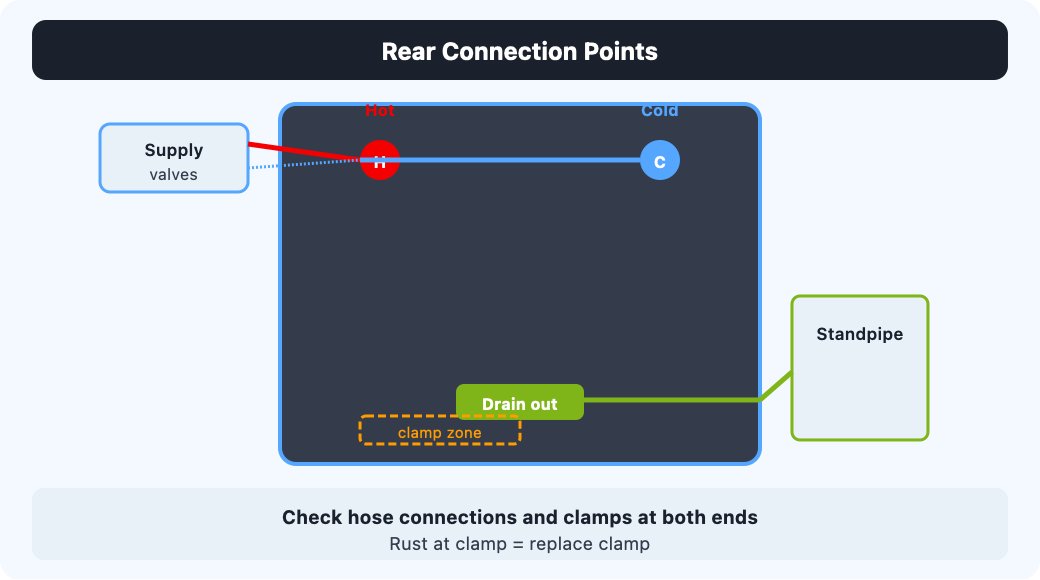
BOOK NOWThe water appears after the spin cycle ends, or while the machine is still running. A washer leaking from the bottom can mean anything from a loose hose clamp to a tub bearing failure that warrants a repair-vs-replace conversation. This guide maps the six causes by when they happen, tells you what to check, and shows you which fixes are within homeowner range.
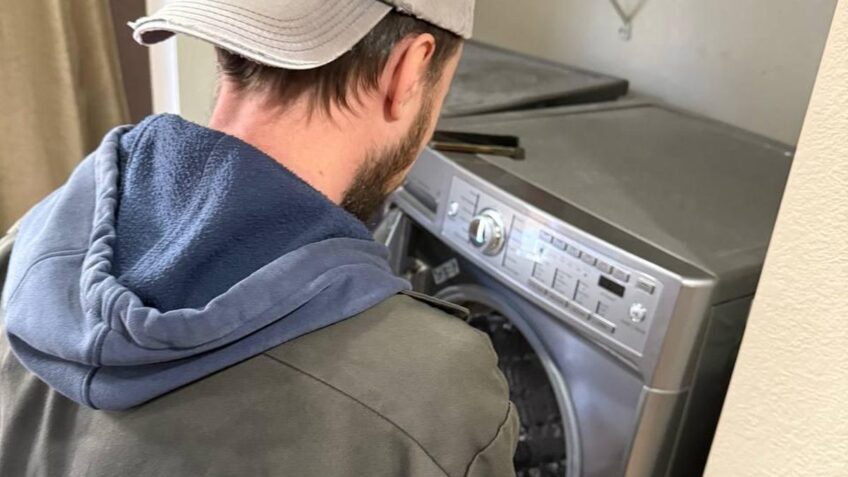
A washer leaking from the bottom most often traces to a failing drain pump or a loose hose connection. On front-loaders, a torn door boot seal is the next most common cause. Detergent overflow and a loose hose clamp are the exceptions you can fix yourself. The cycle phase when water appears is the fastest diagnostic clue.
When a washing machine leaking from bottom leaves a puddle, the cycle phase when water appears is more diagnostic than where the puddle sits. Fill-cycle water points to the supply side. During wash, the culprit is usually the door boot seal or excess suds. Drain-and-spin leaks mean the drain pump or drain hose. A puddle that appears under a machine that has been off for hours almost always traces to the inlet valve weeping slowly.
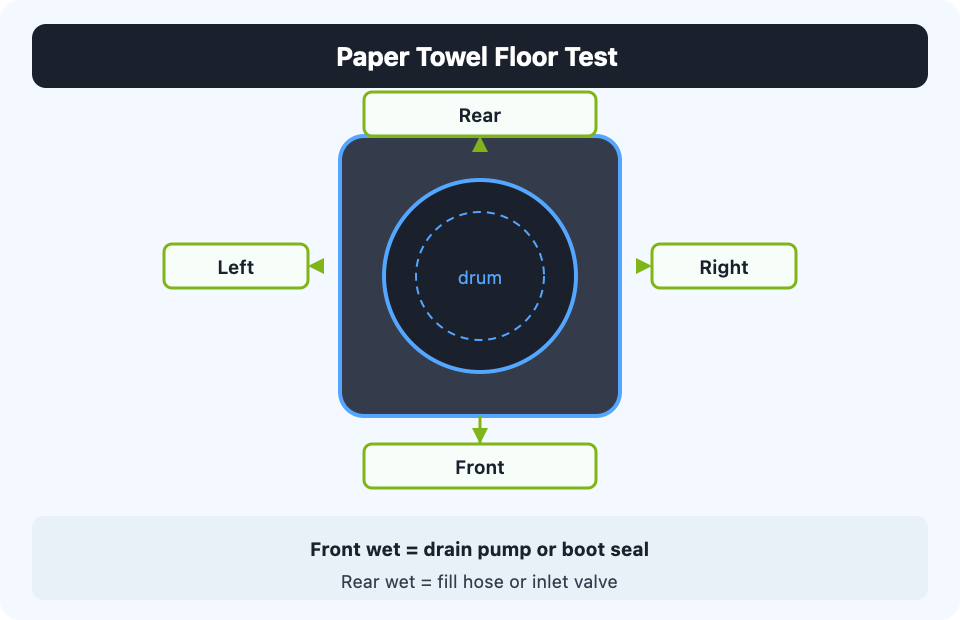
Dry paper towels laid flat around the machine perimeter before you run a cycle identify the leak source by showing which side gets wet first. Place towels at the front, rear, and both sides. Run a short cycle and check which towel is wet. The paper towel floor test identifies leak source by quadrant before you open anything up.
The drain pump fails more often than any other part on both front-load and top-load machines. During drain and spin, it runs under pressure to push water through the drain hose. When the housing cracks or the pump seal degrades, water escapes at the pump body. The puddle tends to appear at the front-bottom on front-loaders or bottom-center on top-loaders, growing with each drain cycle.
We see pump housing cracks regularly in Denver Metro Area homes where washers sit in garages with hard temperature swings. Thermal cycling turns micro-fractures into visible cracks over time. A pump housing crack causes drain-cycle leak because pressure peaks precisely when the component is most stressed.
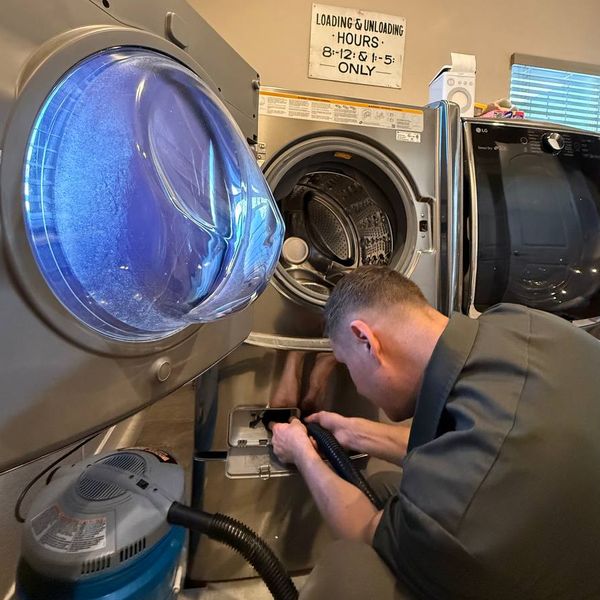
On most front-loaders, a clogged or loose filter cap is the one cause a homeowner can clear without opening the cabinet. The access panel sits at the bottom-left front. Put towels down, pull the small drain hose inside the door to drain residual water, then unscrew the filter cap slowly. Clear any coin, hairpin, or underwire fragment from the chamber. A filter cap not seated fully is itself a common leak source. Cracked pump housing or a damaged pump seal is a professional repair.
If your washer is also failing to drain water entirely, see our guide on why a washer is not draining for the full diagnostic path.
Washing machine hoses fail two ways. Rubber ages. Clamps corrode. Both fail quietly. The external fill hoses crack from age and mineral buildup after five to seven years; the metal band clamps on internal hoses lose tension from vibration. The external drain hose develops cracks at its bends. Any of these lets water escape during fill or drain before it ever reaches the drain pump.
Wet towels at the rear during a fill cycle point toward the fill hose connections. Wet towels at the front or side during the drain cycle point toward the drain hose route. To inspect the internal tub-to-pump hose, remove the lower access panel. Check the washing machine hoses and the hose clamps at both ends. Rust stains around the clamp mean corrosion. Replace the clamp.
Tightening a loose hose clamp and replacing a cracked fill hose are both within homeowner range. When reinstalling, hand-tight plus a quarter turn is correct torque; overtightening cracks the brass ferrule. If the internal tub-to-pump hose clamp has corroded into the hose body, call a technician. Our washer hookup and installation service can confirm correct hose routing if you have recently moved the machine.
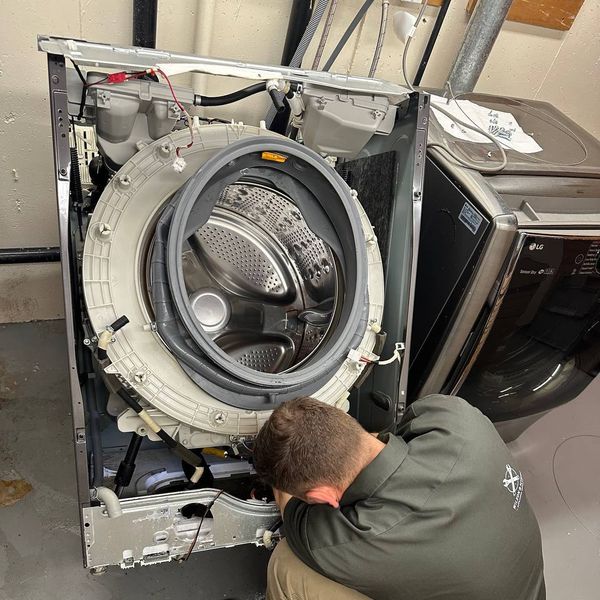
Front-loaders only. The door boot seal, also called the door gasket, is the pleated rubber ring bridging the outer tub and the door opening. If the boot tears from a foreign object or from mold eating the rubber, water exits through the tear and drips from the machine bottom during the wash or agitate phase. This cause does not exist on top-load washers.
Open the door and pull the bottom fold of the boot forward toward you. The door boot bottom fold is tear-prone zone because water pools there during every wash. Run a finger along the inner surface; tears are often small enough to miss on sight alone. A front load washer leaking from bottom during the wash cycle with no drain pump symptoms usually traces here.
Smell mold? Check the boot first. Samsung WF-series front-loaders produced before 2019 are well-documented for door boot deterioration driven by mold in the bottom fold. Samsung DC64-02805A door boot seal part number fits many WF42, WF45, and WF50 variants; confirm your model number before ordering. The AddWash models carry a secondary door seal that can fail separately. A Samsung washer leaking from bottom is worth checking the boot before any other component on the WF-series. An LG washer leaking from bottom during the wash cycle traces to the boot first as well. Leaving the door ajar after every load is the single most effective mold-prevention step for both brands.
Boot seal replacement involves removing the front panel, releasing the retaining ring, and re-seating the new boot evenly around the tub flange. The job runs one to two hours. Professional help is worth it.
Tub bearing failure is the most destructive cause on this list. When the bearing wears out, the tub shaft wobbles, tears the tub seal, and water exits from the bottom during the spin cycle.
Listen first. On top-load machines, the tub seal wraps around the agitator shaft where it passes through the outer tub bottom. When the bearing behind that seal wears out, the shaft wobbles, the seal tears, and water drips from the bottom-center during spin. A top load washer leaking from bottom during spin is the classic presentation. On front-loaders, the drum shaft bearing is pressed into the rear of the outer tub; worn races produce a grinding or rumbling sound before the tub seal fails and water appears.
Tub seal failure exits bottom-center on top-loaders. Wet towels dead-center are the tell. Unplug the machine. Rock the drum side-to-side. More than a few millimeters of play indicates worn bearing races.
On the Whirlpool Cabrio and Maytag Bravos direct-drive platform, bearing and seal come as one combined kit. The Whirlpool Cabrio bearing kit W10435302 includes the outer bearing, inner bearing, tub seal, and snap ring. A Whirlpool Cabrio washer leaking from bottom almost always follows the same sequence: months of loud spin noise, then a small water stain that grows. GE and Kenmore top-loaders on similar platforms share this pattern. For other Maytag top-loader symptoms, see our guide on Maytag washer stuck on sensing.
The bearing failure almost always announces itself with noise before water shows up. If your washer sounds like a jet engine on spin, that is your early warning, not a bad load.
Ryan Sutton, Lead Laundry Systems Tech, Wilson & Myers
This repair is not DIY. Tub bearing and tub seal replacement on a top-loader means removing the entire outer tub and pressing the bearing out with specialty tools. If your machine is more than eight to ten years old, the repair cost versus replacement cost conversation is worth having before you approve the repair. Our insured technicians can assess whether the repair makes financial sense on your specific model year.
No failed component here. HE (High Efficiency) washers, which covers virtually every front-loader and most top-loaders sold after 2008, are designed for a very small amount of HE-labeled detergent. Too much detergent creates more suds than the drum can hold. The suds expand beyond the drum, travel through the detergent drawer and its overflow channel, and appear at the front or bottom during the first agitation phase, not during drain or spin.
Use less detergent. HE detergent one tablespoon per load max is the manufacturer guideline. Run a cycle with no detergent at all. If the floor stays dry, detergent overflow is confirmed. Switch to an HE-labeled liquid and measure at the lowest marked line on the cap. No technician visit needed. Why is my washer leaking water from the bottom only during wash? Detergent overflow is the answer when the timing is wash-only and no pump noise is present. If you are asking why is my washing machine leaking only in the wash phase, start here before booking any service. Rule this out before booking a service appointment, especially if washer leaking water from bottom began around the time you changed detergent brands.
A machine that leaks when off has one culprit. The water inlet valve is the electrically-controlled solenoid that opens during the fill cycle. Its plastic body can crack from age or water hammer stress. Inside, a rubber diaphragm can also deteriorate, allowing the valve to weep even when the machine is off. A washing machine leaking underneath from the inlet valve drips behind the rear panel and migrates forward until it appears at the bottom front.
Check for dampness where the fill hoses connect at the rear. The valve sits right there. Remove the rear panel. Replace the valve, or call a technician if the housing has cracked. The valve is a moderately straightforward replacement when the housing is intact. A technician confirms the failure mode before ordering the part, since a cracked housing requires a different repair path than a failed diaphragm. We source parts through national supplier networks and manufacturer contracts for brand-matched replacements.
Three causes are DIY. Adjusting detergent, tightening or replacing a fill hose, cleaning the pump filter. Everything else needs a pro. The drain pump requires housing assessment before replacement. Door boot replacement means removing the front panel and re-seating the boot with even tension around the full circumference. Tub bearing replacement requires specialty tools and is not a homeowner job.
Call us if the cause is unclear. Our insured technicians across the Denver Metro Area provide washer repair service and can confirm the cause before ordering any part. Any water leaking from bottom of washer that has already reached drywall or subfloor: contact appliance repair service immediately. Water damage costs more to remediate than any washer repair.
The questions below cover the most common causes, timing clues, and safety steps.
A washer leaking from the bottom most commonly traces to a failing drain pump or pump seal, which lets water escape during the drain and spin phases. A loose or cracked hose connection is the second most common cause. On front-loaders, a torn door boot seal also causes bottom leaks during the wash cycle. Identifying when in the cycle the water appears is the fastest way to narrow the cause.
Water reaches the floor from underneath when a component inside the cabinet fails. The drain pump and its connecting hoses sit at the bottom of the machine, so pump seal failure sends water downward and outward. On top-loaders, a worn tub seal around the agitator shaft also allows water to exit from the bottom-center during spin.
Six parts cause most washing machine leaks: drain pump or pump seal, hose connections, door boot seal (front-load only), tub bearing and tub seal, excess detergent overflow, and a cracked water inlet valve. The cycle phase when water appears (fill, wash, drain, spin, or off) identifies which of the six is responsible.
Stop the machine. A washer leaking from the bottom is dangerous when ignored. Standing water near electrical components creates a shock risk. Water that reaches the subfloor or wall framing causes structural damage quickly, and small leaks from cracked pump housings or inlet valves grow with each cycle. Unplug the machine and shut off the supply valves immediately.
A front load washer leaking from the bottom during the wash cycle almost always traces to the door boot seal, the rubber gasket around the door opening. A tear in the bottom fold lets water exit during agitation. Front load washer leaking from bottom during drain or spin points instead to the drain pump or its connecting hose. Samsung and LG front-loaders are particularly prone to door boot mold deterioration.
Yes. Any washing machine can leak from the bottom. Water exits from underneath when internal components fail: the drain pump, hose connections, tub seal, or water inlet valve all sit at or near the bottom of the cabinet. Identifying which cycle phase produces the puddle points directly to the failed part.
Wilson & Myers provides washer repair across the Denver Metro Area, including Denver, Boulder, Lakewood, Aurora, Littleton, Englewood, Sheridan, Wheat Ridge, Edgewater, Golden, Arvada, Westminster, Thornton, Northglenn, Commerce City, Brighton, Broomfield, Superior, Louisville, Lafayette, Longmont, Erie, Centennial, Greenwood Village, Cherry Hills Village, Glendale, Parker, Castle Rock, Highlands Ranch, Lone Tree, Morrison, and Castle Pines. Book online or call a pro to confirm availability.
A tub bearing or pump replacement is a job for an insured technician. We source parts through national supplier networks and serve the full Denver Metro Area.
Found This Helpful?
A residential dishwasher leaking from bottom rarely fails where the dishwasher puddle on floor tiles appears. Pull the kick panel; the highest wet surface mark…
A Samsung washer not spinning leaves clothes wet in the drum and the dryer waiting. Samsung's four platforms handle this differently: WF front-load, WA top-loa…
It is a week before Thanksgiving, and you set the oven to 350 degrees before starting the stuffing. Forty minutes later, the preheat signal fires. That is roug…
Has your refrigerator water dispenser stopped delivering water? In my experience, a large share of these calls end before a technician arrives. A child lock ac…
You open the dishwasher after the cycle and the plates look exactly as you loaded them: dry, cold, with last night's dinner still caked on. Your dishwasher is…
A Whirlpool dryer that tumbles but never heats traces to one of five faults, and three of them cost nothing to check. Here is the order to work through them, p…
Welcome to the community.
You'll receive our next expert update soon.

Wilson & Myers is a verified member of the Denver Metro Chamber of Commerce.


