
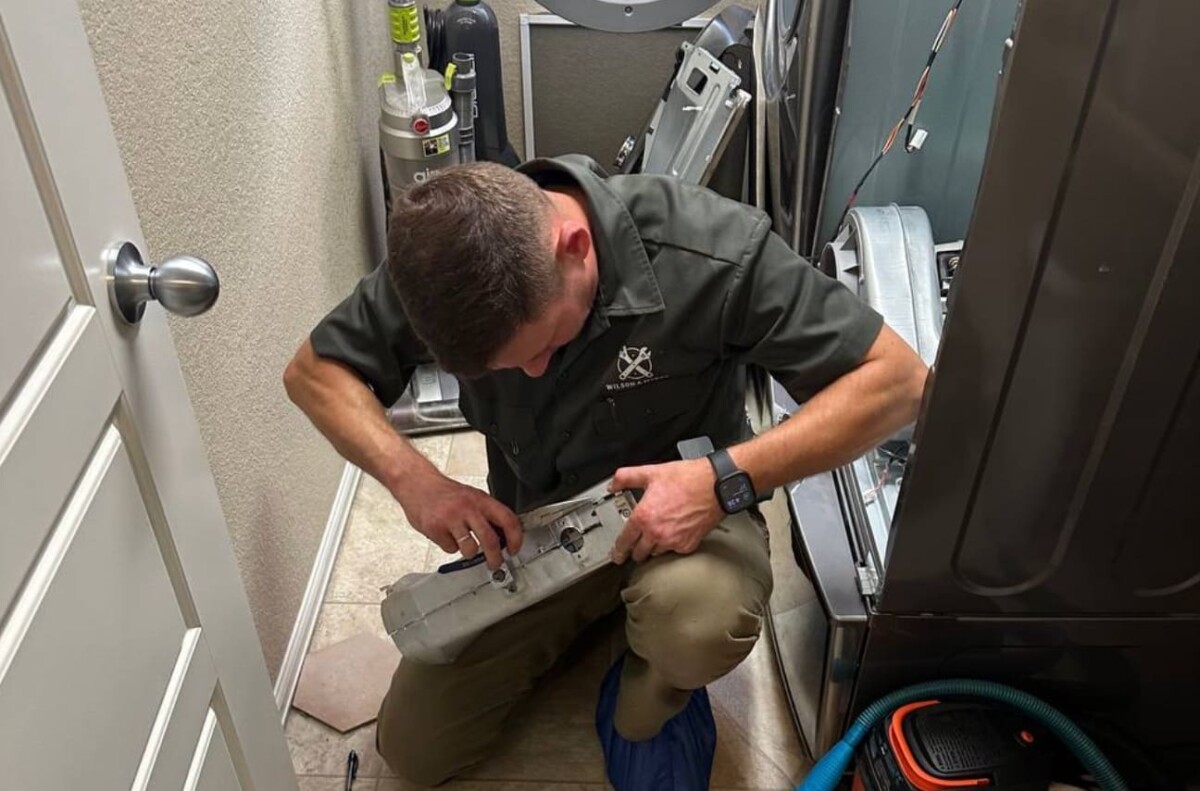

Need a Professional Hand?
If a DIY fix isn't enough, our insured technicians are just a click away. We’ll diagnose the issue and get your home running right again.
BOOK NOWA dryer that won’t start usually fails for one of six reasons: power supply, door switch, thermal fuse, start switch, control lock, or motor coupling. Six causes. One diagnostic path. Most homeowners narrow it down in 60 seconds with a quick outlet and breaker check, then a multimeter when the panel works but the dryer won’t start.
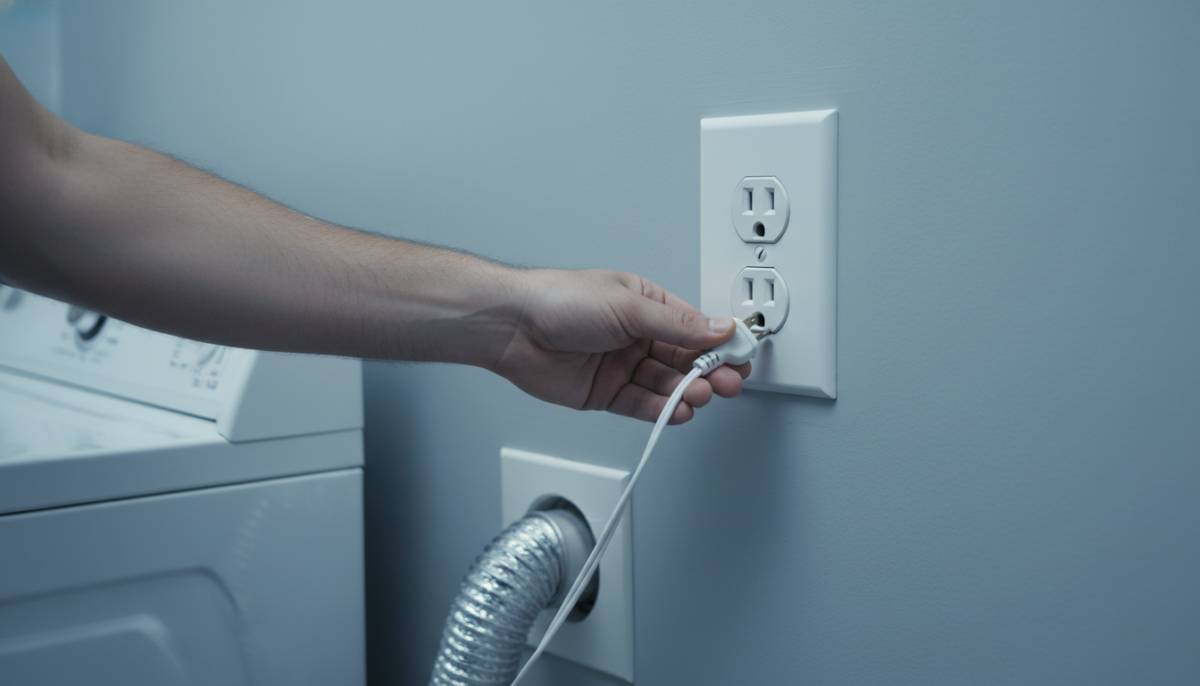
About one in five “dead dryer” calls we receive resolves here, with no tools and no parts. Before chasing any component, spend 60 seconds ruling out a power-side cause.
Plug a lamp into the same outlet the dryer uses. No power means the problem is upstream of the dryer. Check the breaker panel next. Electric dryers run on a double-pole 240-volt circuit, and a tripped breaker will have one leg in the middle position rather than fully to one side. Push it all the way off, then back on.
If the outlet is live and the breaker is fine but the dryer still shows no power, inspect the power cord visually for cracks or damage. Cracked insulation is a fire risk. A damaged plug or cord with cracked insulation needs replacement before any further diagnosis. Gas dryers use a 120-volt outlet rather than 240 volts but follow the same breaker-check logic.
If your dryer is still under warranty, opening the panel or replacing parts may void coverage. Confirm warranty status before going further.
Power confirmed good on all three checks? The fault is inside the unit, so move to the six causes below.
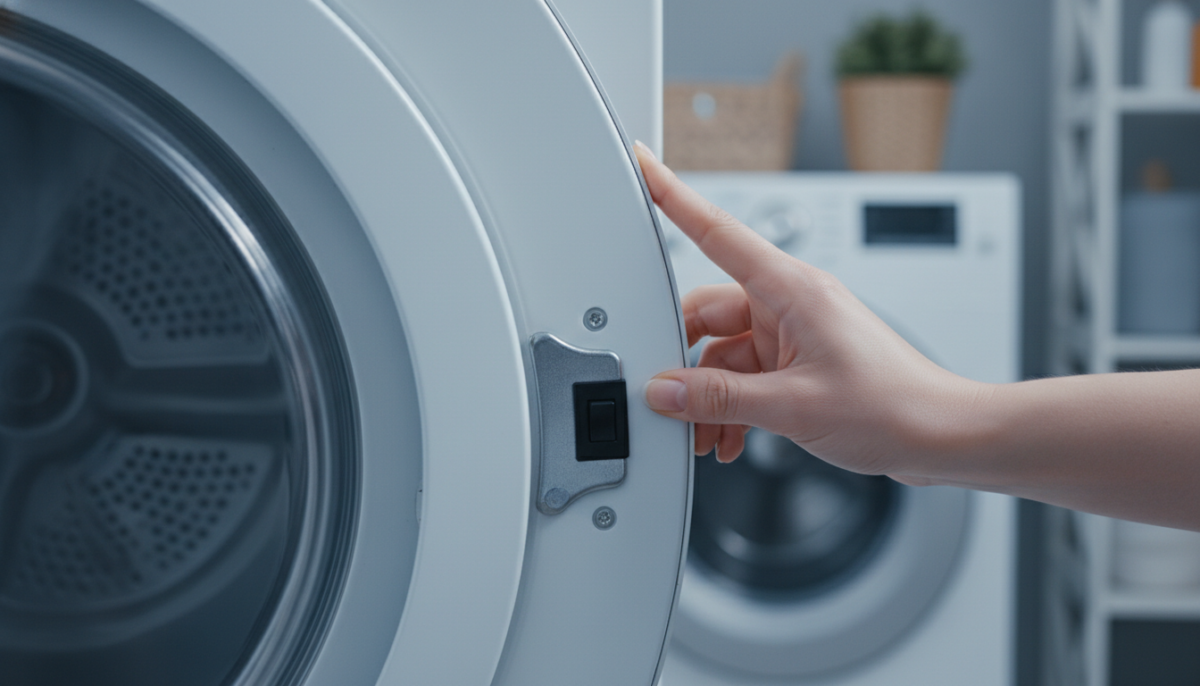
Listen for the click when you close the dryer door. That click is the door switch completing the start circuit. No click means no start. The switch is a small mechanical micro-contact that wears after thousands of door cycles, making it one of the most predictable failure points on any dryer older than five years.
Panel lights on, no response to the Start button, no audible click: that combination points directly here. Try closing the door firmly. A worn door catch can let the door seat fractionally out of alignment, and even a small gap is enough to keep the switch from completing the circuit. A multimeter continuity test on the switch terminals confirms whether the switch is open. Difficulty: 2 of 5. A confident homeowner can swap the part in about 30 minutes.
Always unplug the dryer before testing any internal component. The 240-volt circuit on an electric dryer is lethal.
This one-time safety device opens permanently at about 196 to 220 degrees Fahrenheit, and unlike the hi-limit thermostat it cannot reset itself. On most modern dryers, the thermal fuse sits in the start circuit, not just the heating circuit. A blown fuse leaves the unit completely dead.
It is the most common single-component failure on a dryer that will not start. The fuse is one-time only. The fuse blows from sustained overheating, almost always caused by a restricted vent. Once a lint-clogged vent backs heat up into the cabinet, the fuse opens. Replacing the fuse without clearing the restriction means the replacement blows within days. Clearing the restricted vent is a separate step before the new fuse will hold. Per NFPA data, restricted vents are a leading cause of residential dryer fires in the US.
Never bypass the thermal fuse with a wire or jumper. It is a one-time fire-safety device. Bypassing it removes the protection that prevents a vent-clog overheating event from becoming a dryer fire.
Set a multimeter to continuity and probe the two fuse terminals. Zero continuity on a cold fuse means it has blown. Replace it, then clear the vent. Both repairs are required before the fuse will hold. If the fuse blew but the dryer still turns on and just runs without heat, that is a different fault. See our guide on why your dryer isn’t heating for that diagnostic path. If you smell burning when you first press Start, check our dryer odor guide first. Difficulty: 3 of 5.
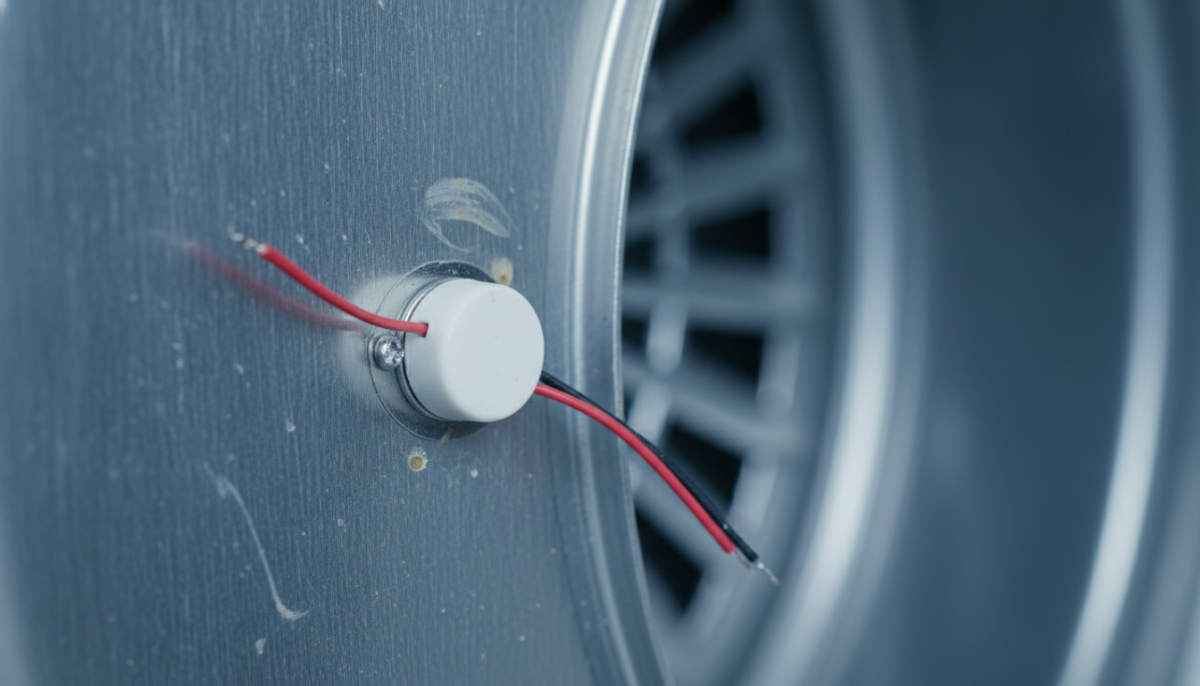
When the panel is on but pressing Start does nothing, the issue is often here. The push-to-start switch is a momentary contact: press it, hold for two to five seconds, and it closes a relay that energizes the motor. Mechanical wear eventually stops the contact from closing.
The signature: panel light on, the door clicks on close, but pressing Start produces no motor sound at all. The dryer has power. This is what homeowners describe as “dryer not turning on but has power.” It points to the start switch. If everything else tests clear, the control board is next. A multimeter continuity test with power disconnected and the button held confirms the switch. Difficulty: 3 of 5.
Look at the panel for a small lock icon or the word LOCKED. This is the one cause that needs no tools at all.
Control lock activates accidentally more often than most homeowners expect. If the icon is lit, hold the designated button for three to five seconds. The exact button varies by model. Check the silkscreen on the panel for a padlock symbol next to a button label. No lock icon but controls are still unresponsive? Unplug the dryer for five to ten minutes to reset the control board. If the dryer starts normally after that reset, the event was a software glitch, not hardware. Difficulty: 1 of 5.
If pressing Start produces a humming sound but the drum does not turn, the mechanical link between motor and drum is broken. The motor is running but cannot drive the load.
A broken drive belt lets the motor spin freely with no torque to the drum. On some models the overload protection trips after a few seconds and the hum stops. Open the front or rear panel to check. A broken belt is visible. A failed motor coupling leaves plastic debris near the motor shaft. Both repairs require panel removal, making this mid-DIY territory for a confident homeowner, though most prefer a pro for this one. Difficulty: 4 of 5.
When everything else tests good and the dryer still won’t start, the main electronic control is the suspect. Board failure is last resort. Capacitor failure, voltage surge damage, or a failed relay channel on the board can cut the start circuit entirely.
Three patterns point here: the dryer stopped working after power outage; error codes appeared before it went completely dead; or random starts and failures have gotten progressively worse. Denver Metro spring and summer thunderstorms create frequent voltage events that stress unprotected appliance electronics. Board diagnosis is elimination-based: every other cause must test clean first. Visual inspection for burn marks or bulging capacitors sometimes confirms the fault before any meter test. Board work is not a DIY project and calls for a pro. Difficulty: 5 of 5.
If you smell gas at any point, stop immediately. Evacuate the room and call your gas utility before continuing any diagnosis.
The six causes apply to every residential dryer made. What varies by brand is where the components sit, what the reset sequence is, and how the control system surfaces a failure. These brand-specific callouts can save you a diagnostic step or two if you already know which brand you have and where its quirks tend to show up.
Not every dryer fault requires a service call. Here is how the tiers break down.
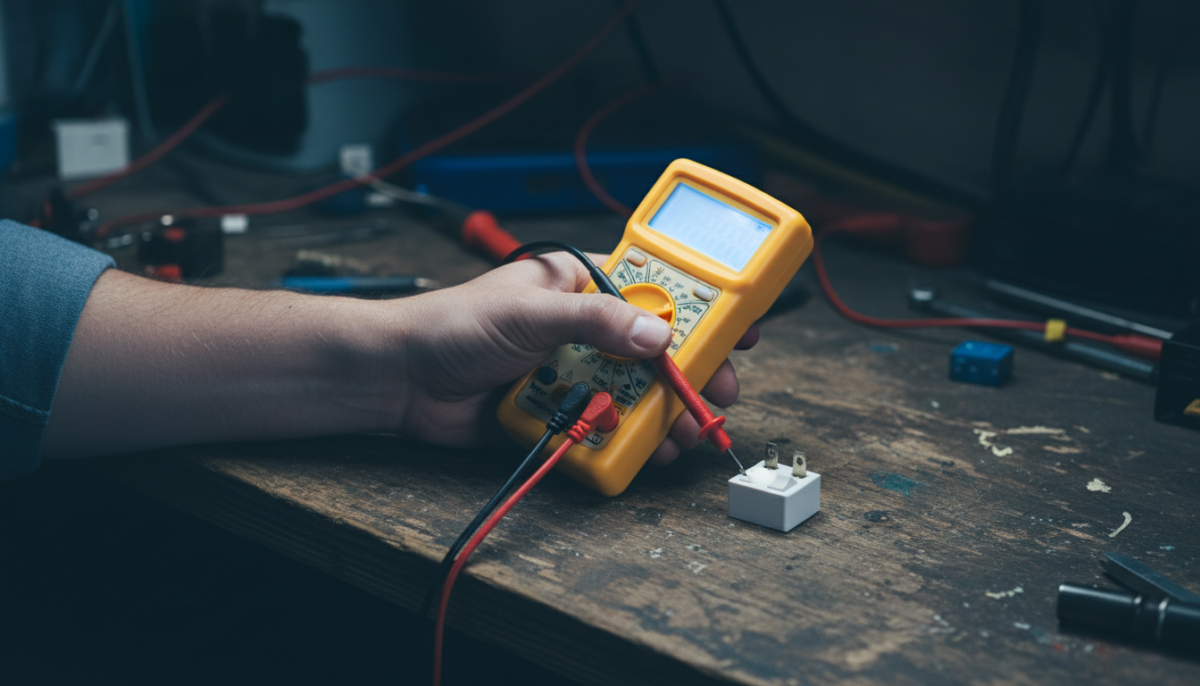
Quick rule: if you can isolate the fault with panel-on tests and it points to one of the first three DIY-tier components, try the DIY route first. Five causes cleared and still no start? The control board is almost certainly the answer, and that one calls for a pro.
Not sure which tier your dryer falls into?
A Wilson & Myers insured technician can diagnose the cause and give you a clear answer before any repair begins. We source parts through national supplier networks and manufacturer contracts.
This guide covers dryers that will not turn on at all. Drum spins but clothes come out damp? That is a separate problem with its own diagnostic path. A dryer that is not heating involves the heating element, hi-limit thermostat, gas valve solenoid (gas models), or igniter, and none of those components prevent the start circuit from working. For the heat-side diagnosis, see our full guide on why your dryer isn’t heating.
Run the 60-second power check first. If the outlet, breaker, and cord all test good, the fault is inside the dryer. Most often it is the thermal fuse or door switch. Listen for a click when you close the door, then press Start. Silence usually means a multimeter test is next.
Yes. The thermal fuse is the most common single-component failure on a dryer that will not start. It opens permanently at about 196 degrees Fahrenheit. Both repairs are required: replace the fuse, then clear the restricted vent that caused it to blow in the first place.
A humming sound with no drum movement points to a broken drive belt or a failed motor coupling. The motor runs but the drum stays still. That is a mechanical fault that requires opening the front or rear panel to diagnose, and most homeowners book a repair tech for this scenario.
Unplug the dryer for 5 to 10 minutes to fully reset the control board. Some models also respond to holding the Start button with the door open, then closing the door. If the reset works, the issue was a software glitch and not a hardware fault. If not, use the cause checklist above.
A sudden overnight failure usually points to a power-side cause: a tripped breaker, a voltage spike from a power outage, a blown thermal fuse, or a door switch that finally wore out. Check the breaker panel first. Then test the thermal fuse with a multimeter. Most overnight failures resolve at one of these two checks.
A dryer that does not start never turns on at all. The panel is dark, or controls are on but nothing responds to the start button. The causes are separate. When a dryer is not heating, it turns on normally and the drum spins but no heat reaches the load. For the heat-side path, see our dryer not heating guide.
Wilson & Myers insured technicians handle dryer-not-starting calls across all 31 cities in the Denver Metro Area. We see the same cause hierarchy every day: thermal fuse and door switch on top, control board and motor on the pro tier.
The guide reflects real field patterns from all 31 cities we serve: Denver, Aurora, Lakewood, Arvada, Westminster, Thornton, Centennial, Highlands Ranch, Parker, Castle Rock, Lone Tree, Greenwood Village, Englewood, Littleton, Wheat Ridge, Edgewater, Sheridan, Longmont, Cherry Hills Village, Glendale, Commerce City, Brighton, Northglenn, Broomfield, Erie, Louisville, Lafayette, Superior, Golden, Morrison, and Boulder. Dryer repair in Denver Metro is available for all major brands.
Dryer Not Starting in Denver Metro?
Our insured technicians serve all 31 cities across the Denver Metro Area. We source parts through national supplier networks and manufacturer contracts for fast, efficient repairs.
A dead dryer usually comes down to a door switch, thermal fuse, or control fault. Wilson & Myers diagnoses all brands across the Denver Metro Area. Book online to schedule your visit.
Found This Helpful?
It is a week before Thanksgiving, and you set the oven to 350 degrees before starting the stuffing. Forty minutes later, the preheat signal fires. That is roug…
Has your refrigerator water dispenser stopped delivering water? In my experience, a large share of these calls end before a technician arrives. A child lock ac…
You open the dishwasher after the cycle and the plates look exactly as you loaded them: dry, cold, with last night's dinner still caked on. Your dishwasher is…
A Whirlpool dryer that tumbles but never heats traces to one of five faults, and three of them cost nothing to check. Here is the order to work through them, p…
A washer that shakes violently during spin traces to one of seven causes, from a bunched load to a failed drum bearing. Here is the order to check them, and th…
A gas smell during oven preheating is normal for about 90 seconds. Here is how Denver technicians tell routine startup odor from a real gas leak…
Welcome to the community.
You'll receive our next expert update soon.

Wilson & Myers is a verified member of the Denver Metro Chamber of Commerce.


