Samsung Washer Won’t Spin: Front-Load and Top-Load Fixes
A Samsung washer not spinning leaves clothes wet in the drum and the dryer waiting. Samsung's four platforms handle this differently: WF front-load, WA top-loa…

Wilson & Myers repairs WhisperKool wine cellar cooling units for homes and collectors across the Denver Metro Area. Our insured technicians handle temperature, cooling, and compressor faults.

WhisperKool wine cellar cooling units protect collections that represent significant investments. A temperature fluctuation of even a few degrees above the set point can accelerate aging and spoil delicate bottles. Wilson & Myers technicians understand the full WhisperKool product architecture, which means faster diagnosis and fewer repeat visits.
We service WhisperKool SC Pro 3000, SC Pro 4000, SC Pro 8000, and the SC 4000i self-contained through-wall systems. We also cover the Platinum Split series including the Platinum Split 8000, and the Platinum Mini Split for confined mechanical spaces. Our service scope extends to Slimline LS and Slimline 2500 low-profile units. We also handle the Phantom 5000, Phantom 3500 whole-cellar systems, and the Extreme 3500ti for high-load applications. For ceiling-mount installations, we service the mini ceiling-mount configuration as well as the ceiling mount 8000 XLT. Fully ducted systems and ductless split systems are both within our technical scope.
We also work with clients whose units are listed under the whisper kool or whispercool spelling variants, which appear in older documentation and warranty paperwork. If you are searching for tech support or replacement accessories and find the name styled differently, the underlying product line is the same. Our service scope applies to all styling variants.
WhisperKool parts are sourced through national supplier networks and manufacturer contracts. We do not promise specific components are on every truck, but common fault components are available through our distribution network.
Temperature creep above the target set point is the most call-generating WhisperKool fault in Denver Metro cellars. It rarely means the unit is beyond repair. The compressor may still run continuously while delivering degraded cooling capacity. Common causes include a low refrigerant charge, a leak at a brazed fitting, or a dirty condenser coil restricting heat rejection. A temperature fluctuation pattern where the cellar holds 58 F overnight but climbs toward 65 F by mid-afternoon is a specific signal. It typically points to partial refrigerant loss rather than full compressor failure. Our technicians perform sealed-system diagnosis before recommending any component replacement.
A failed capacitor is the single most common reason a compressor does not engage on WhisperKool self-contained units. The compressor motor draws start current through the run capacitor, and when the capacitor degrades, the compressor hums briefly and clicks off on thermal overload. Replacing the capacitor typically restores operation within the service visit. When compressor failure itself is confirmed through amp-draw and pressure testing, we provide an honest repair-versus-replace assessment before ordering components.
Icing on the evaporator is a symptom with several causes, not a single root fault. Several distinct faults produce ice buildup on the coil face. A blocked defrost drain, a failed defrost timer, or a failed defrost heater each cause this pattern. A low refrigerant charge causing the suction line to run below freezing produces the same symptom. Restricted airflow through a dirty filter is a fourth common cause. Left unaddressed, the ice block eventually prevents airflow entirely and the cellar warms. Our technicians clear the ice, identify the underlying cause, and fix the root fault rather than treating the symptom alone.
A noisy WhisperKool unit usually falls into one of two categories. Fan bearing wear produces a continuous grinding or squealing that increases with runtime. Compressor vibration, loose mounting hardware, or a failing start component produces an intermittent knock or hum. Both are diagnosable and repairable without replacing the entire unit. Ignoring noise faults accelerates wear on the remaining components, so early service typically costs less than deferred repair.
Water pooling beneath a WhisperKool unit almost always traces to a clogged condensate drain or a cracked drain pan. In Denver Metro cellars with very low ambient humidity, condensate volume is lower than in coastal installations, but the drain still requires periodic clearing. A water leak left unaddressed damages cellar flooring, wall framing, and insulation, compounding the repair cost. We clear the drain, inspect the pan, and confirm the condensate path is unobstructed before closing the service call.
WhisperKool SC Pro and Platinum series units display error codes on the digital controller when a sensor or pressure fault is detected. High-side pressure faults typically indicate condenser blockage, refrigerant overcharge, or condenser fan failure. Low-side pressure faults point to refrigerant loss or compressor wear. Sensor faults signal a disconnected or out-of-range temperature or humidity sensor. Controller board failures produce persistent error codes that do not clear even after the underlying fault is corrected. Our technicians carry diagnostic equipment appropriate for each code category.
Humidity control failure in a WhisperKool unit often surfaces as relative humidity readings above 75 percent or below 50 percent. This shows up in a cellar that previously held stable. A failed humidity-control component is one cause. An oversized unit that short-cycles is another. In many Denver Metro cellars, the real diagnosis is air infiltration through an improperly sealed cellar door or wall penetration. Colorado’s dry climate means outside air infiltrating the cellar drives humidity down rapidly. We diagnose the refrigeration system and the cellar envelope together to provide a complete answer.
Not cooling
›
Refrigerant / coil
Ice buildup
›
Defrost / airflow
Error code
›
Sensor / board
Top 3 WhisperKool symptoms and likely cause categories
WhisperKool manufactures wine cellar cooling units across five main product families, each targeting a different cellar configuration. Understanding which family a unit belongs to determines the correct diagnostic approach and which refrigerant type is most likely present.
Through-wall units like the SC Pro are the most common configuration in Denver Metro custom wine cellars. The install requires only a wall penetration and a standard electrical outlet. Split system configurations such as the Platinum Split serve interior cellar locations with no exterior wall access. The same configuration suits clients who want the condenser unit positioned in a separate mechanical room. Fully ducted systems like the Phantom and Extreme 3500ti series are specified for larger cellars where precise air distribution matters. We service all three installation types including ceiling-mount, through-the-wall, split system, and ductless configurations.
Sister brands in the wine cellar cooling space that we also service include Wine Guardian and Breezaire. For wine cabinet refrigeration, our Wine Enthusiast repair coverage handles compressor-based and thermoelectric units. All four brands share the same refrigeration fundamentals and are serviced by the same Wilson & Myers technicians.
Denver Metro wine cellar cooling presents technical challenges that national service guides do not fully address. Altitude, humidity, and temperature swing create a distinct operating environment. These factors affect unit sizing, refrigerant behavior, and humidity control in ways that differ materially from sea-level installations. Homeowners in the area sometimes describe their wine cellar as needing specialized wine cellar air conditioning rather than ordinary appliance service. That framing is accurate. Wine cellar refrigeration operates under different performance constraints than a standard refrigerator.
At 5,280 feet above sea level, air density is approximately 17 percent lower than at sea level. A WhisperKool unit rated for a 1,000-cubic-foot cellar at sea level delivers roughly 3 to 5 percent less cooling capacity at Denver altitude. The compressor moves the same volume of air but with lower mass. An undersized unit runs continuously and accelerates wear. Undersizing is the most common reason a cellar cannot hold temperature in summer even when the unit functions correctly. Our technicians factor altitude derating into every capacity assessment before recommending a unit size or signing off on a replacement specification.
Humidity is the other major Denver-specific factor. The Denver Metro area averages 20 to 40 percent relative humidity. Wine cellars require 55 to 75 percent for proper cork hydration and label integrity. WhisperKool cooling units manage temperature but are not standalone humidifiers. When a cellar shows low humidity readings, the first diagnostic step examines two possible root causes. Either the humidity control component in the unit has failed, or dry air infiltrates through an unsealed cellar door or wall penetration. Colorado’s diurnal temperature swing often runs 30 to 40 degrees Fahrenheit between daytime highs and overnight lows. This thermal expansion and contraction of door frames and wall assemblies accelerates dry-air infiltration.
We cover wine cellar service across Denver Metro including Denver, Cherry Hills Village, Greenwood Village, and Castle Rock. High-value wine cellars are disproportionately concentrated in these high-income communities, and our technicians are familiar with the custom cellar builds common in that market.
WhisperKool wine cellar cooling units span three refrigerant generations currently in active service across Denver Metro. Identifying the correct refrigerant before any sealed-system work is not optional. Using the wrong recovery equipment or charge specification damages the compressor and voids any residual manufacturer support.
Legacy WhisperKool units manufactured before approximately 2015, including early SC Pro 3000 and Slimline generations, operate on R-134a. This is a moderate-pressure refrigerant requiring Type II or Universal EPA-608 certification for sealed-system work. Mid-generation units manufactured from roughly 2015 through 2024, which represent the largest share of WhisperKool equipment currently in service, use R-410A. This is a high-pressure refrigerant system requiring specific gauges and handling procedures. Newer WhisperKool units manufactured from 2025 onward transition to R-454C or R-455A, low-GWP refrigerants introduced under the EPA AIM Act phasedown of high-GWP hydrofluorocarbons. R-454C is classified as mildly flammable (A2L safety class), requiring updated technician training distinct from R-410A handling protocols.
Wilson & Myers technicians hold EPA-608 certification covering all refrigerant types across all WhisperKool generations. We carry separate recovery and recharge equipment for R-134a, R-410A, and the new R-454C low-GWP refrigerants. This full refrigerant range coverage means we do not defer service on newer units while sourcing specialized equipment. Any work involving refrigerant recovery, leak repair, or recharge is performed by EPA-608 certified technicians per Section 608 requirements.
Booking a WhisperKool service appointment starts at our online booking page. We ask for the unit model number, the symptoms you have observed, and your location. Model number identification matters because the SC Pro 3000 and SC 4000i have different sealed-system configurations. Having that information before the appointment allows the technician to arrive with the most likely diagnostic tools and components for your specific unit.
At the service visit, the technician performs a full system assessment before recommending any repair. This includes checking refrigerant pressures and measuring compressor amp draw. Technicians also verify defrost cycle operation, inspect the condensate drain, and review any error codes currently stored in the controller. We provide a written estimate before any repair work begins. Wilson & Myers sources WhisperKool wine cellar refrigeration components through national supplier networks and manufacturer contracts to keep sourcing times short on common fault components.
Most WhisperKool failures are repairable. Capacitor failures, refrigerant leaks, clogged condensate drains, defrost component faults, and sensor failures are all component-level repairs that restore the unit to full function. Compressor failure on an older unit requires a different calculus. If the unit is under seven years old, compressor replacement is typically worth the cost. For units past ten years with a failed compressor and R-410A refrigerant, the repair-versus-replace discussion involves comparing compressor cost against a new unit. We provide that assessment honestly rather than defaulting to replacement.
WhisperKool SC Pro and Platinum series controllers display numeric or alphanumeric error codes when the unit detects an out-of-range condition. High-side pressure faults signal condenser blockage, fan failure, or refrigerant overcharge. Low-side pressure faults indicate refrigerant loss or compressor wear. Sensor faults point to a disconnected or failed temperature or humidity sensor. Controller board faults appear when the electronic board itself malfunctions. Our technicians carry diagnostic documentation for SC Pro 3000, 4000, and 8000 series codes. The fault category can typically be identified within the first ten minutes of the service call.
The refrigerant depends on the manufacturing date. Pre-2015 units generally use R-134a. Units manufactured from 2015 through 2024 use R-410A. Units manufactured from 2025 onward use R-454C or a related low-GWP refrigerant per EPA AIM Act requirements. The unit data plate on the housing lists the refrigerant type. Our technicians verify refrigerant identity before opening the sealed system regardless of what the data plate shows. Prior service may have changed the charge type.
Denver Metro averages 20 to 40 percent relative humidity outdoors. A WhisperKool wine cellar cooling system controls temperature but does not actively humidify the cellar. Dry air entering through gaps around the door frame, a wall penetration, or an inadequately sealed vapor barrier creates an infiltration load. The cooling unit alone cannot overcome that load. Our service visit includes an inspection of the cellar envelope, not just the unit, when humidity is the presenting problem.
At 5,280 feet, a WhisperKool unit delivers approximately 3 to 5 percent less cooling capacity than its sea-level rating. For most properly sized cellars this margin is not critical in winter. In summer, when ambient temperatures in unconditioned spaces adjacent to the cellar rise, an undersized unit may run continuously without hitting the set point. The altitude derating factor should have been applied when the unit was originally specified. If it was not, upgrading to the next model in the series often resolves the problem without a full system replacement.
We service all active WhisperKool product lines and most legacy units still in service. Our scope covers SC Pro 3000 through SC Pro 8000, Platinum Split, and Slimline LS units. We also service Slimline 2500, Phantom 5000, Phantom 3500, Extreme 3500ti, and ceiling-mount configurations. For very old units where original components are no longer available through the supply chain, we discuss the parts situation honestly. Replacement gets recommended only when no repair path exists.
We schedule WhisperKool service appointments across Denver Metro with typical availability within the current week. Wine cellar cooling is a temperature-sensitive situation, particularly in summer when ambient temperatures accelerate wine damage. We prioritize wine cellar calls when temperature-critical collections are at risk. Book online to check current availability.
Yes. Our service area covers the full Denver Metro territory including Cherry Hills Village, Greenwood Village, Castle Rock, and all surrounding communities. Wine cellars in high-value residential properties across Denver Metro are a regular part of our service schedule. If you are searching for WhisperKool repair near me, Wilson & Myers is the Denver Metro specialist for WhisperKool wine cellar refrigeration service.
Annual preventive maintenance extends WhisperKool service life and catches faults before they become full failures. A maintenance visit covers condenser coil cleaning, refrigerant pressure verification, condensate drain inspection, sensor calibration check, and a humidity-control function test. Most homeowners schedule maintenance in spring before summer ambient loads peak. If your unit is not working correctly, exhibiting rising cellar temperature, ice buildup, or unusual noise, troubleshooting comes first. Maintenance follows the repair. Some homeowners describe their unit as a WhisperKool wine cooler when searching for service. The underlying product is the same wine cellar cooling unit, and our maintenance scope applies regardless of the search phrasing.
Note the cellar temperature, the setpoint and any code on the controller before you call. An insured technician checks the cooling circuit and drainage, then orders the correct part if one is needed.
Repair guides, maintenance tips and troubleshooting walkthroughs written by our insured technicians.
A Samsung washer not spinning leaves clothes wet in the drum and the dryer waiting. Samsung's four platforms handle this differently: WF front-load, WA top-loa…
You opened the KitchenAid freezer this morning and the bin was empty. In my experience, the arm is the first thing worth checking: the fix costs nothing and ta…
A Frigidaire oven not heating can come down to a setting rather than a part. Before you book a repair, two checks cost nothing and take under a minute: the clo…
A Whirlpool dryer that tumbles but never heats traces to one of five faults, and three of them cost nothing to check. Here is the order to work through them, p…
F8 E4 means water reached the drip tray, not a fill fault. Here is the two-step reset and why it can fire on a brand-new install with a dry tray…
A Bosch dishwasher E22 error means one thing: the filter is blocked, and there is probably water sitting in the bottom of the tub…
A Frigidaire refrigerator not cooling is not always a broken refrigerator. The display on the door settles that question in about ten seconds…
You walked into the laundry room and the display is flashing D80. The drum is still turning. You do not know whether to stop the cycle or let it finish. D80 is…
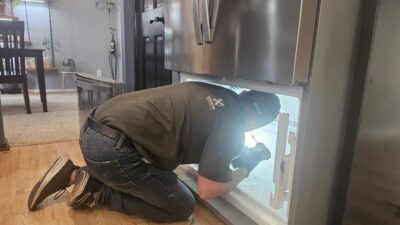
A GE refrigerator not cooling usually falls into one of two failure paths. The question is simple: is the freezer still cold? If yes, the sealed system is inta…
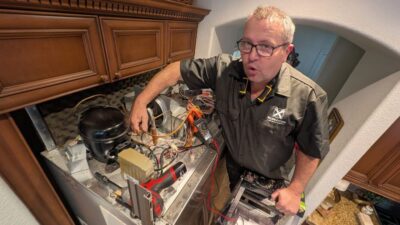
You pull open the freezer on a July evening and find an empty bin. A Frigidaire ice maker not working in peak summer is one of the most frequent calls our Denv…
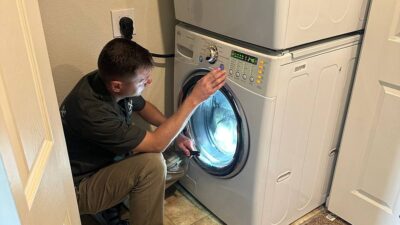
The LG washer UE code means the machine detected an unbalanced load during the spin cycle and stopped to protect the drum and bearings. UE is protection not br…
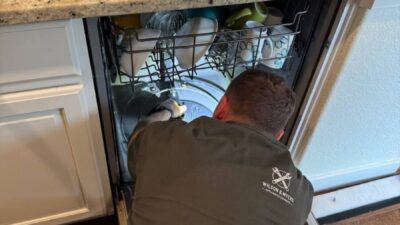
E24 on a Bosch dishwasher means the drain cycle did not complete. A clogged filter basket is the cause in most cases. If the filter is clear, the drain pump or…
Wilson & Myers dispatches insured technicians to homes and cellars running WhisperKool cooling units throughout the Denver Metro Area.
From temperature-swing and cooling faults to compressor and control repair, Wilson & Myers services the full WhisperKool line across the Denver Metro Area.

Is your appliance broken? Our experts offer top appliance repair services with genuine parts and proven techniques for quick fixes. Refrigerators, washers & more!

Professional appliance installation by insured technicians following industry standards. Safe setup for ovens, dishwashers and more, so you avoid DIY errors!

Wilson & Myers is a verified member of the Denver Metro Chamber of Commerce.


