

Need a Professional Hand?
If a DIY fix isn't enough, our insured technicians are just a click away. We’ll diagnose the issue and get your home running right again.
BOOK NOWYou open the dishwasher after the cycle and the plates look exactly as you loaded them: dry, cold, with last night's dinner still caked on. Your dishwasher is not getting water, and it ran a full program without a drop entering the tub. That points to one of five failure points in the fill circuit. The first one to rule out costs nothing to check.
| Symptom | Most Likely Cause | Quick DIY Check | Pro or DIY? |
|---|---|---|---|
| No water in dishwasher, machine silent after starting | Supply valve closed or kinked supply line | Check under-sink shut-off; straighten supply line | DIY check. |
| No water, machine hums then stops | Float switch stuck in raised position | Lift the float dome at the tub front corner by hand | DIY check. |
| No water, machine hums without filling | Water inlet valve solenoid failed | Voltage and continuity test required | Pro. |
| No water, cycle display active but no fill sound | Door latch not fully engaging | Listen for solid click on door close; inspect latch face | DIY inspection, Pro for replacement. |
| Error code on display, no fill | Fill sensor or control board fault | Error code read and fill-circuit diagnosis | Pro. |
A closed or partly closed shut-off valve under the sink stops water before it ever reaches the machine, and it is the one cause that costs nothing to rule out. A valve that is only halfway open, or a supply line kinked behind the machine, will leave the machine completely dry and trigger no error code. GE Appliances puts the operating pressure range at 20 to 120 PSI; below that lower threshold the water inlet valve may not open at all.
Turn the shut-off valve fully counterclockwise to open it and inspect the supply line for bends or crimps. If the kitchen faucet runs normally, household water pressure is not the issue. Scale on the fine mesh inlet screen where the supply line meets the valve is the other supply-side cause, and it builds faster where the supply is harder. For 2025 Denver Water reported an average near 6 grains per gallon, while Aurora reported 8.0.
Clean that screen with an old toothbrush before condemning any component. Knowing how to fix a dishwasher not filling with water starts with these free checks, before any part is ordered. A dishwasher not filling after that screen clears points to a fault deeper in the fill circuit. If water is standing in the tub at the end of a cycle rather than missing entirely, that is a dishwasher drain failure and a different diagnostic path.
The float switch is a two-part assembly: a buoyant dome inside the tub and a microswitch mounted below the tub floor. The float rises as the tub fills; at the setpoint it trips the switch, and the control board closes the water inlet valve to stop filling. When the dome is stuck raised, it sends a permanent “tub full” signal before a single drop enters. A dishwasher won’t fill with water under those conditions even when supply pressure and the valve are both functional.
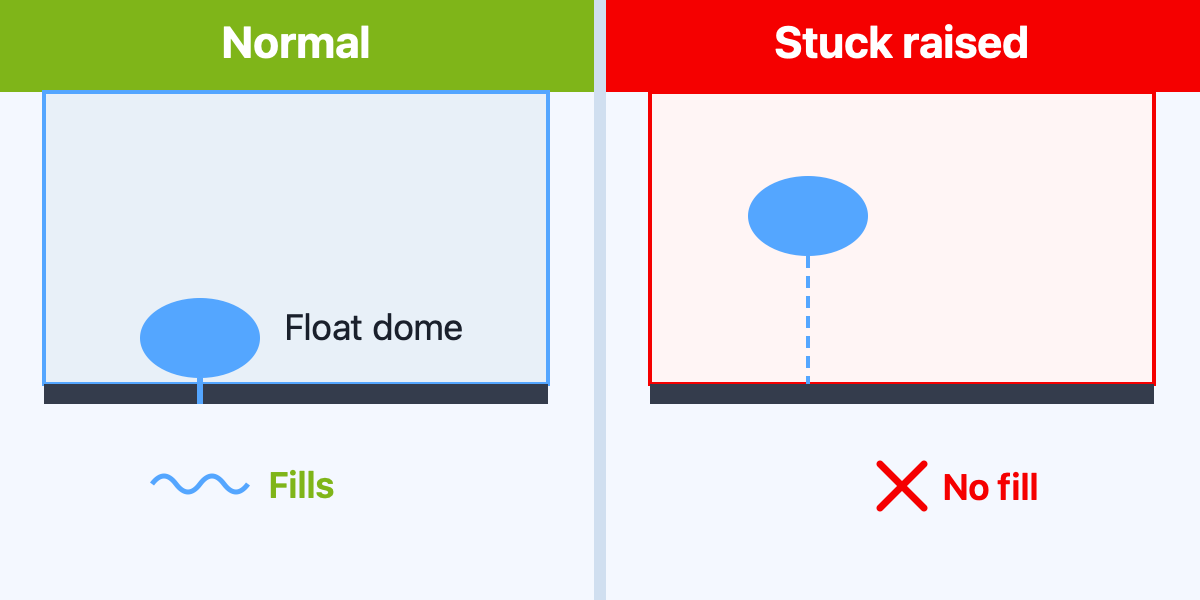
Open the door and look for the float dome at the front bottom corner of the tub, typically front-left, a small white or cream cylinder or dome. Lift it by hand; it should move freely up and down with no resistance. A float that catches, drags, or won’t lower means debris has wedged under the base. Clean around the dome and retry; if the dome itself is warped or cracked, the float assembly needs replacement.
The float switch is the cause I see homeowners miss most. A small piece of food debris under the dome and the machine reads the tub as already full before the first drop enters.
A solenoid coil inside the water inlet valve opens to admit water when the control board sends voltage at the start of a fill cycle. When that coil burns out, the valve body clogs with mineral scale on the inlet screen, or the internal plunger seizes, the valve cannot open regardless of what the board commands. The dishwasher runs but no water inside the tub ever arrives, even when supply pressure and the float switch both check out. The valve sits behind the lower access panel at the point where the supply line enters the machine.
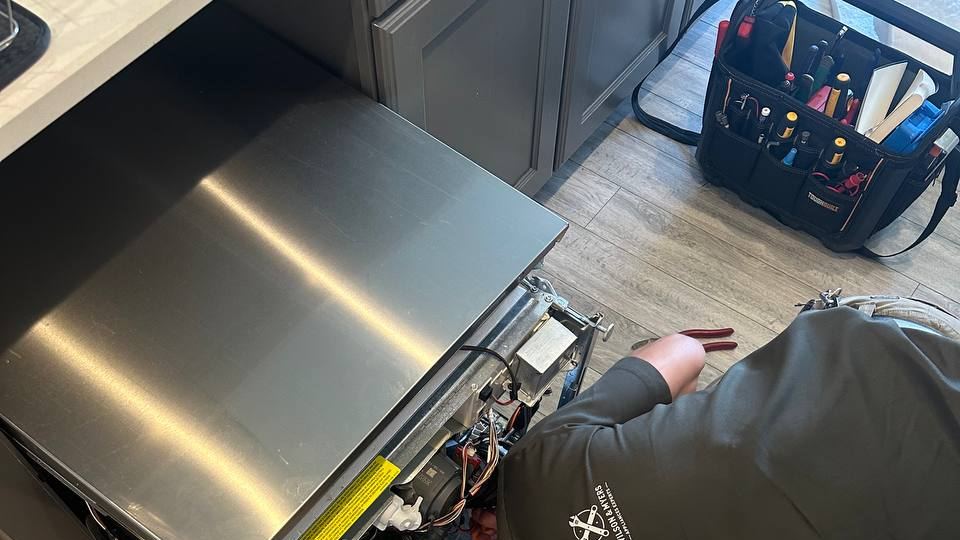
On a machine installed recently, confirm the supply connection was seated at the valve during dishwasher installation. A fitting left loose is a common first-run cause of a dishwasher not getting any water during cycle.
A trained technician applies voltage directly to the valve terminals during a live fill cycle. If voltage is present at the terminals but no water flows, the valve has failed; the control board sent the correct command and the valve is the fault. For a Samsung dishwasher not filling with water or any brand with confirmed supply and a free-moving float, this live voltage test is the professional confirmation step.
Disconnect the machine from power before opening the lower access panel to attempt a continuity test. Locate the water inlet valve at the supply line connection, disconnect the wiring harness connector from the solenoid terminals, and set a multimeter to ohms. Probe both solenoid terminals: a reading of 0 means the solenoid coil is shorted; OL with no reading at all means the coil has burned out. Either result means the valve needs replacement.
When the pattern is a dishwasher not filling after replacing inlet valve, the float switch is the next stop. The dome may have been stuck throughout, blocking fill regardless of what was in the valve.
The door latch switch on every dishwasher is the safety interlock between the physical latch and the control board. If the door is not fully latched, the machine will not begin filling, because the board never receives the “door closed” signal it needs to initiate the fill sequence.
A dishwasher won’t start filling with water even when supply, the float switch, and the inlet valve are all in good shape if the latch does not actuate that switch. Listen for a solid click each time you close the door and push lightly on the door face to check for gap or flex at the top.
Inspect the latch assembly for visible cracks and check the striker plate for misalignment; a worn striker usually needs replacement rather than adjustment. For a deeper latch diagnosis on Frigidaire machines, our door latch check guide covers that fault from a start-failure angle.
Some newer machines add a fill sensor or turbidity sensor rather than a float, and bad sensor data stops the fill the same way; confirming it takes a code read and an insured technician.
F8 E1 is the fill failure code on Whirlpool, Maytag, and KitchenAid dishwashers; older displays on those machines show H2O in place of the alphanumeric code. The code fires when the control board does not detect water entering within the expected fill window. The diagnostic steps above apply directly: check the supply valve first, then the float switch, then the inlet valve.
Samsung machines commonly report 4C or 4E for the same type of supply or valve interruption; LG machines commonly report IE. GE and Bosch do not share a universal fill code we could confirm from manufacturer sources, but the underlying fill-circuit causes are identical regardless of what the display reads.
F8 E1 is separate from F8 E4, which fires when water reaches the drip tray; that is a flood-detection fault covered in our guide to F8 E4 flood detection. If F8 E4 is on your display rather than F8 E1, that article is the right starting point.
The supply check, inlet screen cleaning, float dome lift, and door latch inspection are all within reach for most homeowners. If any of those resolves the fault, you are done. When none of them work, a burned solenoid coil, an open-circuit valve failure, or a fill sensor fault all need a multimeter and live-circuit testing that goes beyond a standard DIY toolkit.
Voltage reaches the terminals during a fill cycle but no water flows.
The dome will not lift freely; cleaning has not resolved it.
The latch face is cracked or the switch no longer produces a solid click.
The machine stops filling mid-cycle with no clear mechanical cause.
Our insured technicians carry the tools and diagnostic experience to confirm the fault before ordering any part. We source parts through national supplier networks and manufacturer contracts. For a Bosch, Frigidaire, or any other brand, the fill-circuit diagnostic follows the same sequence.
Wilson & Myers provides dishwasher repair across Denver, Aurora, Lakewood, Highlands Ranch, and the broader Denver Metro area. When the plates are still dry at the end of another cycle after all these checks, that is the signal to schedule a service visit.
A dishwasher not getting water most often traces to a closed or kinked supply valve, a float switch stuck in the raised position, or a failed water inlet valve solenoid. Check the supply first; it is the fastest thing to rule out. If the machine fills but dishes come out dirty, that points to a different fault.
Start with the supply valve under the sink; turn it fully counterclockwise and inspect the supply line for kinks. Next, open the door and lift the float dome at the front corner of the tub; it should move freely. Knowing how to fix a dishwasher that won’t fill narrows to three checks: supply, float, and valve. If the first two pass, professional inlet valve diagnosis is the next step.
When the dishwasher hums but won’t fill with water, the motor has started but the water inlet valve has not opened. That hum means the valve is receiving power but not responding. The most likely causes are a burned solenoid coil in the inlet valve or a float switch stuck in the raised position. Both require hands-on diagnosis to confirm.
The water inlet valve on a dishwasher sits behind the lower access panel at the bottom front of the machine, at the point where the water supply line enters. The valve holds a solenoid coil and an inlet screen; both can fail independently. Disconnect power before removing the panel, and the valve is accessible with a basic screwdriver.
F8 E1 is the fill failure code on Whirlpool, Maytag, and KitchenAid dishwashers; older displays on those machines show H2O in place of the code. The control board fires it when water does not enter within the expected fill window. Check the supply valve first. If supply is confirmed normal, the fill circuit needs professional diagnosis.
Disconnect the dishwasher from power, remove the lower access panel, and locate the water inlet valve at the supply line connection. Disconnect the wiring harness and set a multimeter to ohms. Probe both solenoid terminals: a reading of 0 means the coil is shorted; OL with no reading at all means the coil is open. Either result means the valve has failed.
When the water inlet valve, float switch, or fill sensor has failed, restoring normal fill takes a trained hand. Wilson & Myers provides insured dishwasher repair across Denver Metro. Book online or call to confirm availability.
Found This Helpful?
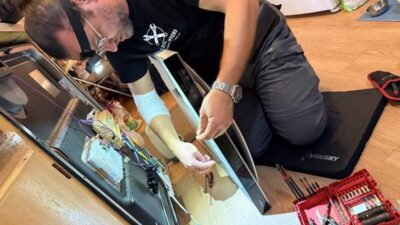
F8 E4 means water reached the drip tray, not a fill fault. Here is the two-step reset and why it can fire on a brand-new install with a dry tray…
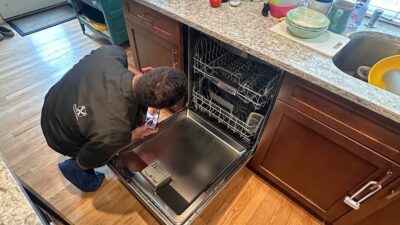
A Bosch dishwasher E22 error means one thing: the filter is blocked, and there is probably water sitting in the bottom of the tub…
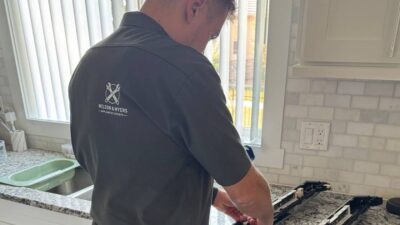
Your dishwasher ran a full cycle and the dishes still came out dirty. Food is stuck to the plates, glasses are cloudy, and the top rack looks worse than the bo…
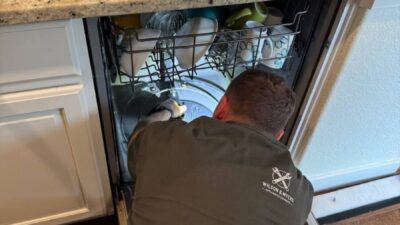
E24 on a Bosch dishwasher means the drain cycle did not complete. A clogged filter basket is the cause in most cases. If the filter is clear, the drain pump or…
Bosch dishwasher not draining? Start with the bottom cylinder filter. A clogged filter causes most drain failures on Bosch 300, 500, and 800 Series machines, a…
You opened the dishwasher expecting dry dishes and found dripping plastic, beaded glasses, and pooled water in the bottom of every cup. A dishwasher not drying…
Welcome to the community.
You'll receive our next expert update soon.

Wilson & Myers is a verified member of the Denver Metro Chamber of Commerce.