

Need a Professional Hand?
If a DIY fix isn't enough, our insured technicians are just a click away. We’ll diagnose the issue and get your home running right again.
BOOK NOWWet dishes after a completed cycle belong to our dishwasher not drying guide. Water sitting in the tub at cycle end belongs to our Bosch dishwasher not draining guide. A machine that never starts belongs to our Frigidaire dishwasher not starting guide.
Six causes explain dishwasher not cleaning in nearly every residential case. A clogged filter pushes dirty water back onto dishes. Blocked spray arm holes cut water pressure. Wrong loading shields dishes from the spray.
Detergent underperforms in Denver’s hard water. Cold water prevents enzyme activation. Empty rinse aid leaves mineral film that looks like a cleaning failure but is not one. A dishwasher not cleaning well on any of these counts usually has a quick DIY solution.
| Cause | What You See | DIY or Pro | Est. Time |
|---|---|---|---|
| Clogged filter | Food residue on all dishes, gritty film | DIY | 5 min |
| Spray arm holes blocked | Dead zones, top rack worse than bottom | DIY | 10 min |
| Wrong loading | Random dirty dishes, shielded items | DIY | 0 min |
| Detergent problems | Waxy film, undissolved residue | DIY | 0 min |
| Water too cold | Greasy film, detergent not dissolved | DIY | 1 min |
| Rinse aid empty | Cloudy glassware, mineral haze | DIY | 1 min |
| Pump, valve, or element | All above checked, still not clean | Pro | By appointment |
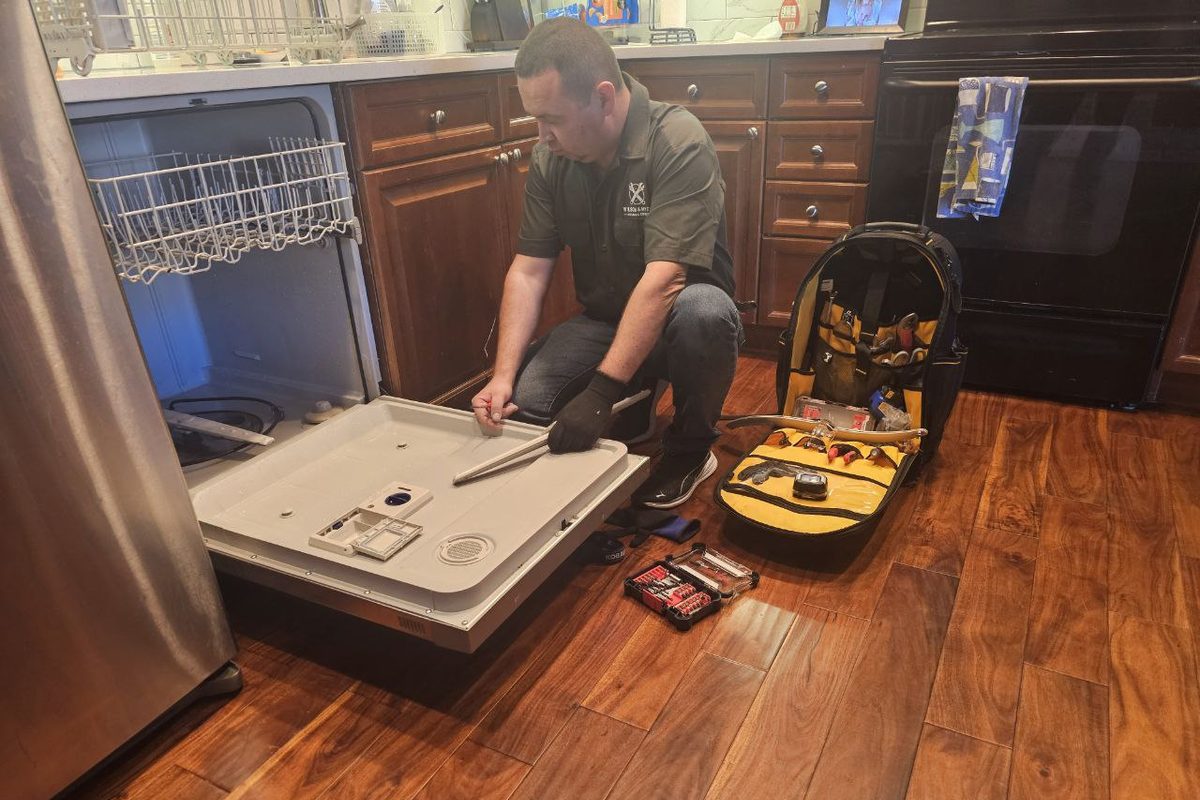
In my experience, the five-minute filter check alone closes most of these calls. Here is how to fix dishwasher not cleaning: run through these six steps in order.
The single most common reason a dishwasher runs a full cycle but leaves food on the dishes is a clogged filter. Most residential machines made after 2006, including Bosch with its triple-filter system, Miele, Maytag, and Samsung models, carry a two-part removable filter in the tub floor. When it packs with food debris, filter debris recirculates through the pump and back onto dishes rather than clean water moving through the spray arms. Clean the filter monthly; in Denver Metro homes running the machine daily, every three weeks is more realistic.
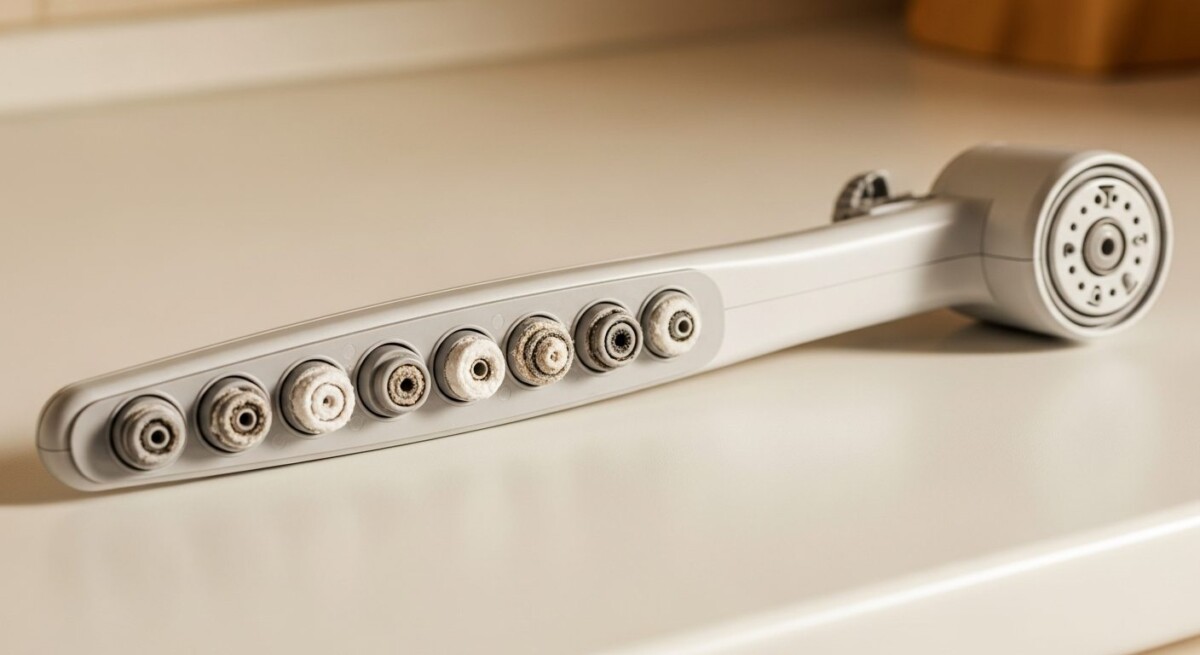
When spray arm holes scaled by mineral deposits narrow the jets, water stops reaching parts of the load. Denver Metro tap water measures in the low hundreds of ppm of calcium and magnesium, producing hard water spray arm scale that builds inside holes over 12 to 18 months. Remove each arm, clear the holes with a toothpick, and rinse. A dishwasher not cleaning top rack while the bottom comes out clean points directly to the upper spray arm or its water supply tube.
Nine times out of ten, five minutes with a soft brush on the filter solves it. Denver’s water means those spray arm holes scale up faster than the manual assumes.
Many guides suggest you vinegar soak spray arms to clear mineral scale, but several manufacturers warn that vinegar degrades door and gasket seals. Use a dishwasher-safe descaler instead. If the top rack stays dirty after clearing the upper spray arm, check the upper arm feed tube on the back wall. A kinked or cracked tube cuts pressure to the upper arm even when its holes are open.
A full load that looks efficient often means spray arms cannot reach every surface. Plates face the center of the bottom rack toward the arm below; bowls and cups go on the top rack angled down. Tall items belong on the outer perimeter only. No pan should cover the detergent dispenser door.
The counterintuitive truth: pre-rinse hurts not helps when you use enzyme detergent. Those enzymes need food residue to activate. A fully pre-rinsed load leaves unactivated detergent on dishes as a waxy film. Scrape food off before loading and skip the tap entirely.
Old powder detergent, the wrong type for hard water, or too large a dose can leave dishes dirtier. Powder loses enzyme potency within about three months of opening once exposed to moisture. Gel formulas carry lower enzyme concentrations and underperform in hard water. Pods and tabs hold potency longer in sealed packaging and are the better choice for Denver Metro households.
The deeper problem is chemistry. Minerals bind surfactants in the same reaction that forms bathtub scum, reducing active cleaning compounds per dose. Adding more detergent only amplifies the reaction.
Enzyme detergents need 120 degree wash water to activate and rinse properly. Your machine may fill with cold water sitting in the supply line. Run the kitchen tap hot before starting a cycle so the first fill is already hot. If the internal heating element has failed, the machine fills with adequate water but never reaches wash temperature, leaving greasy film and undissolved detergent residue on every load.
An empty rinse aid reservoir is a frequent reason glassware comes out cloudy even though the surface is clean. Rinse aid prevents film by breaking water surface tension so water sheets off rather than drying as mineral spots. In Denver Metro, where tap water runs moderately hard, rinse aid is essential, not optional; check the door panel indicator monthly and refill before it bottoms out. When a dishwasher not cleaning as well is the only symptom and the dishes feel clean but glasses are cloudy, top off rinse aid before anything else.
A dishwasher not washing properly after all six of these checks points to an internal component. Schedule a dishwasher repair in Denver and our insured technicians will diagnose the exact fault.
A dishwasher not fully cleaning after all six checks has a component fault. Three mechanical failures account for most pro-tier cases. I find the mid-cycle tub-coverage check the quickest way to distinguish between them. Persistent cleaning problems that survive all six checks point to a mechanical fault, and an insured technician should take it from there.
The most common mechanical culprit is wash pump impeller failure: a pump impeller worn or cracked causes the circulation pump to deliver too little pressure through the spray arms. At the mid-cycle water check, open the door three to four minutes in and confirm the lower arm is actively spraying and the tub floor is several inches deep. A restricted water inlet valve is suspect when the tub floor is barely wet at that check. A failed heating element runs the cycle but never reaches 120 degrees, leaving greasy residue on every load.
On KitchenAid and Whirlpool platform machines, a diverter valve stuck in the lower-only position routes all water pressure to the bottom rack; top-rack cleaning fails every cycle until it is replaced. If the unit is aging and failing on multiple fronts, our team can assess whether a new dishwasher installation is more cost-effective than repair. Residential service runs through our dishwasher repair page. For restaurant equipment, see our commercial dishwasher repair team.
When a dishwasher is not cleaning dishes, the cause is usually filter clogs that leave dishes still dirty, spray arm scale blocking the jets, or loading patterns that shield items from the spray. Check the filter and spray arms first; that resolves most cases without tools. If those check out, verify water temperature, detergent type, and rinse aid before calling a technician.
The fix almost always starts at the filter. Remove and rinse the filter, then check that each spray arm spins freely with clear holes. If dishes are still dirty, run the tap hot before the cycle, switch to pod detergent, and fill the rinse aid dispenser. Dishwasher not cleaning dishes properly after all six checks points to a pump, inlet valve, or heating element. When homeowners tell us my dishwasher is not cleaning my dishes and every DIY check is already done, that is a technician call.
A consistently dirty top rack almost always traces to the upper spray arm or its water feed tube on the back wall of the tub. Remove the arm, clear each hole with a toothpick, and inspect the feed tube for kinks or cracks. On Samsung and LG models, press the upper arm connection firmly until it clicks. A diverter valve stuck in the lower-only position on KitchenAid or Whirlpool machines routes all water to the bottom rack, leaving the top rack dirty every cycle; that repair requires a technician.
Clean the filter monthly under normal use. In Denver Metro homes where tap water runs in the moderately hard range, mineral buildup accelerates clogging; daily users should go to every three weeks. Signs you waited too long: food on dishes after a full cycle, musty smell inside the tub, or visible debris on the mesh.
Scraping food off dishes before loading is good practice, but a full pre-rinse is counterproductive. Enzyme detergents need a small amount of food residue to activate. A fully pre-rinsed load gives the enzymes nothing to work with, and unactivated detergent leaves a waxy film on dishes. Scrape, do not pre-rinse.
Wilson and Myers provides dishwasher repair and cleaning-performance diagnosis across Denver Metro Area, including Denver, Boulder, Lakewood, Aurora, Littleton, Englewood, Sheridan, Wheat Ridge, Edgewater, Golden, Arvada, Westminster, Thornton, Northglenn, Commerce City, Brighton, Broomfield, Superior, Louisville, Lafayette, Longmont, Erie, Centennial, Greenwood Village, Cherry Hills Village, Glendale, Parker, Castle Rock, Highlands Ranch, Lone Tree, and Morrison.
Our insured Denver Metro technicians diagnose spray arm blockages, worn pump impellers, and inlet valve faults, and get your dishwasher cleaning properly again.
Found This Helpful?
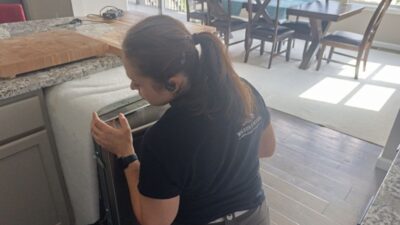
A residential dishwasher leaking from bottom rarely fails where the dishwasher puddle on floor tiles appears. Pull the kick panel; the highest wet surface mark…
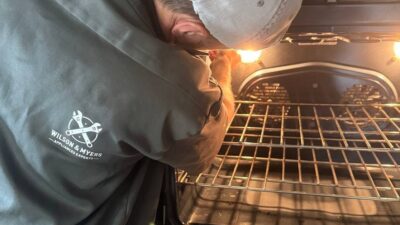
It is a week before Thanksgiving, and you set the oven to 350 degrees before starting the stuffing. Forty minutes later, the preheat signal fires. That is roug…
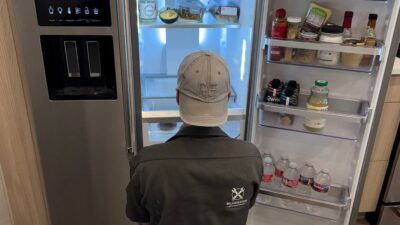
Has your refrigerator water dispenser stopped delivering water? In my experience, a large share of these calls end before a technician arrives. A child lock ac…
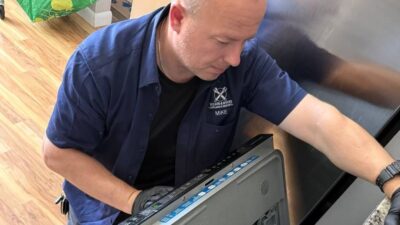
You open the dishwasher after the cycle and the plates look exactly as you loaded them: dry, cold, with last night's dinner still caked on. Your dishwasher is…
A washer that shakes violently during spin traces to one of seven causes, from a bunched load to a failed drum bearing. Here is the order to check them, and th…
F8 E4 means water reached the drip tray, not a fill fault. Here is the two-step reset and why it can fire on a brand-new install with a dry tray…
Welcome to the community.
You'll receive our next expert update soon.

Wilson & Myers is a verified member of the Denver Metro Chamber of Commerce.


