
Need a Professional Hand?
If a DIY fix isn't enough, our insured technicians are just a click away. We’ll diagnose the issue and get your home running right again.
BOOK NOWBosch dishwasher not draining? Start with the bottom cylinder filter. A clogged filter causes most drain failures on Bosch 300, 500, and 800 Series machines, and cleaning it takes about ten minutes. Most drain failures trace back to a filter that has not been cleaned in six months or more. If the problem persists after that, work through the causes below in order before calling a pro.
| Symptom | Most Likely Cause | What to Do |
|---|---|---|
| Small amount of water below filter level | Normal residual, not a failure | No action needed |
| Standing water across the tub floor (E22) | Clogged dishwasher filter | See the Bosch dishwasher E22 guide |
| Water pools after every cycle | Kinked drain hose or failed check valve | Inspect hose behind dishwasher; check valve under pump cover |
| New disposal installed, never drained (E24) | Garbage disposal knockout plug still in place | Remove plug from disposal drain inlet |
| Water backs up into tub after draining | Clogged air gap or loose high loop | Clear air gap cap; verify high loop height |
| Filter clean, hose clear, still won’t drain (E25) | Drain pump blocked or motor failure | Access pump cover; clear impeller; call a tech if motor failed |
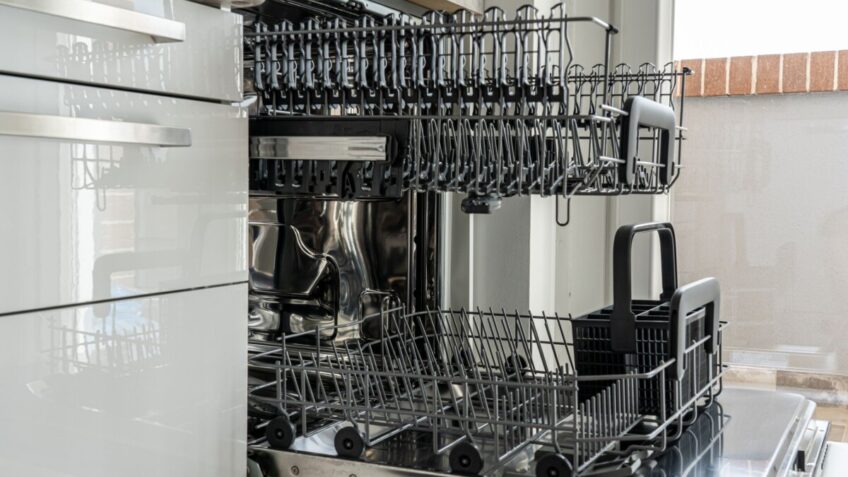
A thin layer of water sitting below the filter level is normal on every Bosch dishwasher. Bosch intentionally leaves a small amount of residual water in the sump to keep the drain seal lubricated. Real failure looks different: Bosch dishwasher water in bottom that covers the full tub floor, typically an inch or more deep, still sitting there after the cycle has fully completed.
Run a quick test first. Cancel the current cycle, power off at the breaker, and shine a flashlight into the tub. If the water is only below the filter housing and the floor of the tub is dry, you do not have a drain problem. If the entire tub floor is wet and water sits above the filter, clean the filter first before checking anything else.
The bottom cylinder filter is Bosch’s primary food-catch mechanism. Every Bosch 300 Series, Bosch 500 Series, and Bosch 800 Series unit uses the same fine-mesh cylindrical design. When homeowners ask why their dishwasher won’t drain, the filter is always the first thing our techs pull. Nine times out of ten, a clogged filter is the answer. When it fills with debris, water has nowhere to go.
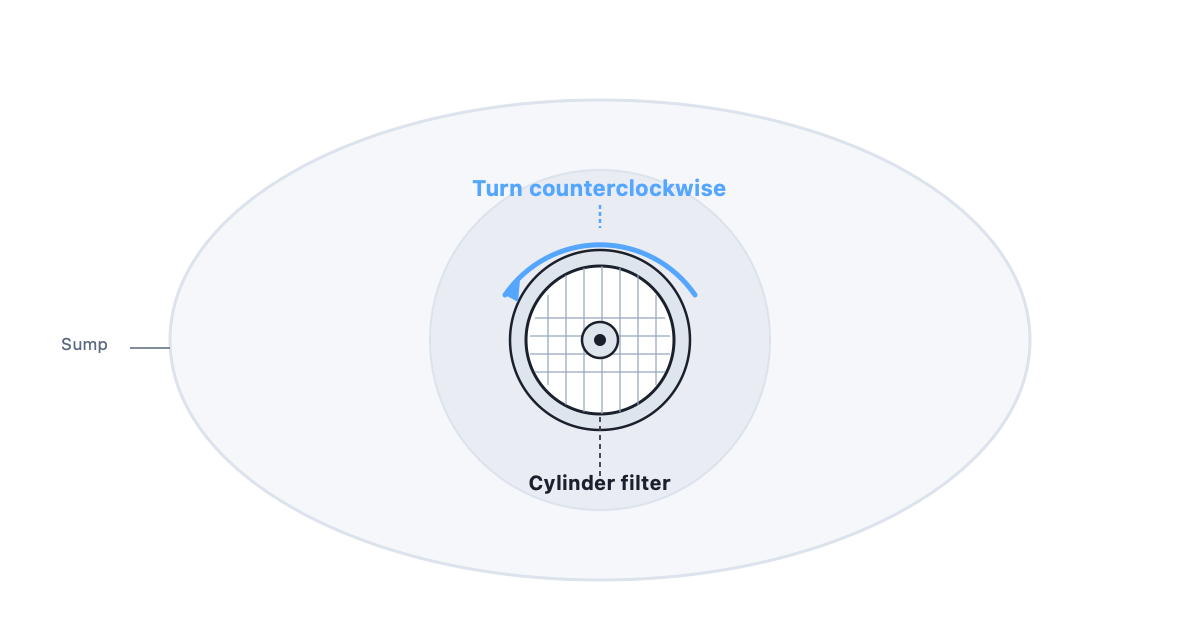
This procedure works across all residential Bosch dishwasher series, including the Bosch Ascenta and Bosch Silence Plus 44 dba. The filter assembly and removal method are identical across all of them.
Monthly cleaning is what Bosch recommends in its owner manuals. Whether a homeowner reports Bosch dishwasher standing water or says my Bosch dishwasher is not draining, the call almost always traces back to a filter that has not been touched in six to eighteen months. A baking soda vinegar rinse through an empty cycle (one cup of white vinegar, then a tablespoon of baking soda) once a month helps keep the sump clear between filter cleanings. It takes five minutes.
Nine times out of ten, a Bosch that won’t drain has a filter packed with food debris. I’ve seen homeowners spend an hour testing the pump when a two-minute filter clean would have fixed it.
Daniel Owens, Kitchen Appliance Tech, Wilson & Myers
If cleaning the filter did not solve it, the Bosch dishwasher drain hose is the next thing to check. The drain hose runs from the pump behind the dishwasher to either the garbage disposal inlet or a standpipe under the sink. A sharp kink in the hose blocks water completely. Same principle as a bent garden hose.
Pull the dishwasher forward slightly or open the cabinet below the sink to trace the hose path. Look for any 90-degree bends or points where the hose is pinched against the cabinet wall. Then verify the high loop. The hose must loop up to at least 32 inches above the floor before descending to the disposal or standpipe. A drooping hose allows drain water to siphon back into the tub. Homeowners often describe this as Bosch dishwasher not draining at end of cycle, even though it drained partway through.
The check valve is a small rubber flap beneath the pump cover. Its job is simple: keep drained water from flowing back into the tub. When it sticks in the closed position, water accumulates even though the drain hose and filter are both clear.
Accessing the check valve requires removing the pump cover, which is covered in the pump section below. If the valve is visibly torn, cracked, or stuck, replacement is a straightforward part swap. For dishwasher repair that goes beyond hose and filter, our insured technicians carry the diagnostic tools to test the check valve and drain solenoid properly.
Every new garbage disposal ships from the factory with a plastic knockout plug sealing the dishwasher drain inlet. The installer must physically knock that plug out before connecting the drain hose. If your disposal was installed without removing it, the drain hose is physically blocked at the inlet and the dishwasher won’t drain at all, regardless of how clean the filter is.
The knockout plug is a solid plastic disc that sits inside the disposal’s dishwasher drain inlet port. It is not a defect. Manufacturers include it because many disposals are installed without a dishwasher present, and the plug keeps the inlet sealed until it is needed. The plug is about the diameter of a quarter and sits roughly an inch inside the inlet port.
To check whether yours is in place: disconnect the drain hose at the disposal inlet and shine a flashlight straight into the port. A solid disc blocking the opening means the plug was never removed. An open circular tube means it was removed correctly. E24 on the display panel almost always accompanies this failure on Bosch dishwashers. Check the display first.
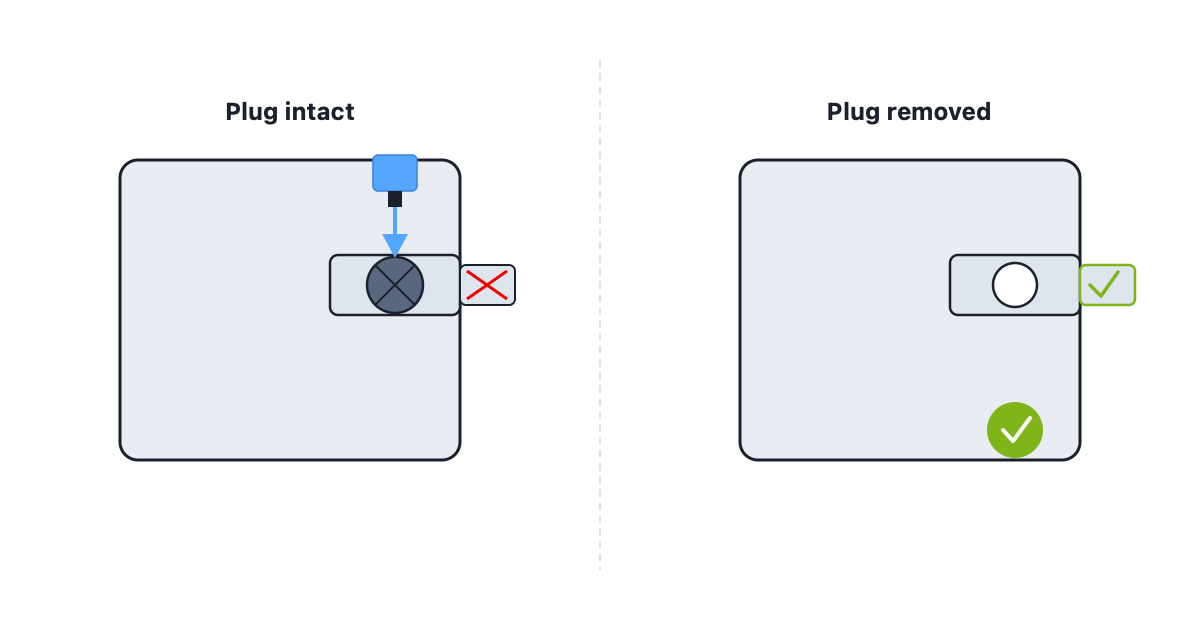
Knockout plug removal requires a flathead screwdriver, a hammer, and two minutes. Power must be off at the breaker before you start.
The air gap is a small chrome or plastic cylinder mounted on the sink deck, usually near the faucet. It prevents backflow from the sink drain into the dishwasher by breaking the siphon connection. When mineral deposits or debris clog it, water backs up through the air gap fitting instead of exiting cleanly. That backup causes Bosch dishwasher not fully draining symptoms even when the drain path itself is otherwise clear.
Fix: remove the decorative cap, then the inner cap, and clear any visible debris with a pipe cleaner or small brush. Reassemble and run a cycle. Denver’s hard water makes mineral buildup in air gaps more common here than in softer-water markets.
If no air gap is installed, the drain hose must form a high loop instead. No air gap means the loop is the only backflow barrier. Secure the hose to the underside of the countertop so the loop peak sits at least 32 inches above the floor. A hose that was never secured or has worked loose over time will allow drain water to siphon back into the tub. Reattach with a cable tie or hose clamp and verify the loop height before running the next cycle.
Remove the bottom rack and the filter assembly. The pump cover is the white plastic disc visible directly below the filter housing in the sump area. The pump cover pry point is a small notch at the edge: insert a spoon handle and lever it up. Gloves are required. Broken glass is the most common debris found around the impeller on service calls. Power off at the breaker before starting this step.
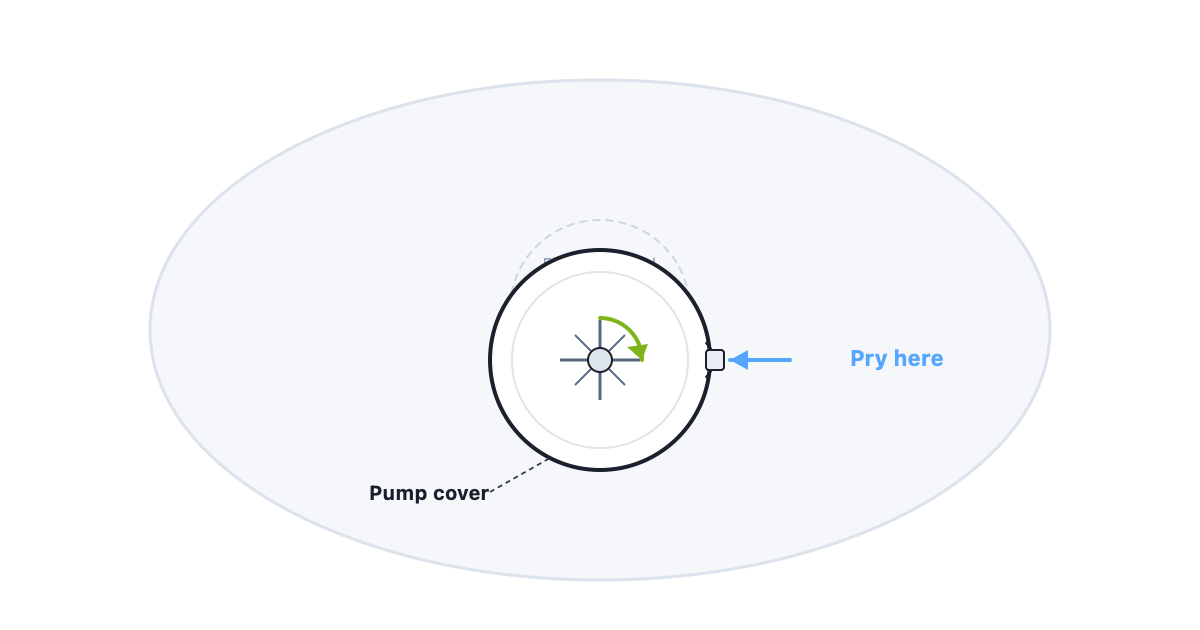
With the cover off, spin the impeller with a gloved finger. It should rotate freely with light resistance. If it does not move, impeller debris is jammed against it. Clear the blockage. Attempt to spin again before reassembling. This is the correct fix for the majority of E25 error codes.
Cleaned the filter, checked the hose, cleared the knockout plug, and verified the air gap? If the impeller spins freely and no blockage is present, the fault lies in the pump motor or drain solenoid. Your Bosch dishwasher won’t drain at this point without professional diagnosis. Pump motor failure has a distinct sound. A loud buzzing at the end of the cycle points to impeller debris still lodged inside. A scraping sound suggests a cracked impeller fin. Humming with no drain attempt means the motor is failing electrically.
Testing pump motor resistance requires a multimeter and a service manual. The normal reading for the Bosch drain pump is 15-40 ohms. That test is technician territory. A Bosch dishwasher not draining completely after the impeller clears points to the motor. Homeowners who have worked through every step above and still see standing water have eliminated every DIY-accessible cause.
When you search how to drain Bosch dishwasher tubs manually, the steps are the same across every series. Standing water blocks access to the filter and pump cover, so removing it first is the right move. On most models, holding the Start button for three to five seconds is the Bosch dishwasher not draining reset that cancels the active cycle and triggers a short drain attempt. If the machine will not respond at all, use this procedure to clear the tub.
This manual drain procedure also applies when the Bosch dishwasher troubleshooting not draining process requires physical access to the pump cover with no standing water present.
Bosch displays drain-related error codes at the end of a failed cycle. Match the code to the correct first check before pulling any components.
| Code | Meaning | First Check |
|---|---|---|
| E22 | Filter blocked | Its own diagnosis, see the E22 guide |
| E24 | Drain path blocked | Check hose, knockout plug, and filter. Full code guide: Bosch dishwasher E24 error |
| E25 | Drain pump blocked | Remove pump cover and clear impeller debris |
For Bosch drain issues linked to the E15 flood-protection code, see our related guide on Bosch dishwasher E15 error causes and fix. For other common dishwasher symptoms, the dishwasher not drying guide covers the dry-side diagnostic sequence.
The most common reason is a clogged bottom cylinder filter. Food debris packs the fine mesh, blocks water flow, and triggers an E22 code. After the filter, check the drain hose for kinks and the drain hose high loop for slack. If a new garbage disposal was recently installed, the knockout plug may still be blocking the inlet. Pump failure is the cause only after all of these are ruled out.
When the filter is clean, the hose is clear, and the knockout plug was never installed, the fault shifts to the Bosch dishwasher drain pump itself. A jammed impeller, a stuck check valve, or pump motor failure each produce standing water with no visible blockage. Spin the impeller by hand after removing the pump cover. If it rotates freely but the machine still will not drain, the pump motor needs professional diagnosis.
If Bosch dishwasher not draining water is still the issue after a cycle, hold the Start button for three to five seconds to trigger a drain reset on most models. If the machine will not respond, cancel the cycle, cut power at the breaker, pull the bottom rack, and use a turkey baster to remove standing water. A sponge finishes the job near the sump. This clears the tub so you can access the filter and pump cover for diagnosis.
A clogged dishwasher filter is the leading cause across all brands. When Bosch dishwasher water not draining is the complaint, the cylindrical filter is the first thing a technician checks. Beyond the filter, a kinked drain hose, a blocked air gap, or a garbage disposal knockout plug can each stop drainage completely. Pump failure is the cause only after the filter and hose are both ruled out.
Wilson & Myers provides dishwasher repair across Denver Metro Area, including Denver, Boulder, Lakewood, Aurora, Littleton, Englewood, Sheridan, Wheat Ridge, Edgewater, Golden, Arvada, Westminster, Thornton, Northglenn, Commerce City, Brighton, Broomfield, Superior, Louisville, Lafayette, Longmont, Erie, Centennial, Greenwood Village, Cherry Hills Village, Glendale, Parker, Castle Rock, Highlands Ranch, Lone Tree, and Morrison. Book online or call to confirm availability.
Our insured technicians diagnose Bosch dishwasher drain problems across Denver Metro Area. We source parts through national supplier networks and manufacturer contracts, so there is no trip to a store and no waiting on shipping.
Found This Helpful?
You opened the KitchenAid freezer this morning and the bin was empty. In my experience, the arm is the first thing worth checking: the fix costs nothing and ta…
A Frigidaire oven not heating can come down to a setting rather than a part. Before you book a repair, two checks cost nothing and take under a minute: the clo…
You open the dishwasher after the cycle and the plates look exactly as you loaded them: dry, cold, with last night's dinner still caked on. Your dishwasher is…
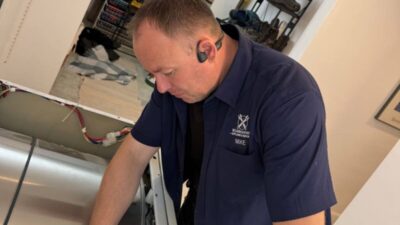
A Whirlpool dryer that tumbles but never heats traces to one of five faults, and three of them cost nothing to check. Here is the order to work through them, p…
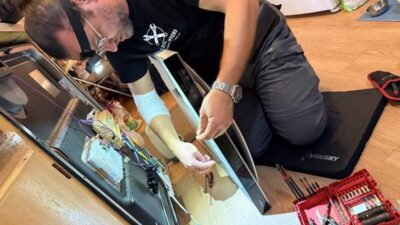
F8 E4 means water reached the drip tray, not a fill fault. Here is the two-step reset and why it can fire on a brand-new install with a dry tray…
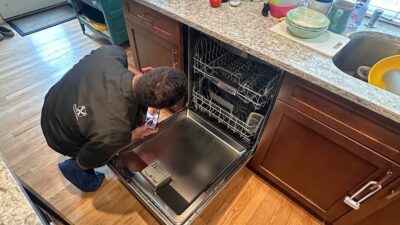
A Bosch dishwasher E22 error means one thing: the filter is blocked, and there is probably water sitting in the bottom of the tub…
Welcome to the community.
You'll receive our next expert update soon.

Wilson & Myers is a verified member of the Denver Metro Chamber of Commerce.


