

Need a Professional Hand?
If a DIY fix isn't enough, our insured technicians are just a click away. We’ll diagnose the issue and get your home running right again.
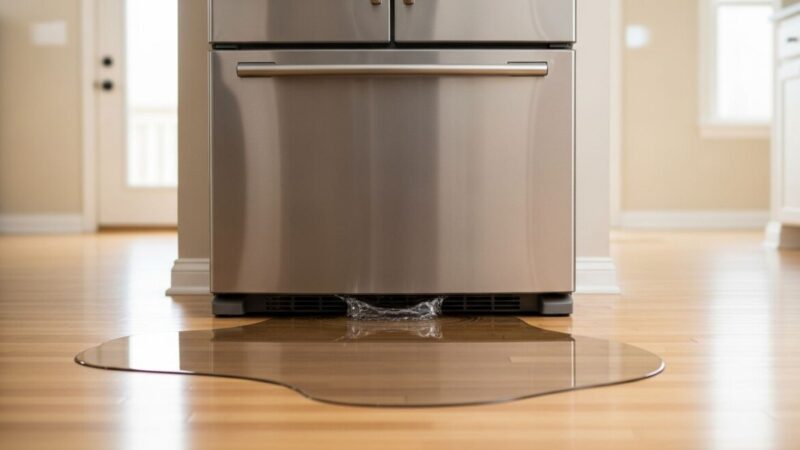
BOOK NOWAny puddle under the fridge reaches the subfloor in under 24 hours. When my refrigerator is leaking water, the cause traces to one of six known sources. A homeowner can locate it in under a minute, whether the fridge dripping water comes from under the crisper or water from bottom of the unit pools behind it.
If your fridge is also failing to keep temperature, a separate problem from a water leak, see our brand-specific diagnostic guides for Samsung, Whirlpool, and LG models. Those are a different diagnostic path.
Match your water location to the table below; most homeowners find the cause in under 60 seconds.
Refrigerator leaking water inside the fresh-food compartment usually traces to the defrost drain. Refrigerator water on floor in front points to drain or pan. Same six causes apply across top-freezer, bottom freezer, French door, and side by side models.
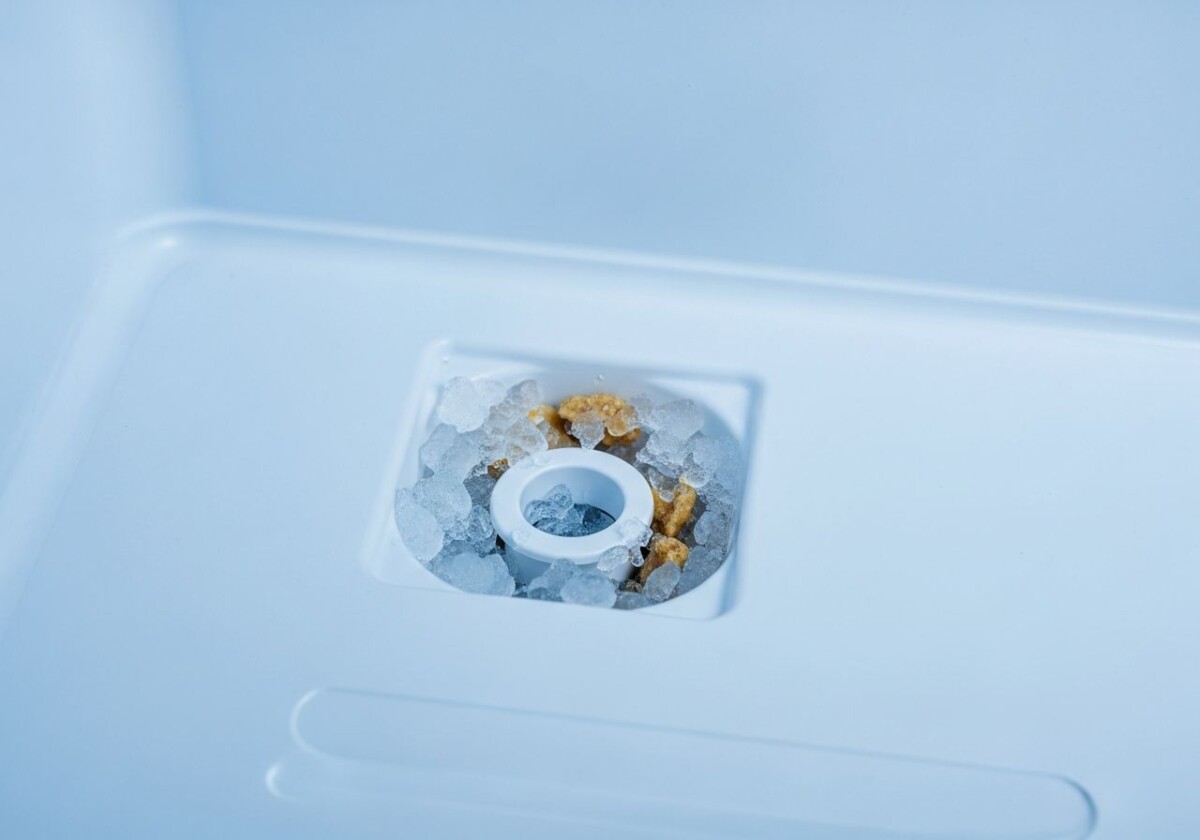
Water under the crisper drawer, or a puddle forming on the floor a day or two after the defrost cycle runs, points here. When a refrigerator leaks water on the floor a day after the defrost cycle runs, this drain is the first suspect. In fact, this is the single most common cause, accounting for roughly 30 to 40 percent of refrigerator leak diagnoses in Denver Metro.
Every fridge runs a timed defrost cycle that melts frost off the evaporator coil, sending meltwater down a small drain tube to the pan below. Food debris and ice fragments accumulate over months until the next cycle’s water backs up and pools inside the fresh-food compartment, or drips out through the base.
First, unplug the fridge. Never open any internal panel while it is live. The drain hole sits at the center of the freezer floor panel. On top-freezer models it is usually under the ice-maker tray; on French door models, check the rear wall. Using a turkey baster, work warm water with one tablespoon of baking soda into the hole.
After the drain clears, water will run into the pan below. If flow remains slow, keep flushing until you hear the drain running freely again. If you smell mildew near the crisper drawers, water has been sitting long enough to grow mold; the cleanup extends beyond the leak fix.
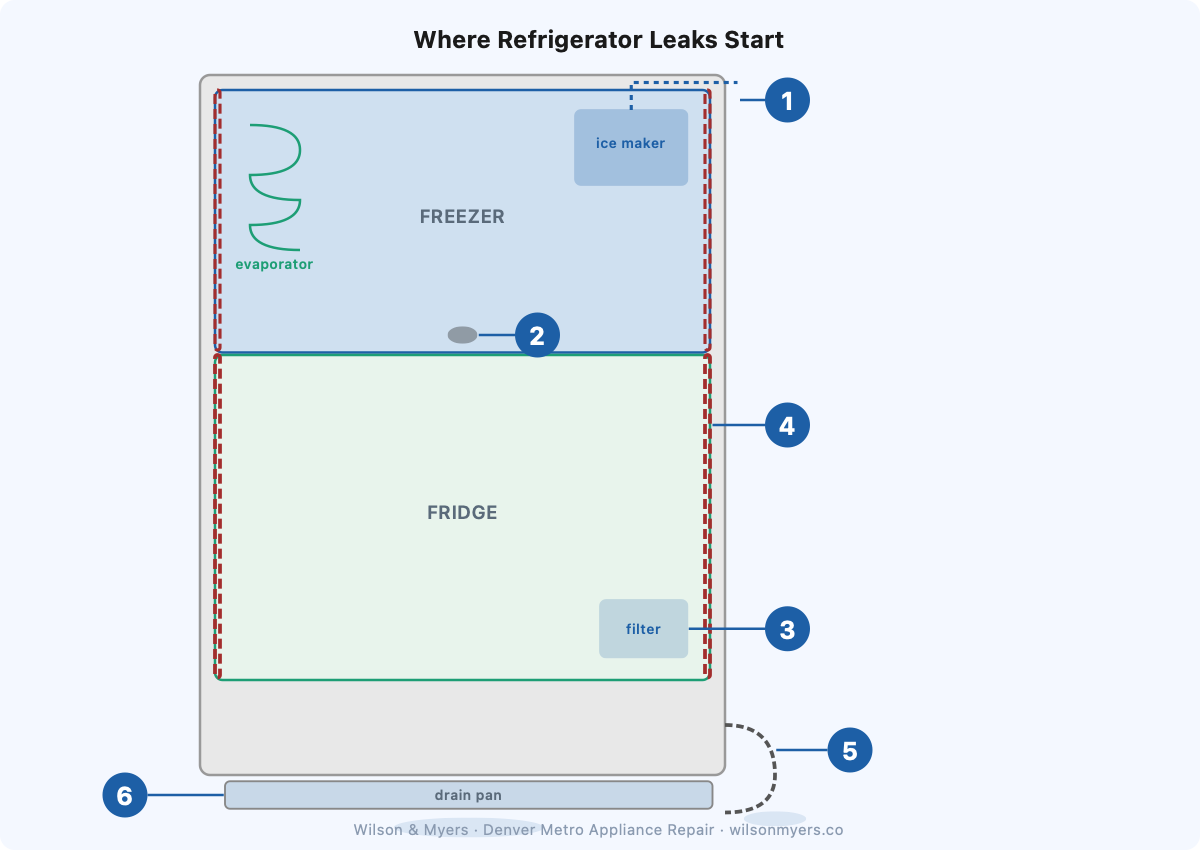
1. Ice maker line · 2. Defrost drain · 3. Filter housing · 4. Door gasket · 5. Supply line · 6. Drain pan
A fridge leaking water from bottom often points here. Water coming from bottom of fridge typically traces to a loose compression fitting or a worn saddle valve. Pull the fridge away from the wall and look for a wet patch behind the unit. The supply line connects via a compression fitting; a loose nut drips, and a quarter-turn with an adjustable wrench often stops it.
The check valve at the back can also fail, letting water back-siphon onto the floor. You may hear a faint gurgling or hiss from behind the unit when this happens. Saddle valves in pre-2010 Denver Metro homes corrode from the inside and require a licensed plumber to replace the wall shutoff valve. We also offer refrigerator water line installation in Denver as a standalone service.
A slow drip from the front of the fridge, after the defrost drain checks out clean, points to the meltwater catch-basin below the unit. Pull the kick plate and slide out the pan. Frigidaire bottom-freezer models from certain production runs have a known pan-cracking issue documented in manufacturer service bulletins, making pan replacement a parts-only swap.
An overflowing pan without a visible crack usually means the defrost drain runs too long. When that happens, flush the drain tube. That clears the root issue.
Close the door on a dollar bill and try to slide it out. If it pulls free without resistance, the gasket has lost its seal at that spot. Test all four sides of both doors.
Because a bad seal is gone, warm humid Denver air leaks in and condenses inside the cabinet. You will see droplets on interior walls and may notice a faint musty smell if the condensation has sat for a few days. Gasket replacement is a confident-DIYer job on most models; a warped door frame is a pro alignment call.
An ice maker leaking water shows up around the fill cup, the housing, or on the freezer floor. A crack or loose fitting in the small plastic line feeding the ice maker shows up as water around the housing or pooling on the freezer floor. You may also hear water trickling where no trickle should be.
A faulty water inlet valve can cause the fill cup to overflow, sending water down the freezer wall. Line replacement is mid-level DIY. However, inlet valve work needs a tech. For a no-ice diagnosis, see our ice maker not making ice guide.
This pattern shows up most in Denver Metro kitchens with north-facing walls or garage-adjacent appliance alcoves. Check for it first when there is no water at the dispenser, no ice, and a small floor puddle. The water line behind the fridge will feel rigid rather than pliable when frozen. That confirms the diagnosis.
Once you confirm the freeze, unplug the fridge, pull it from the wall, and run a hair dryer on low heat along the line until water flows freely again. No parts needed, no service call. Once thawed, wrap the line in foam pipe insulation. Denver altitude and cold-snap temperature swings make this a recurring winter issue in older kitchens. A fridge leaking water in this pattern resolves completely once the line thaws and is insulated.
The flat-back defrost drain in these units routes meltwater along a shorter path that cools faster, making refreeze and clog more likely than on competing layouts. Our techs go to the defrost drain first on the majority of these leak calls in Denver Metro. See the Samsung refrigerator repair page and our Samsung fridge not cooling guide for companion diagnostics.
The variable-speed compressor runs longer per cycle, generating more condensation than conventional units. On some early Inverter Linear models, drain pan capacity is undersized for this volume; if the pan overflows without a visible crack, check compressor cycle duration. Our LG refrigerator repair page lists service options.
Sub-Zero leaks almost always trace to the defrost drain or supply line. See our repair page and the service article for sealed-system edge cases.
GE Monogram’s top-mount filter has an O-ring that does not always reseat when a new cartridge goes in. When water drips from the upper interior after a swap, reseat the cartridge and inspect the O-ring. Our GE refrigerator repair page covers Monogram service.
Older units connect to saddle valves that corrode from the inside. If your fridge is leaking from behind and is more than 15 years old, that valve is the first suspect, making this a plumber call. See Whirlpool refrigerator cooling issues and our Whirlpool refrigerator repair page for appliance-side diagnostics.
Certain production runs carry a manufacturer service bulletin on drain tray cracking. If yours drips from the front and the defrost drain checks out clean, pull the kick plate and examine the tray under good light. Full service options for Frigidaire appear on our Frigidaire repair page.
On Samsung French Door calls, the flat-back drain geometry is almost always the culprit. We go to that drain before we even pull the kick plate.
Alex Feldman, W&M Refrigeration Expert
Before opening any panel, check whether your refrigerator is under manufacturer warranty, because self-repair may void coverage. Parts sourcing for inlet valve and water supply line work runs through our national supplier networks and manufacturer contracts.
Not sure which cause applies to your fridge? We run diagnostics across all brands and give you a clear answer.
Four scenarios belong to a licensed plumber. Knowing the boundary saves you a misrouted service call and gets the right person there faster.
Saddle-valve replacement. Saddle valves pierce into the household copper pipe. Replacing one requires shutting off your home’s main water line. That is plumber work by definition.
Damaged copper wall line. If the supply line at the wall end is kinked or corroded past the fridge fitting, repair may require soldering. That crosses into plumbing-code territory regardless of the appliance involved.
Water-hammer pressure issues. This is the thudding you hear when water flow stops and pressure spikes stress compression fittings on every surge. If you have replaced the fridge water line twice in two years, a plumber installs an expansion tank or pressure-reducing valve at the main.
Frozen wall pipes. Denver winters occasionally freeze pipes inside exterior walls, not just the line to the fridge. If the line is thawed and flowing but other fixtures on that wall still have no pressure, the pipe inside the wall is frozen. A plumber handles that.
A clogged defrost drain or a damaged water supply line explains the majority of floor leaks. Water appearing in front of the fridge points to the drain or drain pan; water behind the fridge points to the supply line. Both have clear diagnostic paths, and most cases resolve at one of these two checks. Water inside fridge under the crisper drawer narrows it further to the defrost drain specifically.
Unplug the fridge and locate the drain hole at the bottom of the freezer compartment. Flush warm water mixed with one tablespoon of baking soda into the hole using a turkey baster. When the drain clears, water will run into the pan below. Most clogs clear in under five minutes.
Appliance repair handles any leak originating inside or under the unit: defrost drain, drain pan, gasket, ice maker line, or inlet valve. This applies whether you have a side by side refrigerator leaking water or a French door model. A licensed plumber handles saddle-valve replacement, damaged copper wall lines, and water-hammer pressure issues. Leak inside the fridge means appliance repair; leak at the wall means plumber.
A clogged defrost drain explains this almost every time. Water coming from the bottom of the fridge interior, or pooling under the crisper drawers, almost always traces to this blocked drain tube. Clearing the blocked drain with warm water resolves this within one defrost cycle. If it returns within a week, a tech clears the ice plug in under 20 minutes.
Clearing a clogged defrost drain costs nothing. Door gaskets are low-cost parts with mid-level DIY install. Water supply line work is either a parts-only DIY or a quick service call. Inlet valve replacement needs a technician, and parts are available through our supplier networks.
Close the door on a dollar bill, then try to slide it out. If it pulls free without resistance, the gasket has lost its seal at that spot. Test all four sides. A bad seal lets warm humid air leak in, which condenses inside as water droplets on interior walls. You may also notice a faint musty smell near the crisper after a few days; that is condensation accumulation, not a separate problem.
Puddles under the crisper drawer, a wet floor in front, pooling behind the unit: whichever pattern brought you here, the fix path is the same. Anyone searching how to fix refrigerator water leak finds the same path through those six checks. A homeowner asking what causes a refrigerator to leak water from the bottom finds the answer in one of them. Locate the source, match it to one of the six causes above, and either clear it yourself or call a pro for the parts-level work.
When you need a pro, Wilson & Myers provides insured refrigerator repair in Denver Metro across all major brands: Samsung, LG, Whirlpool, GE, Frigidaire, Sub-Zero, and more. For homes replacing an old saddle-valve connection, we also handle refrigerator water line installation in Denver. Parts sourcing for inlet valve and supply line work runs through national supplier networks and manufacturer contracts.
Insured technicians serve homeowners across all 31 cities in the Denver Metro Area.
Denver, Boulder, Lakewood, Aurora, Littleton, Englewood, Sheridan, Wheat Ridge, Edgewater, Golden, Arvada, Westminster, Thornton, Northglenn, Commerce City, Brighton, Broomfield, Superior, Louisville, Lafayette, Longmont, Erie, Centennial, Greenwood Village, Cherry Hills Village, Glendale, Parker, Castle Rock, Highlands Ranch, Lone Tree, and Morrison.
Locate the source, match it to one of the six causes, and act before the floor pays for the delay.
Water on the floor behind the fridge or under the crisper drawer? Our insured techs diagnose and fix refrigerator leaks across Denver Metro.
If the leak traces back to a frozen defrost drain or a failed water-line fitting, our insured technicians handle it across the Denver Metro Area. Book online and we will confirm your visit.
Found This Helpful?
A residential dishwasher leaking from bottom rarely fails where the dishwasher puddle on floor tiles appears. Pull the kick panel; the highest wet surface mark…
It is a week before Thanksgiving, and you set the oven to 350 degrees before starting the stuffing. Forty minutes later, the preheat signal fires. That is roug…
You opened the KitchenAid freezer this morning and the bin was empty. In my experience, the arm is the first thing worth checking: the fix costs nothing and ta…
Has your refrigerator water dispenser stopped delivering water? In my experience, a large share of these calls end before a technician arrives. A child lock ac…
You open the dishwasher after the cycle and the plates look exactly as you loaded them: dry, cold, with last night's dinner still caked on. Your dishwasher is…
A washer that shakes violently during spin traces to one of seven causes, from a bunched load to a failed drum bearing. Here is the order to check them, and th…
Welcome to the community.
You'll receive our next expert update soon.

Wilson & Myers is a verified member of the Denver Metro Chamber of Commerce.


