


Need a Professional Hand?
If a DIY fix isn't enough, our insured technicians are just a click away. We’ll diagnose the issue and get your home running right again.
BOOK NOWYour refrigerator started making a sound you have never noticed before. Maybe it is a hum that grew louder overnight, a rattle that started last week, or a fridge making weird noise you cannot place. Some of these noises signal nothing more than normal operation. Others mean a compressor is struggling and your food is […]
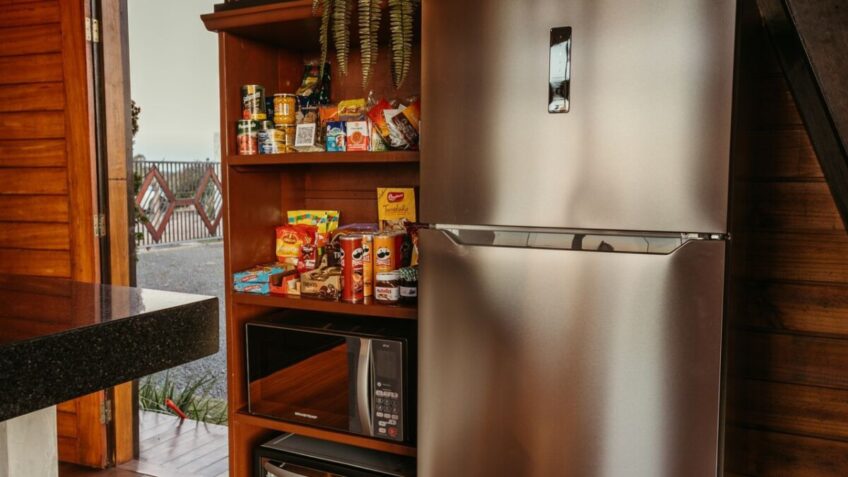
Your refrigerator started making a sound you have never noticed before. Maybe it is a hum that grew louder overnight, a rattle that started last week, or a fridge making weird noise you cannot place. Some of these noises signal nothing more than normal operation. Others mean a compressor is struggling and your food is already at risk. If you are standing in the kitchen thinking my refrigerator is making noise and you cannot tell which it is, this guide sorts it out fast. A refrigerator making noise is one of those situations where the sound itself tells you what to check first, if you know what to listen for.
Refrigerator making noise? The triage table below maps each sound to its likely cause and gives you a fast DIY-or-pro verdict. Most rattling and clicking sounds are a 10-minute fix. Constant loud humming or any chemical smell near the back of the unit needs a pro promptly. Book online if the table points to a compressor or evaporator fan issue.
| Sound | Likely Cause | DIY or Pro? |
|---|---|---|
| Soft hum (15-30 min on/off) | Compressor duty cycle | Normal |
| Loud constant hum + not cooling | Failing compressor | Pro: call promptly |
| Click-buzz-click every few minutes | Start relay failing | DIY, low-cost part |
| Rattling from bottom front or rear | Drain pan or condenser fan debris | DIY: 10 minutes |
| Click every 10-12 hours | Defrost timer cycling | Normal |
| Popping or cracking | Thermal expansion of interior walls | Normal |
| Grinding from freezer compartment | Evaporator fan motor or ice on blades | Pro: evaporator access needed |
A refrigerator makes several sounds that have nothing wrong with them. Knowing these prevents a lot of unnecessary worry. The compressor runs for 15 to 30 minutes, then rests for a similar stretch. That rhythmic hum and the silence that follows are exactly what a healthy unit sounds like. Gurgling or bubbling after the compressor shuts off is refrigerant flowing through the evaporator coils. Normal. A clunk from the freezer every hour or so is ice dropping into the bin.
Popping and cracking are plastic interior walls expanding and contracting as temperature cycles. That is normal too. If any of these descriptions match your refrigerator making noise, move on with your day. Where noise becomes a concern is a pattern change from what you know. A hum that used to be quiet now fills the room. A click repeats every few minutes rather than every 10 hours. A sound started alongside a temperature change inside the cabinet.
When the compressor starts laboring, the hum shifts from background noise to something you can hear clearly from the next room. A healthy compressor runs its cycle and stops. A struggling one keeps going, often because dirty condenser coils are making it work twice as hard, or because the start relay is failing and the compressor cannot complete a clean startup.
The most urgent signal is a loud, constant hum combined with a refrigerator that has stopped cooling properly. At that point the sealed system is compromised and the fridge cannot recover on its own. Food safety becomes the priority. If you are asking why is my refrigerator humming louder than it used to, a fridge making humming noise that is getting worse each day is the compressor signaling it needs evaluation.
If you hear a click-buzz-click pattern repeating every few minutes, the start relay is the likely suspect, not the compressor itself. Pull the fridge from the wall, locate the small relay clipped to the side of the compressor, and give it a shake. A rattle inside means the relay’s internal contact has broken. Replacing it costs very little and takes about 20 minutes. If a new relay does not stop the clicking, the compressor itself needs evaluation by an insured technician. That is a pro call involving refrigerant handling and EPA-608 certification. If your refrigerator is not cooling at the same time the hum changes, treat it as urgent.
We get more calls about fridge noise in July and August than any other month. Heat makes the compressor work harder, and if it is already struggling, that is when homeowners first notice the hum has changed.
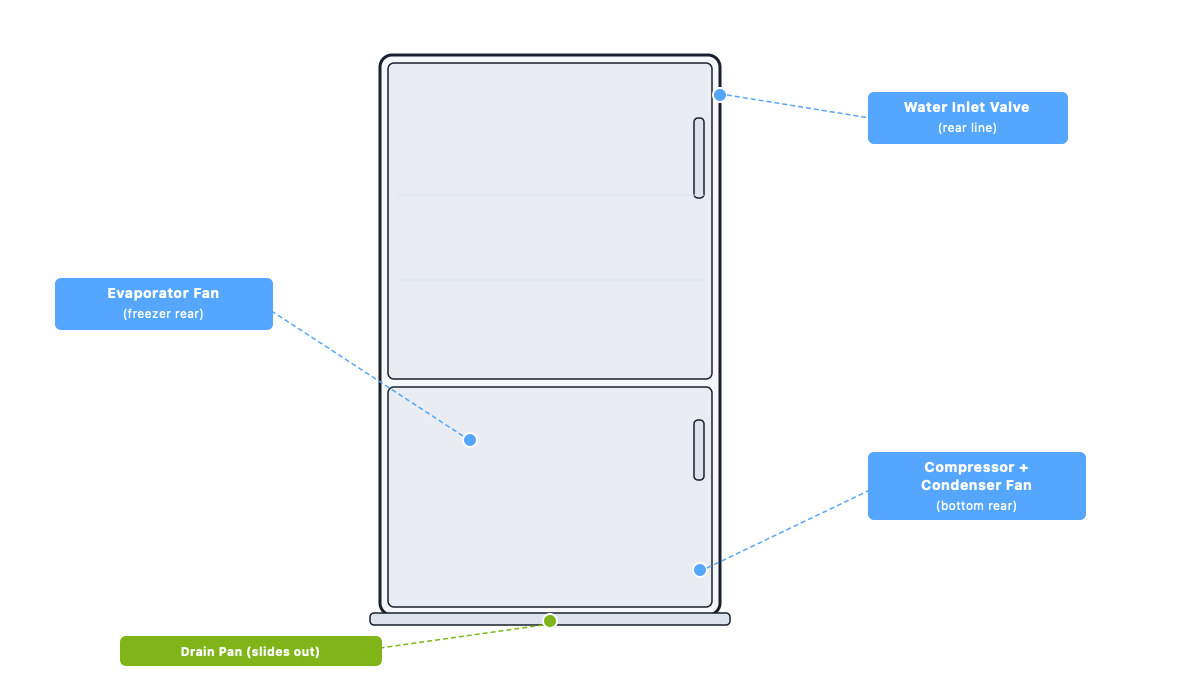
The condenser fan sits at the bottom rear of the refrigerator, pulling air across the condenser coils. When pet hair, dust, or a stray piece of cardboard catches in the fan blades, the fan starts to labor and the hum from the bottom of the unit gets louder. Pull the fridge away from the wall, remove the rear access panel, and clear the blades. Spin them by hand to confirm they move freely.
If the blades spin but the motor makes a grinding whir, the bearings are worn and the motor needs replacement. Dirty coils add to the problem. When dirty condenser coils are caked with dust, the compressor has to run longer to shed heat, turning a quiet unit into a refrigerator making loud noise. This is also why a refrigerator making loud humming noise often clears up after a coil cleaning. Vacuum the coils at least twice a year with the fridge unplugged. On most Whirlpool, GE, and Frigidaire models, the coils sit behind the kick plate at the bottom front. Samsung and LG models often place them at the rear.
A short buzzing sound lasting two to three seconds every hour is the water inlet valve opening to fill the ice maker. It is normal. A fridge making buzzing noise that runs continuously, or a refrigerator making buzzing noise at random without any ice-making cycle, means the valve is stuck open or the solenoid has failed. The refrigerator buzzing noise in that case comes from the rear, where the water supply line connects. Replacement is an intermediate DIY repair: shut off the water supply line, disconnect the fitting, and swap the valve.
If your refrigerator has been humming louder than usual, rule out the start relay and dirty coils first. If the sound continues after those checks, our Wilson & Myers technicians can confirm whether the compressor needs service before food is at risk. Refrigerator repair in Denver Metro Area covers the noise diagnostics in this guide.
A refrigerator making clicking noise is one of the most common noise complaints. Most clicking is either a normal defrost cycle transition or a fixable start relay issue. Knowing which one saves you from an unnecessary service call.
Automatic defrost cycles run every 10 to 12 hours. At the start and end of each cycle, the defrost timer clicks once as it transitions between cooling and defrost modes. That single click every half-day is normal.
Continuous clicking, or clicking that repeats every few minutes, means the timer is stuck or the defrost heater and thermostat have failed. A simple test: locate the timer and advance it manually with a flathead screwdriver at the timer slot. If the fridge moves into defrost and the clicking stops, the timer is functional but something downstream in the defrost circuit has failed. A technician can test the heater element and thermostat in about 20 minutes to pinpoint which part failed.
The click-buzz-click pattern is the start relay’s signature. It fires, the compressor tries to start, fails, resets, and tries again every few minutes. Here is the shake test that confirms it:
LG linear compressors from model years 2014 through 2019 have an elevated failure rate and tend to show the click-buzz-click pattern earlier than expected. If you have an LG refrigerator from that period making this sound, skip ahead to a professional diagnosis rather than cycling through relays. For ongoing ice maker issues that accompany the clicking, the LG refrigerator ice maker not working guide covers that branch in detail.
Ice makers click, clunk, and buzz as part of normal operation. The harvest cycle runs roughly every one to one-and-a-half hours: the motor turns, ice releases from the mold, drops into the bin, and the fill valve buzzes briefly as the mold refills. If you hear a fridge making clicking noise only when the ice maker is cycling, that is the machine working correctly.
The concern is clicking that never produces ice, or a loud repeated knock from the freezer compartment. Check for an ice bridge: a frozen sheet spanning the top of the ice bin that tricks the sensor into thinking the bin is full. Turn off the ice maker for 24 hours to thaw it and restart the cycle. For Samsung models that have stopped making ice while still clicking, the Samsung fridge not making ice guide walks through the Samsung-specific diagnostic.
A fridge making rattling noise almost always traces to one of three spots: the drain pan, the condenser fan, or the leveling feet. Rattling is actually the most fixable category of refrigerator making noise. All three causes are DIY fixes that take under 15 minutes.
The drain pan is the most common source of rattling that homeowners overlook. It sits at the base of the refrigerator, slides under the unit, and catches defrost water. When the compressor vibrates the cabinet, a loose or slightly off-track drain pan resonates against the frame and produces a steady rattle. The fix takes 10 minutes:
Standing water in the drain pan can also trigger a bad smell inside the refrigerator. If you have noticed both a refrigerator making rattling noise and an odor, this is the first place to check. A drain pan that overflows onto the floor points to a clogged defrost drain line, which is a separate issue covered in the refrigerator leaking water guide.
An unlevel refrigerator amplifies every vibration the compressor produces. The front leveling feet should be adjusted so the unit tilts very slightly toward the rear, about one degree, enough that a door swings closed on its own rather than staying open. Turn the front leveling feet clockwise to raise a corner. Use a small level on top of the unit to confirm it is even side-to-side.
Loose items on top of the refrigerator, like a cutting board or a box of cereal, can produce a surprising amount of rattling when the compressor cycles. Inside, unsecured shelves and condiment jars rattle on glass shelving. Check those first if the rattle sounds like it is coming from inside the cabinet rather than underneath it.
Pet hair and small debris collect on condenser fan blades and inside the rear access area. Even a modest buildup makes the fan rattle against its housing. Pull the fridge out, remove the rear panel, and clear the blades and the surrounding area with a vacuum brush attachment.
While you are there, vacuum the condenser coils at the same time. A fridge making rattling noise from the rear almost always traces to this spot or to the drain pan. Two birds, one 10-minute fix.
A single loud thunk when the compressor starts or stops is normal. The compressor housing shifts slightly on its suspension springs as it powers up, producing a one-time knock that stops immediately. Repeated knocking during a compressor run cycle is different: worn suspension mounts let the compressor body contact the cabinet, and the vibration travels through the frame as a rhythmic knock. That is a pro repair.
A fridge making knocking noise from the freezer compartment usually points to the ice maker. An ice bridge, a solid sheet of ice across the top of the bin, can cause the harvest arm to knock repeatedly as it tries and fails to push through. Turn the ice maker off and let the bridge thaw for 24 hours. If refrigerator making knocking noise from the freezer persists after that, open the freezer and hold the door switch manually depressed while listening. Grinding or scraping from behind the rear panel points to the evaporator fan contacting frost buildup on the blades. That is also a likely cause when your freezer is not freezing properly. A fridge making noise when door is closed is often this same evaporator fan running behind the rear panel.
Plastic interior walls expand and contract as the temperature cycles, especially during and after defrost. The result is a series of refrigerator making popping noise or cracking sounds that alarm homeowners the first time they hear them. They mean nothing. Defrost cycles also produce hissing and sizzling as meltwater drips onto the defrost heater. Another normal sound.
A fridge making popping noise intermittently, tied to temperature changes or defrost timing, is benign. Continuous popping combined with a fridge that is not holding temperature is a different situation and points to a defrost system failure.
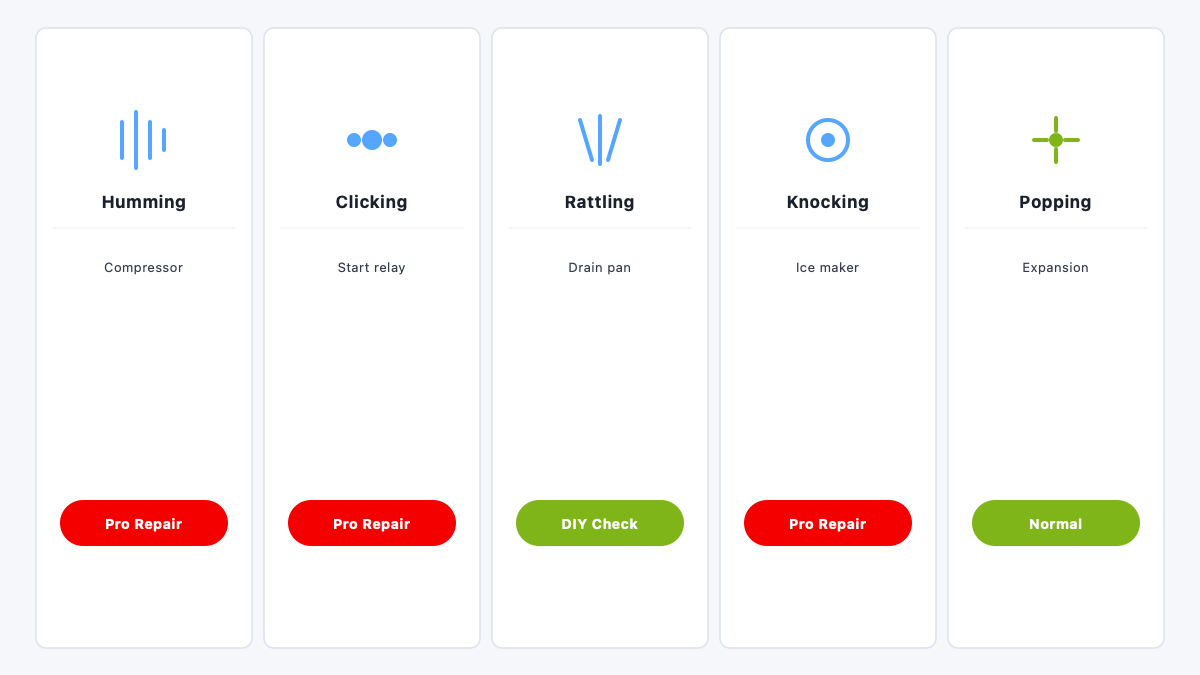
Most refrigerator noises are harmless. A hum from the compressor, ice dropping into the bin, and occasional popping from thermal expansion are all normal. A noisy fridge becomes a real safety concern when the sound signals a failing compressor, a refrigerant leak, or an electrical failure. Those three situations need a pro promptly.
Warning: Three danger signals: (1) Loud constant hum combined with the fridge not staying cold. (2) Chemical smell or oily residue near the rear of the unit while the compressor runs continuously. (3) Any burning smell with noise present.
The USDA and FDA standard for perishable food safety is 40 degrees Fahrenheit for no more than four hours. If your refrigerator is making a loud constant noise and the temperature inside has climbed, that four-hour window is already running. Do not wait to see if the sound goes away on its own.
A refrigerant leak is a separate concern. Refrigerants in common use today, R-134a and R-600a, are not acutely toxic at the volumes a home refrigerator carries, but they displace oxygen in confined spaces and federal law prohibits DIY handling. EPA Section 608 regulations require an EPA-608 certified technician for any sealed-system work, including refrigerant recovery, recharge, or repair.
Grinding from the freezer compartment combined with frost buildup on the back panel and a freezer that is losing temperature is the signature of an evaporator fan motor failure. It will not resolve itself. The longer it runs in that state, the more ice accumulates on the blades and the greater the strain on the evaporator coil behind it.
In the Denver homes I service, the noises that cannot wait are the three danger signals above: a constant loud hum with the fridge not cooling, any chemical or burning smell, and grinding from a freezer that is losing temperature. If your fridge shows any of them, call Wilson & Myers before food is at risk. Front Range summers make this worse than people expect, a compressor that has been straining quietly for months often fails in a single hot August week, so a sound you have lived with can become a breakdown fast.
Compressor or evaporator fan issues can turn into spoiled food and a full appliance replacement. Our insured refrigerator technicians serve Denver Metro Area and source parts through national supplier networks and manufacturer contracts. Book a refrigerator repair diagnostic and we will confirm what is causing the noise before it becomes a food loss situation.
Refrigerators make noise for a range of reasons, most of them normal. The compressor runs on a 15-to-30-minute duty cycle and produces a low hum. The defrost timer clicks every 10 to 12 hours. The ice maker drops ice and buzzes briefly when filling. Pay attention to sounds that changed recently: louder, more frequent, or accompanied by a temperature shift.
A refrigerator making noise has one of five causes. The compressor may be cycling normally. A component like the start relay or condenser fan may be starting to wear out. The drain pan or condenser fan may have debris causing a rattle. The defrost system may be producing its normal sounds, or the compressor itself may be failing. The triage table at the top maps each sound to its cause.
Most refrigerator noise is not dangerous. It becomes a safety issue in three situations. A loud constant hum combined with the fridge not cooling signals compressor failure and puts food at risk after four hours above 40 degrees Fahrenheit. A chemical smell or oily residue near the rear panel points to a refrigerant leak, which requires an EPA-608 certified technician. Any burning smell paired with a noise is an electrical failure: unplug and call for service.
A fridge making loud humming noise usually points to one of three causes. The compressor may be laboring because dirty condenser coils are forcing it to run longer. The condenser fan may have debris on the blades. Or the compressor is starting to fail. Clean the coils and clear the fan first. If the refrigerator humming continues, have the compressor evaluated.
Your fridge makes noise at night because the house gets quiet and the sounds that were always there become audible. The compressor runs its normal duty cycle around the clock, and defrost cycles often run in the late evening or early morning. If the noise at night is genuinely louder, the compressor may be running longer cycles as ambient temperature drops, amplifying a start relay or coil issue already developing.
The most common causes of a fridge making loud noise are dirty condenser coils (forcing the compressor to work harder), debris on the condenser fan blades, a loose drain pan rattling against the frame, or an unlevel unit amplifying compressor vibration. Clean the coils, clear the fan, reseat the drain pan, and adjust the leveling feet. If the refrigerator is still making loud noise after those four steps, the compressor or evaporator fan motor needs professional evaluation.
Wilson & Myers provides refrigerator repair across Denver Metro Area, including Denver, Boulder, Lakewood, Aurora, Littleton, Englewood, Sheridan, Wheat Ridge, Edgewater, Golden, Arvada, Westminster, Thornton, Northglenn, Commerce City, Brighton, Broomfield, Superior, Louisville, Lafayette, Longmont, Erie, Centennial, Greenwood Village, Cherry Hills Village, Glendale, Parker, Castle Rock, Highlands Ranch, Lone Tree, and Morrison. Our fridge repair service covers all major brands including Samsung, LG, Whirlpool, GE, Frigidaire, and Sub-Zero.
Our insured technicians diagnose refrigerator noise across Denver Metro Area. We source parts through national supplier networks and manufacturer contracts, so common compressor and fan repairs happen fast.
Found This Helpful?
It is a week before Thanksgiving, and you set the oven to 350 degrees before starting the stuffing. Forty minutes later, the preheat signal fires. That is roug…
You opened the KitchenAid freezer this morning and the bin was empty. In my experience, the arm is the first thing worth checking: the fix costs nothing and ta…
Has your refrigerator water dispenser stopped delivering water? In my experience, a large share of these calls end before a technician arrives. A child lock ac…
You open the dishwasher after the cycle and the plates look exactly as you loaded them: dry, cold, with last night's dinner still caked on. Your dishwasher is…
A washer that shakes violently during spin traces to one of seven causes, from a bunched load to a failed drum bearing. Here is the order to check them, and th…
A gas smell during oven preheating is normal for about 90 seconds. Here is how Denver technicians tell routine startup odor from a real gas leak…
Welcome to the community.
You'll receive our next expert update soon.

Wilson & Myers is a verified member of the Denver Metro Chamber of Commerce.


