

Need a Professional Hand?
If a DIY fix isn't enough, our insured technicians are just a click away. We’ll diagnose the issue and get your home running right again.
BOOK NOWYour refrigerator is running too cold, not too warm. The opposite symptom directional split from not-cooling articles matters: see our refrigerator not cooling guide if yours is too warm. When a refrigerator is freezing food, the cold-air control chain can no longer regulate how much cold air enters. It is overcooling, not broken. Refrigerator freezing food follows the same six causes below for french door, side by side, and bottom freezer models alike.
| Cause | Component | DIY or Pro | Estimated fix time |
|---|---|---|---|
| Temperature set too low | Dial or digital control | DIY | 30 seconds (then 24-hour evaluation) |
| Items blocking vent | None | DIY | 5 minutes |
| Air damper stuck open | Damper control assembly | DIY medium | 30 to 60 minutes with OEM part |
| Faulty thermistor | Temperature sensor | Pro recommended | 1 to 2 hours |
| Door gasket leak | Door seal | DIY to test, DIY or Pro to replace | 5 minutes to test |
| Thermostat or control board | Temperature control thermostat, control board | Pro | 1 to 3 hours |
The temperature dial controls how often cold air enters the fresh food compartment. On many models a higher dial number means colder, not warmer: “7” on a 1-7 scale is the coldest position. The fresh food target 37 to 40 degrees Fahrenheit is the manufacturers’ consensus, including Whirlpool, GE, and Maytag. Set the dial to the midpoint and wait for the 24-hour stabilization after temperature setting change. Checking at 30 minutes leads to unnecessary service calls. DIY, no tools.
The cold-air vent opens at the top rear of the fresh-food compartment. Items pushed directly against it, such as eggs, leafy greens, and open containers, sit in the strongest air stream and freeze while the rest of the shelf stays normal. Food freezing near the back while the front stays fine is the localized tell. The 5-minute self-fix temperature and vent clearance resolves most cases without tools. Maintain the 2 to 3 inch clearance needed from air vents and move sensitive items away from the rear wall. DIY.
The air damper controls cold-air flow from the freezer side. A damper stuck open at top rear fresh food section delivers cold air continuously. Frost inside the housing and food freezing near the top rear are the signs. Ice buildup sometimes clears during a scheduled defrost cycle, but a mechanically stuck actuator will not self-correct. In Whirlpool refrigerators, the damper assembly is among the most common replacements when homeowners ask why is my Whirlpool refrigerator freezing my food. DIY medium, OEM part required.
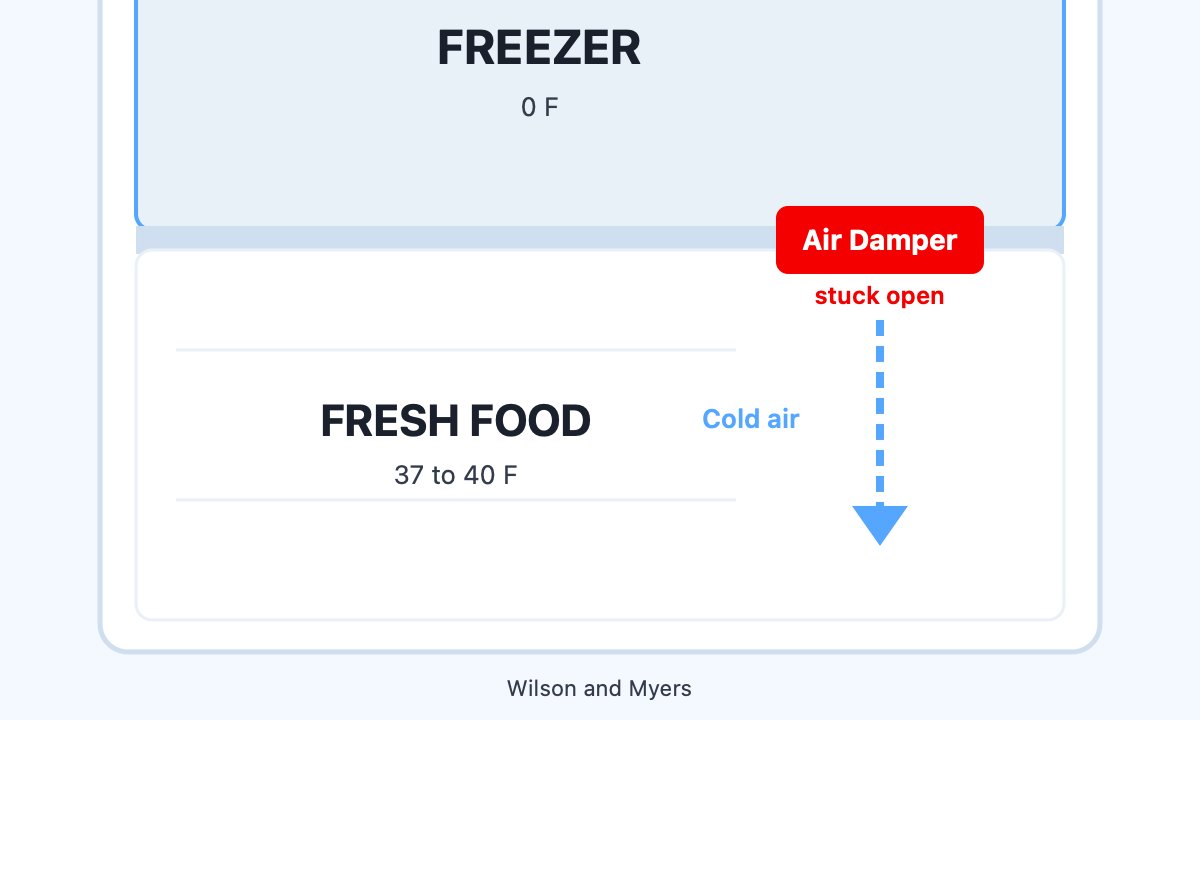
Most homeowners adjust the temperature dial first. I always check the damper after confirming the setting. It sticks open, and that is a two-screw fix.
The thermistor is a variable-resistance temperature sensor that reports fresh-food conditions to the control board in real time. When it fails, it reads warmer than actual, signaling the board to keep requesting cooling even when the compartment has already reached setpoint. The thermistor resistance test with multimeter is the diagnostic: resistance should shift noticeably as the sensor warms in your hand. KitchenAid and GE models use different resistance ranges; verify your model’s service manual before ordering. Pro recommended.
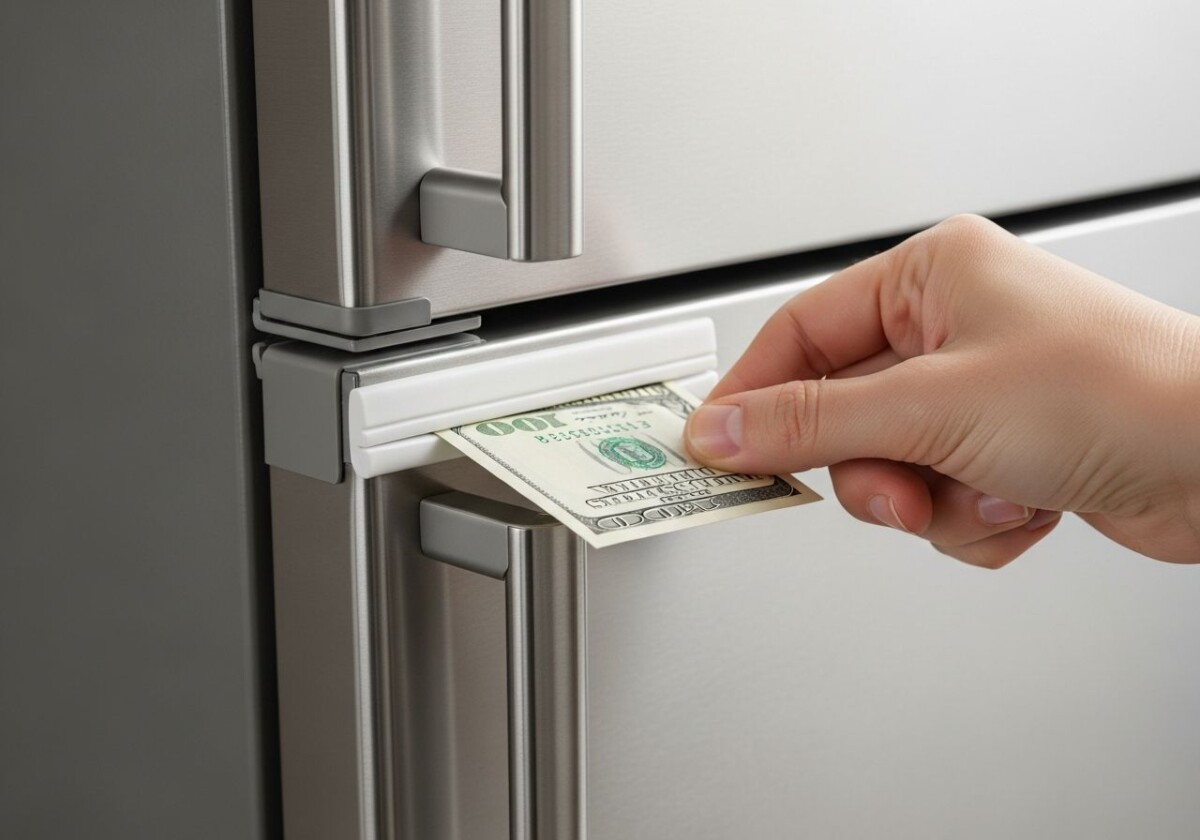
The door seal paradox compressor overrun causes overcooling and refrigerator freezing food: a leaking gasket lets warm air in, the thermistor signals more cooling, and the compressor runtime extends. That extra runtime pushes more cold air through the air damper and drops the compartment below setpoint. Run the dollar-bill gasket test: close the door on a bill and pull. If it slides out freely, the door seal leak causes compressor overrun and overcooling. DIY to test, DIY or Pro to replace.
These are the final diagnostic tier, not the first stop. The temperature control thermostat directs voltage to the compressor and evaporator fan motors. When stuck in continuous cooling, the fresh-food section cannot warm to setpoint. Turn the dial slowly from minimum to maximum and listen for a click. No click often points to a failed thermostat. Follow the diagnosis sequence thermostat before thermistor before board: the RepairClinic diagnosis sequence thermostat first then thermistor prevents expensive misidentification. Inspect condenser coils and disconnect power before any testing. Pro.
If my fridge keeps freezing food after a dial adjustment, knowing how to stop refrigerator from freezing food means checking the damper next. My refrigerator keeps freezing my food after a setting change almost always traces to the damper or vent.
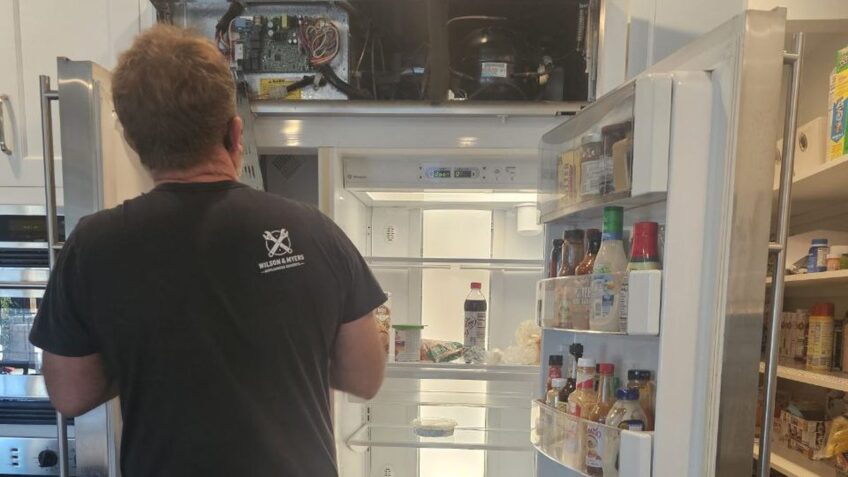
If you have worked through these steps and the fridge is still freezing food, Schedule a refrigerator repair in Denver with Wilson and Myers. Our insured technicians serve the entire Denver Metro Area and will confirm availability for your neighborhood.
Most homeowners can stop refrigerator freezing food with a dial adjustment or vent clearance. The damper is a reasonable DIY repair with the right OEM part.
Denver homes have a specific situation worth knowing. Standard refrigerators are designed for a standard operating ambient 55 to 85 degrees Fahrenheit range. A garage fridge below 55 degrees causes thermostat to stop calling for cooling, and the fresh-food side drifts toward the outdoor temperature. Denver garage fridge cold ambient below 55 degrees is a seasonal pattern from October through March. That is not a broken refrigerator. A nearly empty fridge also loses thermal mass between cycles, making a borderline air damper more likely to push the compartment below setpoint. Denver summer compressor overrun with stuck damper is the opposite risk: when the garage climbs into the 90s, a borderline damper becomes a definite overcooling source.
Call our refrigerator repair team when the dial and vent checks fail or the damper shows ice you cannot clear. A failing door seal or thermistor and control board diagnosis also needs a professional’s hands. Call before ordering parts: the diagnosis sequence matters, and a misidentified board is the most expensive mistake. Our technicians handle Whirlpool, Samsung, LG, GE, KitchenAid, Maytag, and Frigidaire across the Denver Metro Area. Book online to confirm availability.
Unusual noise points to our refrigerator making noise guide. Water under the crisper is in our refrigerator leaking water guide. The general refrigerator repair guide covers all other fridge symptoms.
When my refrigerator is freezing food and the setting has not changed, the air damper is the first thing to check. Homeowners asking why is my fridge freezing food after a stable week should start there. The dial may be set too low, items may be blocking the rear vent, or the thermistor is misreading the compartment temperature. If the refrigerator is freezing my food despite a dial adjustment, the damper or thermistor is the likely cause.
The fresh-food compartment should hold 37 to 40 degrees Fahrenheit, with 38 degrees as the midpoint. The freezer should stay at 0 degrees Fahrenheit. After any dial adjustment, wait a full 24 hours before evaluating results. Rechecking at 30 minutes leads to unnecessary service calls.
To stop food freezing in refrigerator compartments, set the dial to the 37-to-40-degree Fahrenheit midpoint and wait 24 hours. Clear any items within 2 to 3 inches of the rear vent to stop food freezing in fridge sections near the back wall. If food is freezing in the refrigerator after both checks, inspect the damper.
Food freezing near back of refrigerator sections traces to vent placement or damper failure in a refrigerator too cold freezing food. The cold-air vent from the freezer opens at the top rear of the fresh-food section, and items pressed against the back wall sit in the strongest air stream. If rearranging items does not stop the freezing, the air damper at the top rear corner may be stuck open and needs inspection. Moving items away from the rear vent is the five-minute fix to try first.
Yes, a bad door seal can cause refrigerator freezing food, and the mechanism is counter-intuitive. A leaking door gasket lets warm air into the compartment. The thermistor detects the temperature rise and extends compressor runtime to compensate. That extra runtime drives more cold air through the air damper and pushes the fresh-food temperature below setpoint. Run the dollar-bill gasket test to confirm the seal. This cause amplifies a borderline air damper or thermostat but rarely drives freezing on its own.
When homeowners ask why is refrigerator freezing food on the warmest setting, the answer is almost always the air damper or thermistor. An air damper stuck open delivers continuous cold regardless of the dial. A thermistor reporting a warmer food compartment temperature than exists keeps the control board running the cooling cycle past setpoint. A Frigidaire, Samsung, or LG refrigerator with this pattern needs damper and temperature sensor inspection.
Wilson and Myers provides refrigerator repair and overcooling diagnosis across Denver Metro Area, including Denver, Boulder, Lakewood, Aurora, Littleton, Englewood, Sheridan, Wheat Ridge, Edgewater, Golden, Arvada, Westminster, Thornton, Northglenn, Commerce City, Brighton, Broomfield, Superior, Louisville, Lafayette, Longmont, Erie, Centennial, Greenwood Village, Cherry Hills Village, Glendale, Parker, Castle Rock, Highlands Ranch, Lone Tree, and Morrison.
Our insured Denver Metro technicians diagnose stuck air dampers, failing thermistors, and worn door seals, and get your fridge back to the right temperature.
Found This Helpful?
A residential dishwasher leaking from bottom rarely fails where the dishwasher puddle on floor tiles appears. Pull the kick panel; the highest wet surface mark…
It is a week before Thanksgiving, and you set the oven to 350 degrees before starting the stuffing. Forty minutes later, the preheat signal fires. That is roug…
You opened the KitchenAid freezer this morning and the bin was empty. In my experience, the arm is the first thing worth checking: the fix costs nothing and ta…
Has your refrigerator water dispenser stopped delivering water? In my experience, a large share of these calls end before a technician arrives. A child lock ac…
You open the dishwasher after the cycle and the plates look exactly as you loaded them: dry, cold, with last night's dinner still caked on. Your dishwasher is…
A washer that shakes violently during spin traces to one of seven causes, from a bunched load to a failed drum bearing. Here is the order to check them, and th…
Welcome to the community.
You'll receive our next expert update soon.

Wilson & Myers is a verified member of the Denver Metro Chamber of Commerce.


