Your KitchenAid Ice Maker Stopped Making Ice. Start Here.
You opened the KitchenAid freezer this morning and the bin was empty. In my experience, the arm is the first thing worth checking: the fix costs nothing and ta…

Most calls on this machine start the same way, with water standing in the bottom of the tub. How high that water sits tells a technician how bad the blockage is. We diagnose first and quote second, and you decide before any part is ordered.
We service KitchenAid built-in 24 inch dishwashers, current models and discontinued ones alike. The model prefix tells us which console the machine carries, and the console decides which part is involved.
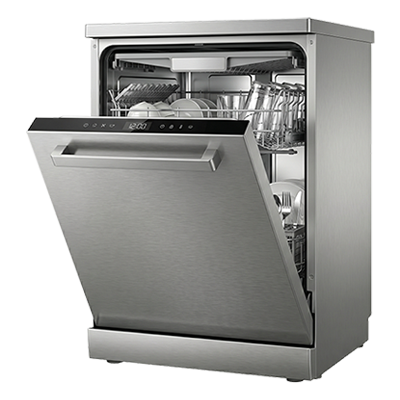
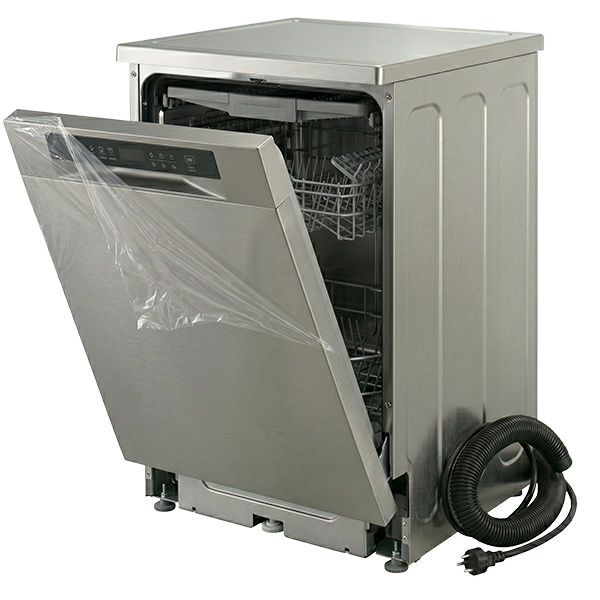
KDF is a front control machine, with the buttons on the face of the door. KDT and KDP are integrated top control, with the buttons hidden along the top edge.
At least eleven models are on sale today, and eleven is a floor. KitchenAid’s listing pages force an in-stock filter back into the query, so a discontinued machine cannot appear. Its own Dimension Guide W11409323G names thirty-one prefixes and still omits one of the eleven.
Front control, buttons on the door face
Top control, buttons along the door edge
Custom cabinet panel over a 24 inch machine
Still serviced, still fitted in Denver kitchens
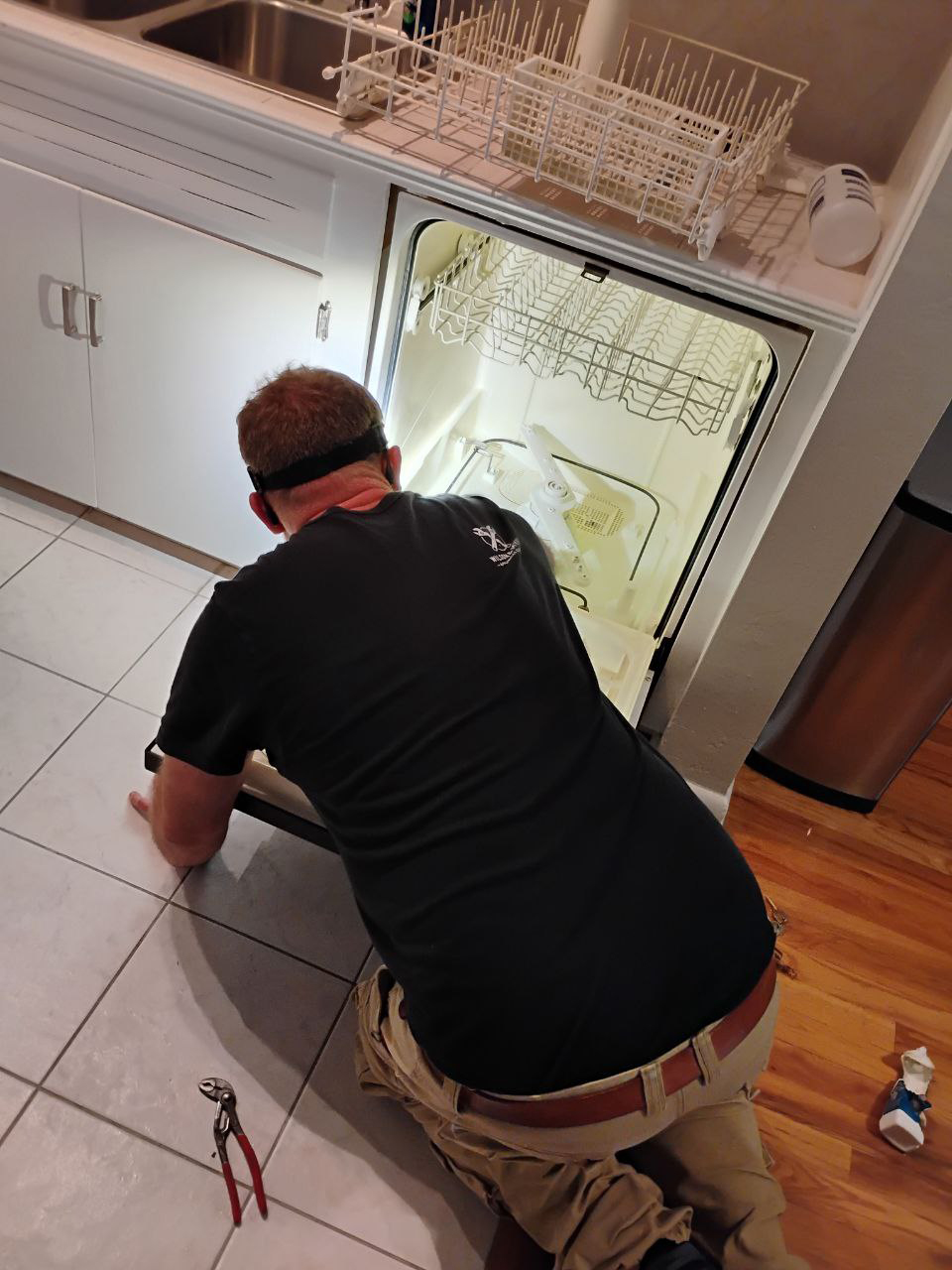
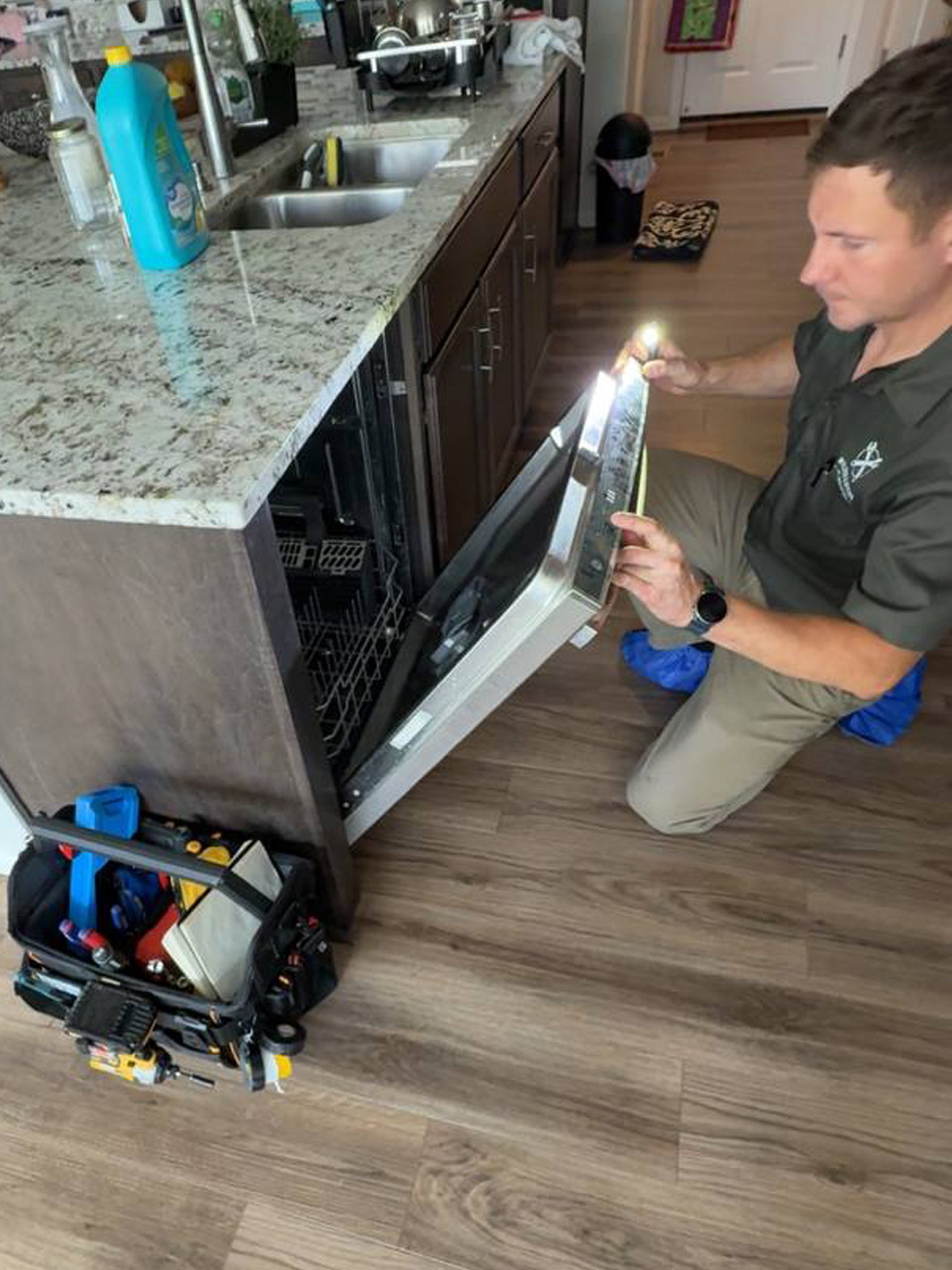
This is the most common dishwasher call we take, and it is usually a restriction rather than a dead pump. The control runs the drain pump at the end of a cycle. Water leaves through the sink tailpiece, an air gap or a disposal inlet, and four things sit on that path.
Water just above the filter screen is a partial restriction. Water near the door opening is a severe blockage, or a pump that never ran.
One installation fault causes more of these calls than any failed component. The knockout plug in a disposal’s dishwasher inlet has to be driven out when the disposal goes in. We have seen machines that never drained once since the day the disposal was replaced. If the disposal itself is at fault, that is a garbage disposal repair.
KitchenAid’s Dimension Guide sets the drain height at 20 inches minimum above the floor, or an air gap instead. It caps the drain hose at 12 feet and rules out joining hoses.
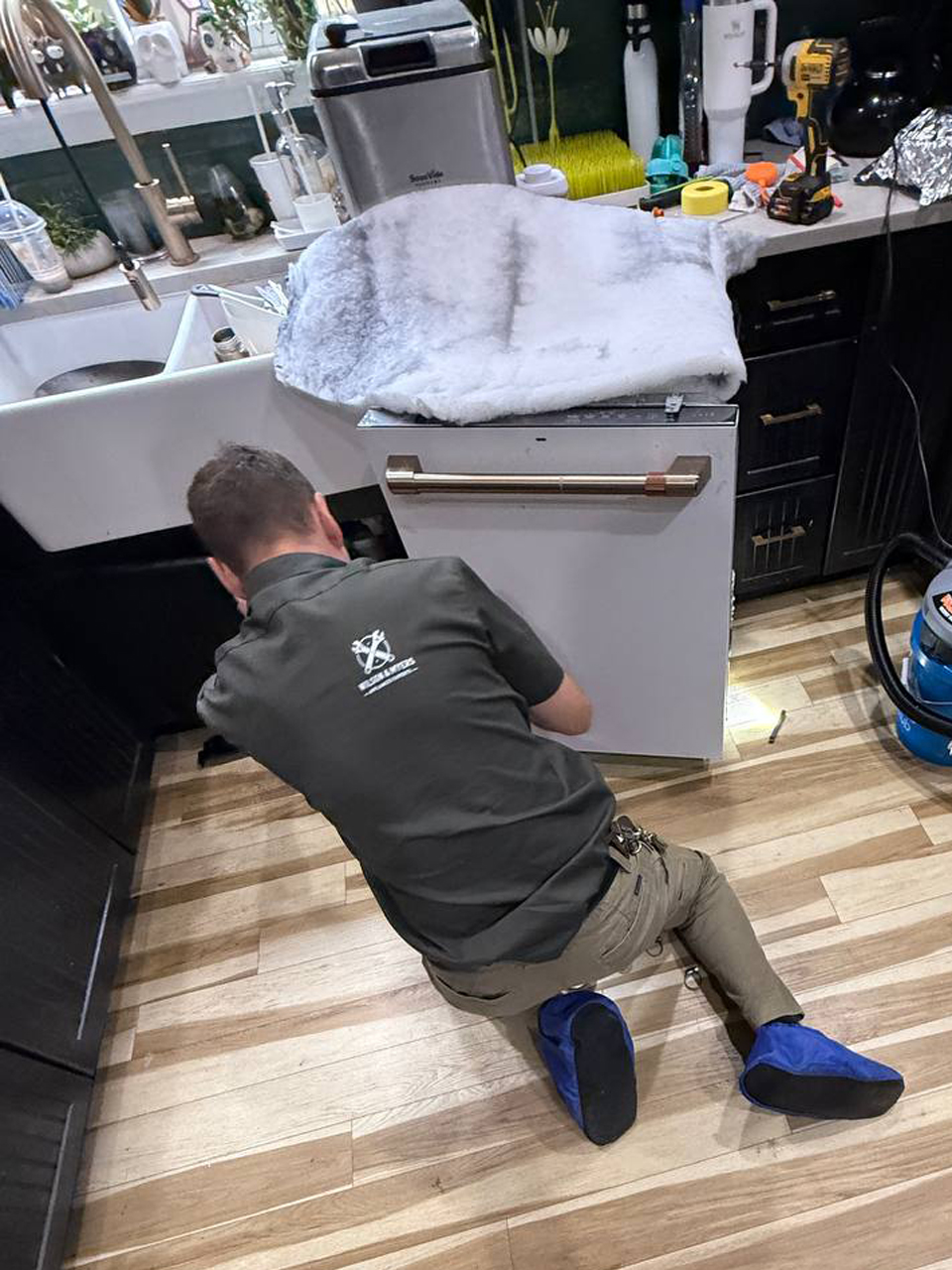
Three systems have to be right at once, and all three fail in a way that looks identical. The water has to arrive hot and under pressure, the arms have to turn, and the filter has to be seated.
KitchenAid’s installation specification calls for water at 120 degrees Fahrenheit at the machine, on a hot supply between 20 and 120 psi. Before a cycle, spin the middle spray arm by hand, because any resistance means a dish is fouling it.
Filters are where most published advice goes wrong, because two different designs are in service and need opposite instructions. The shared help platform behind this family of brands calls them Filter Style 1 and Filter Style 2.
Style 1 has a removable filter. The upper assembly turns a quarter turn counterclockwise and lifts out, over a lower filter. It wants rinsing on a schedule, and if it still spins freely after refitting it is not locked in.
Style 2 has no user filter at all, only a foreign object cup in front of the lower rack. These machines have a built-in chopper, so an intermittent grinding noise can be entirely normal.
The KDTS424SPS specification sheet describes True Self-Cleaning Filtration, which eliminates manual filter cleaning. On any other machine, open the door and look, because both designs are still working in Denver Metro kitchens.
Where the water appears tells you which part is involved. At the front and around the door it is usually the gasket, over-sudsing, or an arm hitting the seal. At the bottom center it points at the pump seal, the sump or an overfill.
The most common leak is not a leak. Dishwasher detergent does not foam, but hand dish soap does, and so does spray-on pre-wash residue. Suds push water out past the door seal, and the same foam can stop the machine filling.
An F6E3 code is that fault by name. The published remedy is 2 to 3 tablespoons of cooking oil in the tub, then a full cycle with no detergent.
Both KitchenAid specification sheets list a Leak Identification System among the key features. What it does, drain the tub and warn you, is shared across this platform.
These machines dry by getting water to sheet off the dishes and venting the humid air, so rinse aid is not optional here. KitchenAid’s use instructions say you must use a drying agent such as a rinse aid.
The dispenser holds about 5 ounces and lasts one to three months. The factory setting is 2 or 3. One published instruction is to raise it a level and retest, another to go straight to the highest setting.
Three drying methods appear across the line: a heating element, a fan, or a door that opens itself at the end of the cycle. That fan can run for up to eight hours afterwards, and that is normal. The specification sheets name a ProDry System and an Automatic Door Open Dry System.
Run a cycle with heated dry selected, then open the door at the end. A warm, slightly steamy tub is working. A stone cold tub with no steam is a heating fault.
Most of these calls are not faults. Five ordinary things stop a healthy machine starting, and only after those does it become a switch, a console or a board.
A machine that will not fill has four usual causes, and only one is a failed part. The supply valve is closed, or the fill hose is kinked. The door was opened mid cycle, which flashes Start or Resume and holds the fill. Or the drain loop sits below 20 inches, so the machine siphons itself empty as fast as it fills.
That last case is invisible from the front, and it usually starts the day a plumber changed something under the sink.
Codes here come from a knowledge base that Whirlpool Corporation shares across several of its brands. They are platform codes rather than something KitchenAid publishes alone. Most of them name a component, so write the code down before you clear it.
| Code | What it points at | First move |
|---|---|---|
| F9E1 | Long drain | Filter, drain hose, disposer knockout, air gap |
| F8E1 or H2O | Not detecting water | Open the supply, check the hose for kinks |
| F8E4 | Water in the drip tray | Empty it, check the float switch |
| F6E3 | Excessive suds | Clear the suds, run a cycle with no detergent |
| F6E4 | Water float switch | Level the machine, then cycle power |
| F7E2 | Wash motor error | Cycle power, then service |
| FAE4 or F10E4 | Diverter valve error | Cycle power |
FAE4 and F10E4 are one code, not two, because the A and the 10 are the same digit shown two ways. The water code is written H2O in one place and H20 with a zero in another.
Older machines with no display flash the code instead. Count the first burst for the F number, pause, then count the second burst. Seven flashes and then one flash is an F7E1.
The status light is not an error code. Blue is washing, white is finished, blinking is paused. Red means drying is in progress, which reads as an alarm and is the machine working correctly.
The reflexive line about hard water destroying a dishwasher does not survive the numbers. The manufacturer’s use instructions recommend a water softener at 15 grains or more. That is the figure a local supply has to be measured against.
Denver Water published its own hardness in a blog post dated 27 July 2017. It gave 75 to 120 milligrams per liter on the southern collection system, and 40 to 50 on the northern one. That is roughly 2.3 to 7.0 grains per gallon.
So spotting and film on that supply are usually a rinse aid or water temperature problem. Those figures cover Denver Water’s own service area, and wells and other providers across Denver Metro can run harder.
Several of these calls end without a service visit. Work through the free checks first.
Call us when the fault returns after those checks, or when a code names the wash motor, the heater or the control. Call us too when water reaches the floor, or when the repair means pulling a built-in machine out of cabinets.
Our insured technicians handle dishwasher work across the Denver Metro Area. We diagnose first and quote second, and you decide before any part is ordered. Book online and give us the model number from the label inside the tub frame. Check both sides of the door opening, because some machines print it on the right and others on the left.
These are the questions Denver Metro owners ask before they book a dishwasher visit.
A little water in the sump is normal and keeps the seals from drying out. Standing water above the filter screen is not. Start at the filter and the drain hose, then check the disposal knockout plug.
It is the long drain code, so the machine did not empty in the time it expected. The published checks are the filter, the drain hose, the disposer knockout and the air gap.
No. Retailers advertise these machines against NSF/ANSI 184, the residential standard, not the commercial NSF/ANSI 3. KitchenAid’s own guide says a residential machine meeting that standard is not intended for a licensed food establishment.
KitchenAid has been part of Whirlpool Corporation since 1986, and the troubleshooting documentation is genuinely shared. Hardware is a separate question, and no published document maps a KitchenAid model onto a sibling one.
This page sits under the KitchenAid brand page, which covers the cooking side too. Our all-brand dishwasher repair page covers every make, and dishwasher brands lists them side by side.
If the machine is being replaced rather than repaired, see dishwasher installation. For a KitchenAid refrigerator in the same kitchen, see refrigerator repair. We service the sibling brands too, so a Whirlpool, Maytag or JennAir machine in the same house is covered. The brands index lists them all.
Every repair carries a 100-day labor warranty, and we source KitchenAid parts through national supplier networks and manufacturer contracts.
Send us the code from the panel and the model number from the door edge. We will book an insured technician for it.
Repair guides, maintenance tips and troubleshooting walkthroughs written by our insured technicians.
You opened the KitchenAid freezer this morning and the bin was empty. In my experience, the arm is the first thing worth checking: the fix costs nothing and ta…
A Frigidaire oven not heating can come down to a setting rather than a part. Before you book a repair, two checks cost nothing and take under a minute: the clo…
A Whirlpool dryer that tumbles but never heats traces to one of five faults, and three of them cost nothing to check. Here is the order to work through them, p…
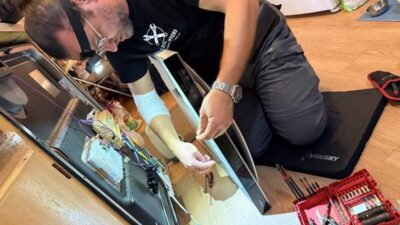
F8 E4 means water reached the drip tray, not a fill fault. Here is the two-step reset and why it can fire on a brand-new install with a dry tray…
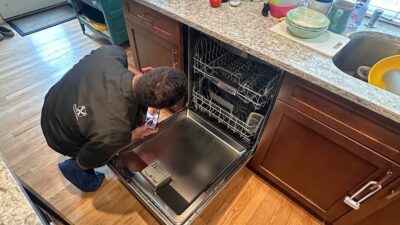
A Bosch dishwasher E22 error means one thing: the filter is blocked, and there is probably water sitting in the bottom of the tub…
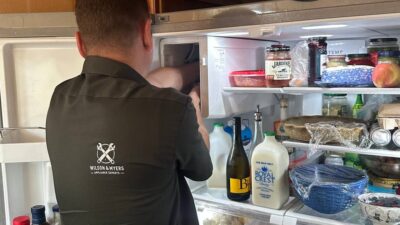
A Frigidaire refrigerator not cooling is not always a broken refrigerator. The display on the door settles that question in about ten seconds…
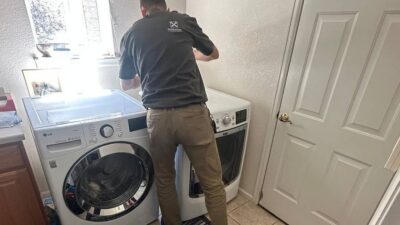
You walked into the laundry room and the display is flashing D80. The drum is still turning. You do not know whether to stop the cycle or let it finish. D80 is…

A GE refrigerator not cooling usually falls into one of two failure paths. The question is simple: is the freezer still cold? If yes, the sealed system is inta…
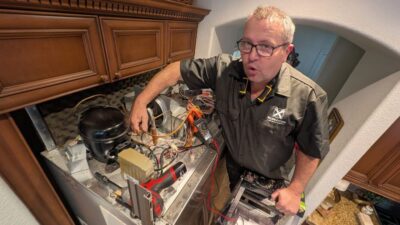
You pull open the freezer on a July evening and find an empty bin. A Frigidaire ice maker not working in peak summer is one of the most frequent calls our Denv…
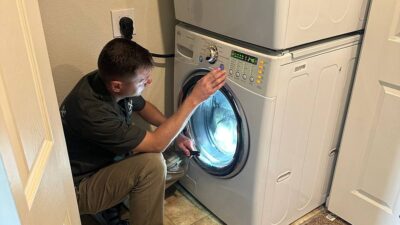
The LG washer UE code means the machine detected an unbalanced load during the spin cycle and stopped to protect the drum and bearings. UE is protection not br…
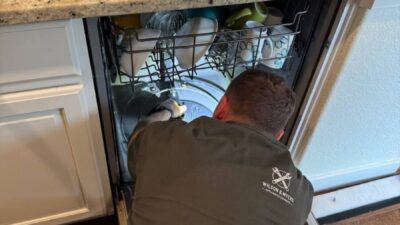
E24 on a Bosch dishwasher means the drain cycle did not complete. A clogged filter basket is the cause in most cases. If the filter is clear, the drain pump or…

When the LG washer LE code flashes mid-cycle, the drum stops, and your laundry sits locked inside. Most people's first thought is a broken motor. It usually is…
Wilson & Myers dispatches insured technicians to homes running KitchenAid appliances throughout the Denver Metro Area.
We diagnose the fault first and quote the repair second, so you decide before any part is ordered.

Wilson & Myers is a verified member of the Denver Metro Chamber of Commerce.